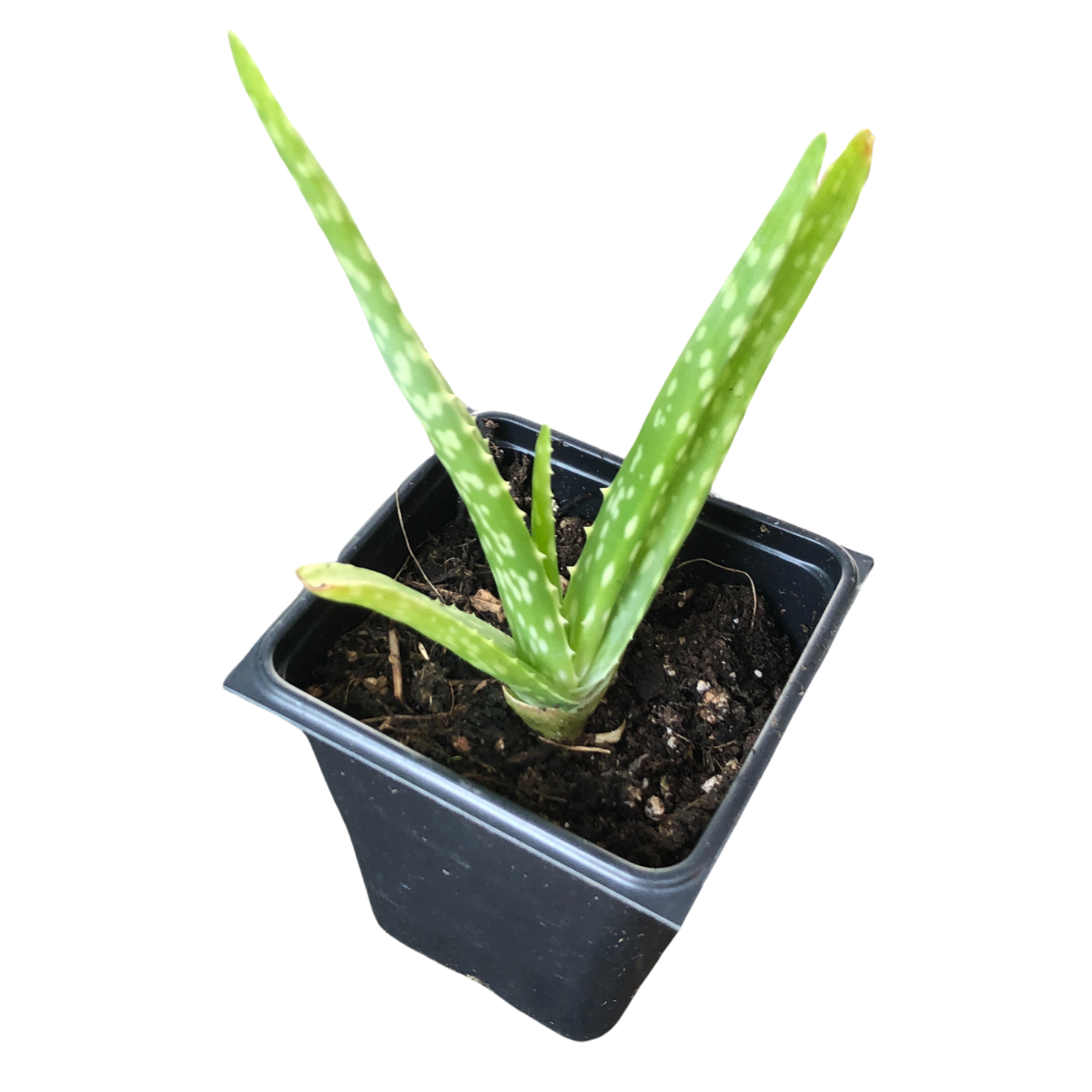
SKU: 78704781281
aloe vera barbadensis miller plants for sale

aloe vera barbadensis miller plants for sale Organic Aloe Plant (Aloe Barbadensis)

Sale price$23.28 Regular price$25.87
Save 10%

Pay in installments of $6.47 with ShopPay, AfterPay and Klarna

Shipping Estimate
USA
  • USA
  • CAN

Ships within 48 hours · Estimated delivery Jul 24 - Jul 29

Promo Codes Available:

For Your Every Summer RSVP, with Code: SUMMER15

Description

aloe vera barbadensis miller plants for sale Organic Aloe Plant (Aloe Barbadensis)Aloe barbadensis, also called Aloe barbadensis Miller, medicinal aloe, Barbados aloe, Aloe vera, or the burn plant, is a member of the Asphodelaceae family and is an easy to grow, attractive succulent. Its a beautiful houseplant or addition to rock gardens in warm climates. Aloe plants are quick growing and great for beginners. An aloe vera houseplant is a must have plant for any herbalists kitchen. The clear gel within the aloe leaves is often used

Aloe barbadensis, also called Aloe barbadensis Miller, medicinal aloe, Barbados aloe, Aloe vera, or the burn plant, is a member of the Asphodelaceae family and is an easy-to-grow, attractive succulent. It’s a beautiful houseplant or addition to rock gardens in warm climates. Aloe plants are quick-growing and great for beginners.

An aloe vera houseplant is a must-have plant for any herbalist’s kitchen. The clear gel within the aloe leaves is often used fresh or incorporated into skin and hair care products. It’s the same aloe vera gel you may see in bottles at the pharmacy, and herbalists have used it to provide quick relief for sunburns and other mild skin irritations. Herbalists have also used Aloe vera barbadensis juice internally to relieve mild gastrointestinal issues and improve digestion.

Note that some folks are allergic to aloe.

Aloe plants are tender perennials. They’re most commonly grown indoors as a houseplant but can be moved outdoors to a porch or patio during the warmer months. If you’re moving an indoor aloe vera out for the summer, you will need to transition your plant slowly, or the leaves can burn. Aloe thrives in bright, indirect light.

How to Grow Aloes

Grow your aloe plant in sandy, well-drained soil. Cactus or succulent potting mixes work well for aloe. Water sparingly, but thoroughly, allowing the soil to dry out completely between watering- aloes kept too wet will rot at the soil surface. Aloes don’t require high soil fertility but will benefit from a weak fertilizer once or twice a year. Aloe plants do best when kept between 55- and 85-degrees Fahrenheit.

• Tender Perennial
• USDA Hardiness Zone: 10-12
• Light: Bright, indirect sunlight
• Soil: Well-Drained, Sandy
• Soil pH: 7.0-8.5
• Mature Size: 1-2 Feet Tall
• Medicinal
• Houseplant

Shipping Notes
  • Free Standard Shipping on $100+ Orders to the USA.
  • Except Preorder products are shipped in 48 hours.
  • Delivery to the USA:
  1. Standard Shipping : 3-10 business days
  • If time is of the essence, please consider selecting expedited delivery for faster service.
Exchange/Return Notes
  • We offer a 30-day return/exchange service after receiving.
  • Final sale items are not eligible for returns or exchanges.
  • To process your return/exchange, please contact us at [email protected]
  • Please click here for more details>>> Return & Exchange Policy
SKU: 78704781281

Discover Niche Categories That Outsell aloe vera barbadensis miller plants for sale

Top-Converting Item to Boost Your Average Order

4.7 ★★★★★
Based on 23 reviews
Sort
Highest Rating
Newest First
Oldest First
Product Reviews
K
Verified Purchase
Khatuna Brady
Lowell, US
★★★★★ 2
A masterfully falsified history of the late Soviet developments
Format: Paperback
This book represents academic propaganda, providing some interesting insights into important events. Some details are true, but some crucial details are omitted. It represents a sanitized version of Russia's modern history. It provides misleading information about Gorbachev's constitutional reforms, aimed at partitioning of 15 republics into 53 confederation entities. Originally, the targeted republics were Kazakhstan, Moldova, Georgia, Azerbaijan, Ukraine, etc. Those conflicts were manufactured by the Soviet center to discredit "nationalists," facilitate the partition of national republics, and grant Moscow right to protect ethnic minorities. According to Starovoitova, Bakatin, Yakovlev, and a few other primary sources, the Soviet security services led special operations in the Caucasus and Central Asia to provoke those conflicts. Zubok avoids citing those parts. Using the imperial approach of "divide and rule," Moscow attempted to become a peacekeeper in the conflicts it created between different ethnicity. In addition to fragmenting the republics with well-developed national identities, Gorbachev's new constitution would revoke their right to leave the USSR, written in Lenin's 1922 Constitution (Shakhnazarov, 1992). Zubok does not explain any of it. His book is an effort to protect the truth and conceal facts with Russian myths and lies about nationalism (also referred to as Nazism). Notably, Zubok does not recognize non-Russian republics and describes them as "territories." He mentions Pitsunda as a resort on the Black Sea, not as Georgia. For lying about the genocidal ethnic cleansing conducted by the Russian military against the Georgian population of Abkhazia, Zubok owes apology to the victims of conflicts and wars initiated by Gorbachev and carried on by Yeltsin. The story about "the hardliners coup against Gorbachev" is also a big fat lie. American scholars, Amy Knight, John Dunlop, and William Odom provide more accurate insights. For Russian sources, read Marshal Shaposhnikov or Aleksandr Lebed's memoirs (1995) and listen to Gennady Yanaev's interview (2009). According to Mitrokhin archives (original), the August 1991 coup was an active measure the KGB developed per Gorbachev's request. The so-called coup was part of Gorbachev's constitutional reform, which would lead to the removal of unfriendly leaders (including Yeltsin) from the republics. It failed because the Soviet military brass, foremost Pavel Grachev, had defected to Yeltsin earlier in 1991. When you read a book by a seasoned Russian propagandist, like Zubok or Trenin, take it with a grain of salt, because it will always contain a mix of lies and truth.
WAS THIS REVIEW HELPFUL?YesReportShare
Reviewed in the United States on March 16, 2023
U
Verified Purchase
Ujjval K. Vyas
San Leandro, US
★★★★★ 5
An important work and worth the time.
Format: Hardcover
Real scholarship addressing difficult but important topics in history, economic history, and development. What every economist should read to think much more deeply about how institutions, culture, and human agency interact. At the same time, scholars like the three co-authors demonstrate that there still remains the possibility of doing work that isn’t larded with ideological or activist posturing. Highly recommended.
WAS THIS REVIEW HELPFUL?YesReportShare
Reviewed in the United States on May 5, 2026
H
Verified Purchase
Hal in Bloomington, Indiana
Natrona Heights, US
★★★★★ 5
Excellent research and well written by a Noble Laureate
Format: Hardcover
Excellent research and well written.
WAS THIS REVIEW HELPFUL?YesReportShare
Reviewed in the United States on December 10, 2025
D
Verified Purchase
David Freshwater
Massapequa, US
★★★★★ 2
should have been shorter
Format: Hardcover
really interesting approach - but far too wordy
WAS THIS REVIEW HELPFUL?YesReportShare
Reviewed in the United States on February 3, 2026
T
Verified Purchase
T
Houston, US
★★★★★ 5
6 year old loves these books
Format: Paperback
One of my son’s favorite book series.
WAS THIS REVIEW HELPFUL?YesReportShare
Reviewed in the United States on May 1, 2026

recommand products