Pay in installments of $5.31 with
 ,
,
 and
and

Shipping Estimate
USA
- USA
- CAN
- USA
- CAN
Ships within 48 hours · Estimated delivery Sep 11 - Sep 16
 Promo Codes Available:
For Your Every Summer RSVP, with Code: SUMMER15
Description
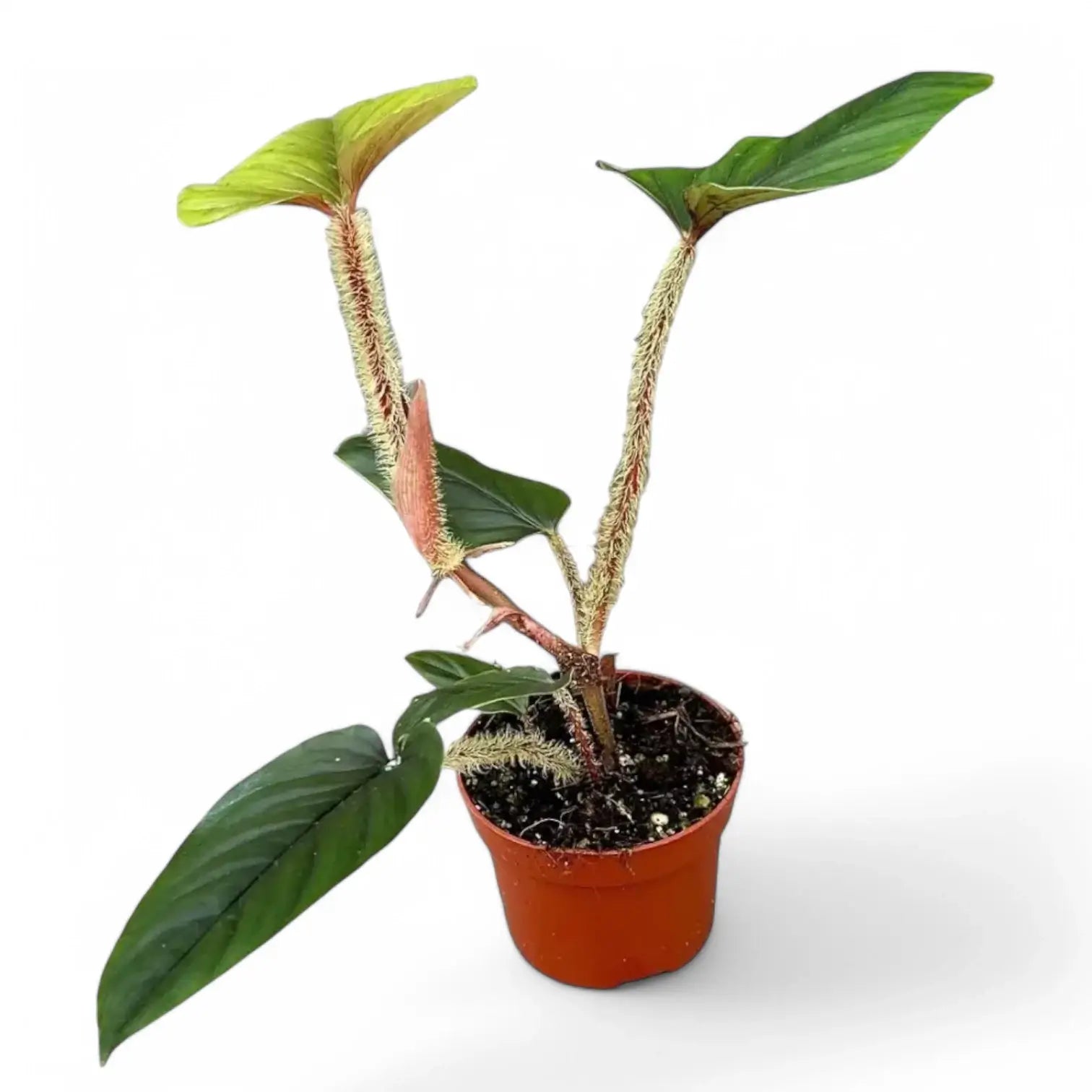
philodendron serpens vs squamicaule Philodendron serpens – Hairy Stems & Glossy HeartsPhilodendron serpens Hook. f. rare hairy petiole Philodendron from the Andes Philodendron serpens is a hemiepiphytic climber native to the premontane and lower montane forests of the Andes in Colombia (Nario) and Ecuador (Carchi, Pichincha, Pastaza). Described in 1871 by Joseph Dalton Hooker, it is instantly recognisable by its cordate green leaves and petioles densely covered in short, recurved hairs. In habitat it climbs mossy trunks in humid,
Philodendron serpens Hook.f. – rare hairy-petiole Philodendron from the Andes
Philodendron serpens is a hemiepiphytic climber native to the premontane and lower montane forests of the Andes in Colombia (Nariño) and Ecuador (Carchi, Pichincha, Pastaza). Described in 1871 by Joseph Dalton Hooker, it is instantly recognisable by its cordate green leaves and petioles densely covered in short, recurved hairs. In habitat it climbs mossy trunks in humid, shaded understories between 500 and 1 500 m elevation, a setting that informs its care in cultivation.
Foliage and growth highlights
- Blades: Cordate to broadly cordate leaves, 30 – 45 cm long, 14 – 18 cm wide, leathery yet flexible, with a cordate base and acuminate tip.
- Petioles: Covered with dense retrorse trichomes (short, backward-curving hairs) that create a tactile, “serpent-like” texture.
- Growth habit: Scandent climber; produces aerial roots for anchorage and benefits from textured vertical supports.
Juvenile to mature development
Juvenile foliage is smaller, softer, and smoother. As the plant matures and gains height on a pole, blades broaden, texture deepens, and petiole hairs become denser. Appressed contact at each node improves hydraulic efficiency, encouraging larger leaves and maintaining petiole hair density.
Native range and ecology
- Distribution: Andes of southern Colombia (Nariño) and northern to central Ecuador (Carchi, Pichincha, Pastaza)
- Elevation: ~500 – 1 500 m above sea level
- Habitat: Premontane wet forest and cloud forest edges; shaded, mossy slopes with constant humidity and organic-rich substrates
Care essentials for thriving Philodendron serpens
- Light: Bright, indirect light for compact growth and strong leaf colour; avoid prolonged direct sun.
- Water: Keep the mix evenly moist; let the top 2 – 3 cm dry before rewatering. Always ensure free drainage.
- Humidity: ≥70 % RH is ideal; excels in plant cabinets, terrariums, or enclosed high-humidity displays with airflow.
- Temperature: Optimal 18 – 29 °C; avoid drops below 13 °C or heat above 32 °C.
- Substrate: Airy aroid blend (~35 % coco coir, 30 % fine orchid bark, 20 % perlite, 10 % compost, 5 % horticultural charcoal).
- Feeding: Balanced liquid fertiliser at 25 – 50 % label rate every 4 – 6 weeks during active growth.
- Support: Moss or fibre pole; secure the stem at each node to encourage appressed climbing and larger foliage.
Propagation and alternative culture
- Stem cuttings: Take one-node cuttings below an aerial root; root in moist sphagnum, water, or semi-hydro.
- Air layering: Useful for larger, established stems to maintain vigour.
- Semi-hydro: Adaptable with gradual transition; maintain steady nutrient solution and good root aeration.
Inflorescence
Produces a green spathe enclosing a pale green to white spadix. Flowering is rare in cultivation and mainly of botanical interest; foliage and petiole features are the primary ornamental appeal.
Common issues and targeted solutions
- Pests: Monitor for thrips, spider mites, and mealybugs; treat early with insecticidal soap, neem oil, or horticultural oils.
- Yellowing leaves: Often from overwatering or poor drainage; adjust watering and refresh mix.
- Browning tips: Low humidity; raise RH and keep watering consistent.
- Drooping: Underwatering or temperature stress; correct promptly.
- Stunted growth: Increase light, ensure nutrient supply, and check for root congestion.
Conservation note
Not currently assessed by the IUCN, but its natural habitat is fragmented by land-use change. Ethical sourcing from cultivated stock supports both horticulture and wild populations.
Order Philodendron serpens
Add Philodendron serpens to your high-humidity collection for its lush cordate leaves and rare, tactile petioles. With filtered light, consistent moisture, and vertical training, it becomes a living showcase of Andean rainforest character.
Shipping Notes
- Free Standard Shipping on $100+ Orders to the USA.
- Except Preorder products are shipped in 48 hours.
- Delivery to the USA:
- Standard Shipping : 3-10 business days
- If time is of the essence, please consider selecting expedited delivery for faster service.
Exchange/Return Notes
- We offer a 30-day return/exchange service after receiving.
- Final sale items are not eligible for returns or exchanges.
- To process your return/exchange, please contact us at [email protected]
- Please click here for more details>>> Return & Exchange Policy