Pay in installments of $5.49 with
 ,
,
 and
and

Shipping Estimate
USA
- USA
- CAN
- USA
- CAN
Ships within 48 hours · Estimated delivery Jul 27 - Aug 1
 Promo Codes Available:
For Your Every Summer RSVP, with Code: SUMMER15
Description
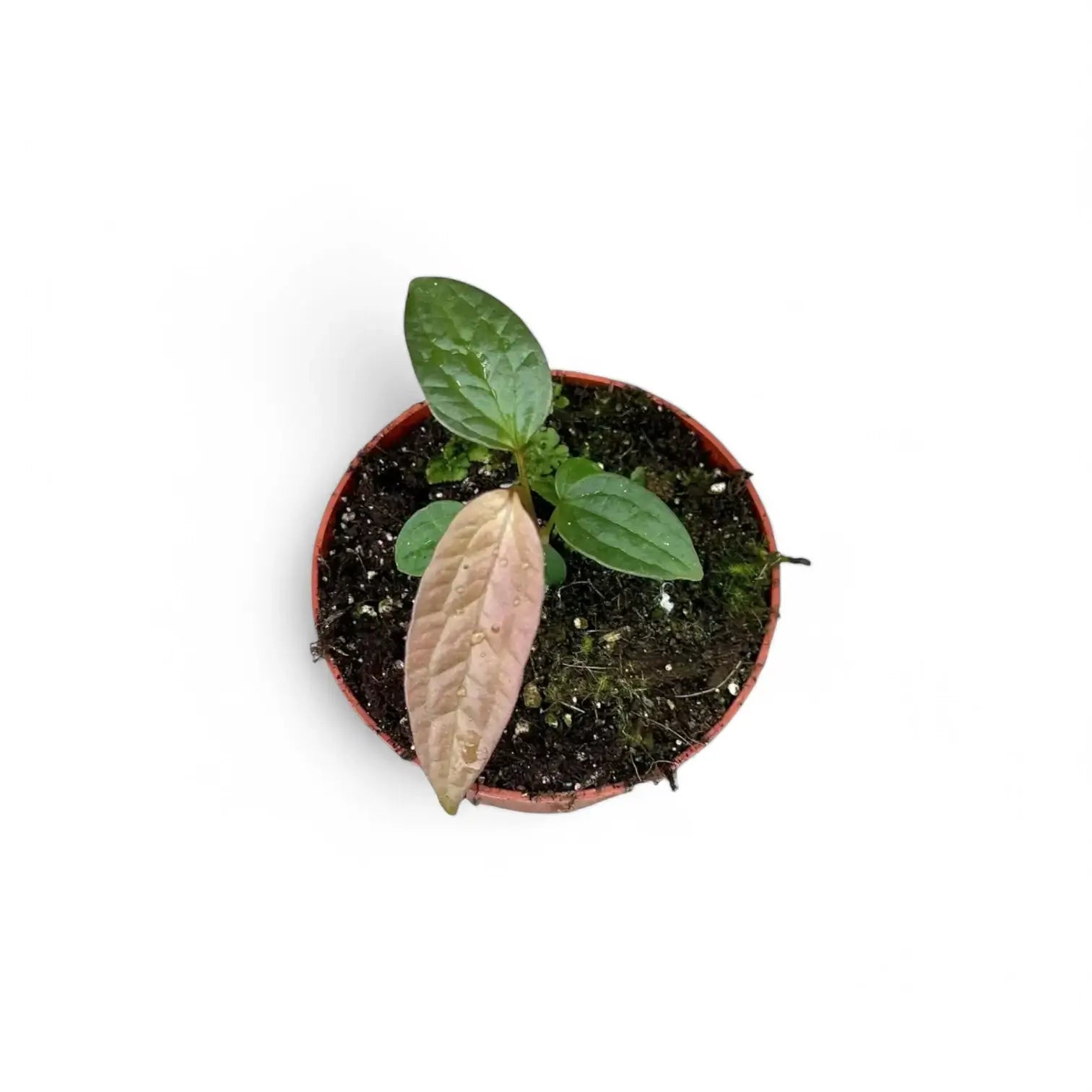
anthurium arisaemoides Anthurium arisaemoides – Tri-Lobed Bullate AnthuriumAnthurium arisaemoides With trisect, bullate foliage and a terrestrial to occasionally epiphytic habit, Anthurium arisaemoides grows from shaded wet forest settings where stems may stay low, creep through mossy ground level areas or root near tree bases. The three part blades and raised leaf texture give it a clearly segmented appearance. This flexible habit makes the root zone especially important indoors. The plant wants even moisture and humidity,
Anthurium arisaemoides
With trisect, bullate foliage and a terrestrial to occasionally epiphytic habit, Anthurium arisaemoides grows from shaded wet-forest settings where stems may stay low, creep through mossy ground-level areas or root near tree bases. The three-part blades and raised leaf texture give it a clearly segmented appearance.
This flexible habit makes the root zone especially important indoors. The plant wants even moisture and humidity, while the base still needs air around it; a heavy, sealed mix can damage the same stems and roots that should stay active and lightly moist.
Key traits of Anthurium arisaemoides
- Growth form: A terrestrial to occasionally epiphytic Anthurium associated with moist forest understory conditions.
- Habit: It may stay low or grow more erect, with botanical descriptions recording stems from ground-level growth to taller creeping or upright forms.
- Leaf blade: Leaves are trisect, meaning the blade is divided into three main segments.
- Texture: The blades are conspicuously bullate, with a raised, uneven surface and visible relief.
- Colour: Leaf surfaces range from light to dark green, with paler undersides and sunken netting beneath.
- Root setting: The root zone should stay lightly moist and airy, especially around creeping or ground-level stems.
Forest context and indoor behaviour
Anthurium arisaemoides is native from Ecuador to western Bolivia, including Ecuador, Peru and Bolivia. It is associated with tropical moist to wet forest from roughly 300–2000 m, where constant humidity and filtered light shape the plant’s growth.
The trisect leaves are usually spaced along an elongate stem, with slender petioles holding the segmented blades above the base. Indoors, the plant should be kept evenly moist but never stagnant. A potting mix that includes bark, fibre and mineral pieces gives the roots air while still holding enough moisture between waterings.
Root-zone care for Anthurium arisaemoides
- Substrate: Choose an airy organic/mineral mix that stays open around the base after watering.
- Water: Keep the mix lightly and consistently moist, then let excess water drain fully.
- Light: Use bright filtered light. Strong sun can mark leaves, while very dim light slows new growth.
- Humidity: Moderate to high humidity suits new growth and reduces dry edges on tender leaves.
- Air movement: Gentle airflow lowers the risk of base problems in a consistently moist setup.
- Temperature: Warm, stable indoor temperatures are best. Avoid chilling the root zone while the mix is wet.
Problems to watch on Anthurium arisaemoides
- Soft base or stem marks: Often linked to wet, compacted substrate around the crown or creeping stems.
- Dry leaf edges: Check for low humidity, long watering gaps or roots that have dried too far.
- Slow recovery: Cold roots and wet mix can keep the plant inactive after shipping or repotting.
- Misshapen new growth: Crowding or dry air can affect leaves while they are still unfolding.
- Yellow lower leaves: Remove ageing leaves only when fully spent, and check the root zone if yellowing spreads quickly.
Irritation risk for Anthurium arisaemoides
Keep Anthurium arisaemoides away from pets and children. Plant tissue and sap can irritate the mouth, eyes and sensitive skin.
Botanical notes on Anthurium arisaemoides
Anthurium arisaemoides was described by Michael T. Madison and published in Selbyana 2:249 in 1978. The species name means Arisaema-like, referring to a resemblance with the aroid genus Arisaema. The type locality is in the Cordillera de Cutucú, a humid forest region in Ecuador.
Shipping Notes
- Free Standard Shipping on $100+ Orders to the USA.
- Except Preorder products are shipped in 48 hours.
- Delivery to the USA:
- Standard Shipping : 3-10 business days
- If time is of the essence, please consider selecting expedited delivery for faster service.
Exchange/Return Notes
- We offer a 30-day return/exchange service after receiving.
- Final sale items are not eligible for returns or exchanges.
- To process your return/exchange, please contact us at [email protected]
- Please click here for more details>>> Return & Exchange Policy