SKU: 82398174456
red spider lily extract

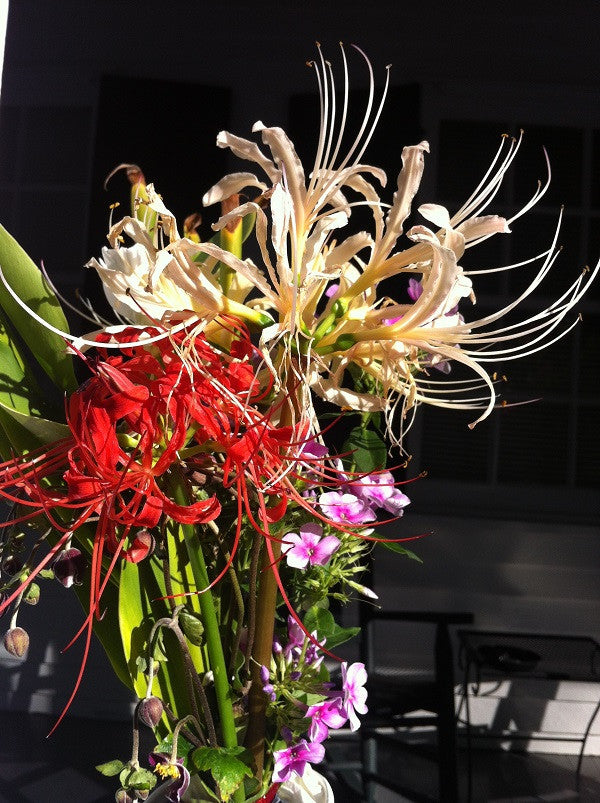
red spider lily extract Red Spider Lily (Lycoris radiata) Southern Heirloom Triploid

Sale price$19.59 Regular price$21.77
Save 10%

Pay in installments of $5.44 with ShopPay, AfterPay and Klarna

Shipping Estimate
USA
  • USA
  • CAN

Ships within 48 hours · Estimated delivery Jul 24 - Jul 29

Promo Codes Available:

For Your Every Summer RSVP, with Code: SUMMER15

Description

red spider lily extract Red Spider Lily (Lycoris radiata) Southern Heirloom TriploidRed Spider Lily (Lycoris radiata): A Gardener's Guide to the Enchanting Resurrection Flower Red spider lilies are beloved perennials that thrive in zones 7 10, bringing a burst of vibrant beauty to gardens when fall rains arrive. A Lily of Many Names: The Red Spider Lily's Regional Nickname: One of our favorite things about the red spider is its many names as you travel across the country. This also makes for interesting conversations with our

Red Spider Lily (Lycoris radiata): A Gardener's Guide to the Enchanting Resurrection Flower

Red spider lilies are beloved perennials that thrive in zones 7-10, bringing a burst of vibrant beauty to gardens when fall rains arrive.

A Lily of Many Names: The Red Spider Lily's Regional Nickname:

One of our favorite things about the red spider is its many names as you travel across the country. This also makes for interesting conversations with our customers to make sure that we are talking about the same flowering bulb. The names don't change the striking beauty of this fall-blooming flower. Here in East Texas, we call it the "red spider lily". It is red, and the stamens look like spider legs. Along the coast, it is often referred to as a "hurricane lily" because it often blooms after the first fall hurricane. Many people call this a "naked lady" because it blooms on a naked stalk. Others simply call it a "surprise" lily because it shows up out of nowhere and surprises you one day with a flower. No matter what it is called, its beauty will make you glad that you have it in your garden.

The Red Spider Lily's Unique Bloom Cycle: A Timeline

Understanding the Red Spider Lily's bloom cycle is key to successful cultivation. Most people still expect to see something growing during the summer months. You won't see anything. These lilies are dormant in the summer. The flowers suddenly appear with the first later summer or early fall rains. One day there is nothing growing and then suddenly you have a surprise, a fully blooming flower! That is why they are called "Surprise lilies". Yellow spider lilies act very similarly to yellow spider lilies, schoolhouse lilies, and naked ladies. Simply put, they bloom in the fall and then have foliage for the winter. I have spider lilies planted almost 2 years ago that have not yet produced blooms but have produced increasing foliage each year.

1. Planting (Anytime): Avoid hard freezes, but otherwise you can plant the bulbs anytime that you are thinking about them.
2. Dormancy (Summer): Bulbs rest underground, conserving energy.
3. Surprise Blooms (Late Summer/Early Fall): Flowers emerge seemingly overnight.
4. Foliage Growth (Fall/Winter): Leaves appear, gathering nutrients for the following year.

Nurturing the Foliage: The Key to Red Spider Lily Success

The foliage is vital for the bulb's health and reproduction. Don't be discouraged if you don't see blooms the first year – healthy foliage is a positive sign of bulb establishment. The foliage tells you the bulb is growing and multiplying. We know that we all want to see the beautiful unusual blooms in the fall, but the foliage is very important. The foliage is what allows the bulb to grow and multiply. Many people get very concerned if they don't see the spider lily bloom the first year that they plant it and believe that maybe the bulb isn't any good. The foliage is what you watch for if you don't see your spider lily bloom, or even if you do.

Below you will see a picture of the foliage of the red spider lily - it looks like grass. We took the picture on November 1st. The foliage has been popping out of the ground a little over the previous couple of weeks, but now you can really see the stand. All of those different tufts of foliage are bulbs, and someday you will see a beautiful stand of red spider lilies here. In this area because of the super dry summer, not one red spider lily bloomed. However, you can see that the bulbs are growing. The foliage is up and ready to take in nutrients over the next several months while helping the bulbs grow, mature, and multiply. I know you will have to take our word for it, but there wasn't even 1/2 that much foliage there last year which shows you how quickly the bulbs multiply. The foliage will continue to grow. Even if it gets hit by a winter cold snap, it will have taken in nutrients for months! Always allow the foliage to die down naturally and don't cut it off. If you cut it, you are killing the bulb. Once the foliage is completely dead which is usually around the beginning of May, this area can be mowed. Remember, it takes a lot of energy for the bulb to push that bloom up out of the ground and open wide. The more time the bulbs can take in nutrients, the more energy they will have for that fall bloom.

Sunlight Requirements: Ensuring a Spectacular Bloom

The single most important thing about landscaping with spider lilies is the sun. They need at least 6+ hours a day of WINTER sun. That means about 6-8 hours of sunlight during the winter months. If you look at the photo above, you will see that they are in the shade of the trees. You can be sure that most, if not all, of those trees, will lose their leaves in the winter when the greenery needs sunlight. The spider lily puts on its foliage during the winter (November - May) and that is when it takes in the nutrients it needs to produce those golden flowers the following September. The winter foliage soaks up sun energy during winter as it prepares for summer dormancy. The foliage normally completely dies down by around May.

Planting and Care Tips for Red Spider Lilies

Don't plant the bulb too deep. You will plant the bulbs 2-3 times deep the height of the bulb (so if your bulb is 2" tall, then you will plant it 4-5 inches deep). You can plant 2-3 per hole to make the blooms look more natural. Spider lilies really do well in any type of soil. They thrive in soil that has plenty of organic material mixed in, but they do not require fertilizer. Newly planted bulbs would actually be harmed by exposure to fertilizer, so if you are going to apply nutrients, limit the application to established plants when the plants are producing their green leafy foliage during the winter. After planting the bulbs, water the soil thoroughly. Damp soil is ok, as long as the bulbs are in a spot where they will receive plenty of winter sun and the foliage is allowed to die down naturally in the spring. Standing water is not good. Once the summer season starts the spider lily will do best in soil that dries out a bit, as this facilitates its entry into the dormant stage when its leaves die back. This period is followed by its blooming season when it will reward daily watering with long-lasting blooms. Too much moisture in the soil will lead to the bulbs rotting.

Planting Depth: Plant bulbs 2-3 times their height deep.

Soil Type: While adaptable, they thrive in soil rich in organic matter.

Watering: Water thoroughly after planting and during dry periods. The bulbs are dormant during the summer so you don't need to water them.

Fertilizer: Avoid fertilizing newly planted bulbs; established plants benefit from fertilizer during active foliage growth.

The performance of red spider lilies primarily hinges on two factors:

1. Winter Sunlight: To produce lush blooms, the bulbs need to absorb sufficient nutrients from the winter sun. Energy stored over months is used to create these breathtaking blossoms. For this, they require at least six hours of winter sun for several months to ensure they have the energy needed.

2. Fall Rains: The magic trigger for these blooms is the arrival of fall rains. Without adequate rainfall in September, the bulbs won't bloom, as the rains are the signal they've been waiting for.

Dividing and Multiplying Your Red Spider Lily Garden

Early spring is ideal for dividing, but it can be done whenever convenient. Remember, transplanting might cause the lilies to skip a blooming cycle.

Companion Plants for Red Spider Lilies: A Symphony of Color

Enhance your garden's beauty by pairing Red Spider Lilies with other perennials, annuals, or bulbs for continuous blooms:

Perennials: Salvias, Lantanas, Plumbago, Phlox
Annuals: Alyssum, Snapdragons, Pansies, Cyclamen
Bulbs: Narcissus, Iris, Snowflakes, Rain Lilies, Crinums, Hymenocallis

FAQ's

Do animals bother the red spider lilies?

Pollinators adore yellow spider lilies...hummingbirds, bees, and butterfilies.

While deer will eat anything (including plastic flowers if hungry enough), spider lilies are more resistant to their urges than many other ornamental garden products. They definitely leave the foliage alone during the winter, but can be attracted to the bright flowers. So the answer to this question, is that they are mostly resistant, depending on how hungry the deer are. Remember, humans ate tulips during times of hunger/famine, yet tulips definitely aren’t on our menu either.

We understand that online sources sometimes raise concerns about toxicity, so we want to offer some clarification. Much of the alarm you may see online stems from generalized or exaggerated toxicity listings. In reality, cases of actual poisoning are extremely rare, and the plants are not considered a serious risk. While red spider lily bulbs, like many ornamental bulbs, do contain alkaloids that could cause mild irritation if ingested in large quantities, they are not considered dangerous to humans or animals under normal garden conditions. The key is that even for mild irritation they would need to be fully consumed in large quantities. Even if animals chew on the bulbs a little bit, they aren't interested in them (even deer who have been known to eat plastic flowers leave them alone). In fact, they’ve been grown safely in Southern gardens for generations—including in areas with pets and children. You can feel confident they won’t pose a hazard just by being in your garden.

When should I plant red spider lilies? How far in advance should lily bulbs be planted before the first frost in the fall?

For fall planting, aim to have fall lily bulbs in the ground at least four weeks before the first frost. This gives them time to get settled and adjusted before the freeze. You can plant red spider lilies anytime, but avoid a hard freeze.

How do you ship red spider lilies?


During the spring, we ship these vibrant bulbs "in the green," which means they are plump, healthy, and eager to be planted. Expect the foliage to yellow and die back naturally—this is a normal process where the leaves nourish the bulbs for future blooms. Once the foliage is dead, you can cut it off. The rest of the year we ship dormant bulbs. Plant them, water them, and then just wait. Remember - you won't see anything during the summer as the bulbs are dormant. You may not see blooms the first fall depending on when you planted the bulbs. Many perennial bulbs need 6-12 months in the ground before they bloom.

Your Red Spider Lily Journey Starts Today!

Order your Red Spider Lily bulbs now and witness the magic of these captivating flowers in your own garden. With their unique charm and resilience, they are guaranteed to become a treasured part of your landscape.

Shipping Notes
  • Free Standard Shipping on $100+ Orders to the USA.
  • Except Preorder products are shipped in 48 hours.
  • Delivery to the USA:
  1. Standard Shipping : 3-10 business days
  • If time is of the essence, please consider selecting expedited delivery for faster service.
Exchange/Return Notes
  • We offer a 30-day return/exchange service after receiving.
  • Final sale items are not eligible for returns or exchanges.
  • To process your return/exchange, please contact us at [email protected]
  • Please click here for more details>>> Return & Exchange Policy
SKU: 82398174456

Discover Niche Categories That Outsell red spider lily extract

Top-Converting Item to Boost Your Average Order

4.6 ★★★★★
Based on 19 reviews
Sort
Highest Rating
Newest First
Oldest First
Product Reviews
S
Verified Purchase
Stephen McLeod
Bozeman, US
★★★★★ 5
One of the greatest in SPECTACULAR DVD package
This new Criterion Collection edition of *8 1/2* is one of the best DVD "special edition" sets I've come across. The Movie: Fellini's breakthrough film is a movie about itself. It is archetypal in the Fellini canon because it both settles old scores and announces a new cinema. The film's hero is an Italian filmaker (Mastroianni as "Guido" a quasi-alter ego for the director) who has just had his first major hit (=La Dolce Vita). He is not resting on his laurels, however. He is confronted with the necessity of the next movie. This necessity is both personal to the director and apparently contractual: the producer is forever hovering... To Guido, it is an inner necessity, an unrest, a creative suffocation, objectified in the opening sequence of the movie where Guido is seen/not seen by the camera, trapped inside a tiny car that is itself trapped in a traffic jam that stretches endlessly beyond available light as the car fills with toxic gas. We see the as yet unidentified hero in silhouette from behind. We see his hands and feet from outside the car, through the window as he desparately tries to escape. Then, he mysteriously escapes through the car's roof like a new bird escaping its shell and is carried off into the clouds, etc. The trouble is, this is a wish fulfillment dream. In "real" life, Guido is about to make a movie, and he has no idea what it's going to be about, or what to do with all the actors and extras, and the giant launching pad for some kind of space-ship that is the only thing even close to a concrete idea for the projected picture. The film is not, however, a perfect autobiographical fit. For one thing, Fellini gets to finish his movie and Guido, evidently, does not. But, that said, the movie is a virtual mirror of itself, which was a very hard thing to pull off in 1962, before the concept of "virtual" was annexed by the codifiers of computer jargon, and *8 1/2* is nothing if not a virtuoso performance. Fellini's breakthrough is the film we watch. But in the film, the hero finds the resolution to his anguish, not in finding the project - that is, in making what would have been the film-about-itself within the film-about-itself within the film-about-itself that we are, finally, watching - but in letting go of the project, in surrendering to the impossibility of finding it or making it. Precisely *on the other side of his own fantasy-suicide*, at the moment when he apparently gives in to despair, he discovers the circle of life and becomes able to join into the procession of lives into which his own life is finally intertwined. So, this is an essential film. And it is a film so rich in texture that a person could watch the movie a hundred times and find new things to wonder at, and discover new connections between the One and the Many - Fellini's personal/existential problem. The DVD: First disc contains a sparkling transfer of the movie that restores a luster to the angular lights and shadows in Fellini's final black & white movie. Audio commentary by a couple of scholars and Fellini's former close accomplice Gideon Bachman. Second disc contains Fellini's famous "Director's Notebook" of 1968(-9), an hour-long movie that was originally made for television, as well as another documentary about composer Nino Rota, and various interviews, including one with the ever-fiesty Lina Wertmueller who was Fellini's Asst. Director on *8 1/2*. The package also comes with a really interesting little booklet with lots of information and a thoughtful mini-essay. Overall a great package that I'll not regret buying.
WAS THIS REVIEW HELPFUL?YesReportShare
Reviewed in the United States on January 5, 2002
O
Verified Purchase
Old Cinephile
Belleville, US
★★★★★ 5
"Happiness consists of being able to tell the truth without hurting anyone."
From the stunning, groundbreaking opening sequence of escaping asphyxiation to the fantastical harem scene to the final realization to become PART of life instead of just trying to control or run from it, Fellini's masterpiece gives us one of cinema's great rollercoaster rides of guilt, artistic creativity and self-acceptance. Certainly, one of the most influential films of all time it breaks completely free of convention and introduces us to the inner workings of director Fellini's world. And we are much richer for the journey. Sometimes painful, sometimes supremely funny we can't wait to find out about another hidden treasure or nightmare locked away in the mind of Guido Anselmi. You'll never think about directors and film making quite the same way again. Criterion does a fine job with this Blu-ray release. The restored image here has deep blacks, solid greyscale and brilliant whites. Grain is very tight with nice detail. Details in the characters' faces are easily seen. The cleaned up restored mono soundtrack is clear and the musical elements are without distortion. As usual for Criterion, the supplements are extremely generous with several fine documentaries, interviews, and a nice booklet with writings by Fellini and critics. Truly a must own for any physical media collection.
WAS THIS REVIEW HELPFUL?YesReportShare
Reviewed in the United States on May 12, 2024
C
Verified Purchase
Christina Reynolds
Battle Creek, US
★★★★★ 5
A Tangled (But Necessary) Mess
My rating is more of a 4.5 Thanks for reading! 𝑰'𝒎 𝒏𝒐𝒕 𝒂𝒇𝒓𝒂𝒊𝒅 𝒂𝒏𝒚𝒎𝒐𝒓𝒆 𝒐𝒇 𝒕𝒆𝒍𝒍𝒊𝒏𝒈 𝒕𝒉𝒆 𝒕𝒓𝒖𝒕𝒉, 𝒐𝒇 𝒕𝒉𝒆 𝒕𝒉𝒊𝒏𝒈𝒔 𝑰 𝒅𝒐𝒏'𝒕 𝒌𝒏𝒐𝒘, 𝒘𝒉𝒂𝒕 𝑰'𝒎 𝒍𝒐𝒐𝒌𝒊𝒏𝒈 𝒇𝒐𝒓 𝒂𝒏𝒅 𝒉𝒂𝒗𝒆𝒏'𝒕 𝒇𝒐𝒖𝒏𝒅. 𝑻𝒉𝒊𝒔 𝒊𝒔 𝒕𝒉𝒆 𝒐𝒏𝒍𝒚 𝒘𝒂𝒚 𝑰 𝒄𝒂𝒏 𝒇𝒆𝒆𝒍 𝒂𝒍𝒊𝒗𝒆 𝒂𝒏𝒅 𝑰 𝒄𝒂𝒏 𝒍𝒐𝒐𝒌 𝒊𝒏𝒕𝒐 𝒚𝒐𝒖𝒓 𝒇𝒂𝒊𝒕𝒉𝒇𝒖𝒍 𝒆𝒚𝒆𝒔 𝒘𝒊𝒕𝒉𝒐𝒖𝒕 𝒔𝒉𝒂𝒎𝒆. 𝑳𝒊𝒇𝒆 𝒊𝒔 𝒂 𝒄𝒆𝒍𝒆𝒃𝒓𝒂𝒕𝒊𝒐𝒏. 𝑳𝒆𝒕'𝒔 𝒍𝒊𝒗𝒆 𝒊𝒕 𝒕𝒐𝒈𝒆𝒕𝒉𝒆𝒓! 8 & ½ s a 1963 Italian surrealist psychological comedy-drama film directed and co-written by Federico Fellini. Troubled Italian filmmaker Guido Anselmi struggles with creative stasis as he attempts to get a new movie off the ground. Overwhelmed by his work and personal life, the director retreats into his thoughts, which often focus on his loves, both past and present, and frequently wander into fantastical territory. As he tries to sort out his many entanglements, romantic and otherwise, Anselmi finds his production becoming more and more autobiographical. In the time it takes to complete a single project a director will don countless hats and faces, 8 & ½ centered around the demands of this position and the chaos that transpires on a given film set. Born January, 20th, 1920, Fellini started working on movies in the capacity of a screenwriter, his earliest works including varying radio sketches and recipiency of his first screen credit for 𝑻𝒉𝒆 𝑷𝒊𝒓𝒂𝒕𝒆'𝒔 𝑫𝒓𝒆𝒂𝒎 in 1940. Shortly thereafter Fellini found himself continuously having more responsibility put on his plate, with some assignments requiring him to provide labor he hadn’t expected before: example of which being when he had to some acting of his own while 𝑳'𝑨𝒎𝒐𝒓𝒆 (1948) was in production. These roles run amok in 8 & ½, eventually culminating in Guido’s hesitancy to hand full reign of a given task to a given (But seemingly qualified) colleague, his worry somewhat rooted in the anticipated receptiveness of his anticipated audience to his final product; likewise, this disposition is further informed by what Fellini’s perceived as overt failures prior to the 8 & ½, as 𝑽𝒂𝒓𝒊𝒆𝒕𝒚 𝑳𝒊𝒈𝒉𝒕𝒔 (1950) left him with debts that took a decade to resolve on the account of it being poorly received. So begs the question at the root of Guido’s tangential laments and ruminations: Should movies be made primarily for an audience as a remote victory or reflective of its crew as a personal disaster? 8 & ½ opens on Guido Anselmi: Marcello Mastroianni bringing just the right amount of cool and cosmopolitan with an almost hitman disposition; as the production he is in charge of unfolds his appearance cracks under the pressure of this creation, in due time revealing someone that isn’t as confident as he appears and further upon at great risk of sinking in to an otherwise listless existence. Anselmi’s woes are interspersed with what can only be described as hazy dreams, the latter more overtly inspired by the subjects of religion and a pair of parental figures whom remain unimpressed by their sons’ abilities after having already passed away. Further investigation reveals to what extent these may be manifestations of insecurity on Fellini’s behalf; prior to working on films Fellini enrolled in a law school for the sake of pleasing his parents (though no record exists of him ever attending a class), and in spite of considering himself to be Catholic he avoided former activity in a corresponding church. No-one can speak with confidence as to what drove this refusal, except to say on the topic of faithfulness in the context of his marriage he was a known transgressor: so much so that in spite of marrying Giulietta Masina in 1943 he attended the funeral of his father with an identified mistress in 1956. Whether out of embarrassment, shame, or whatever else may be attributable, Guido’s stream of consciousness (And disloyalty to his partner Luise), as it play out in 8 & ½ is a muddle of personal experiences, and then some as evidenced by Fellini’s own comments aside: 𝑰𝒕 𝒊𝒔 𝒏𝒐𝒕 𝒎𝒆𝒎𝒐𝒓𝒚 𝒕𝒉𝒂𝒕 𝒅𝒐𝒎𝒊𝒏𝒂𝒕𝒆𝒔 𝒎𝒚 𝒇𝒊𝒍𝒎𝒔. 𝑻𝒐 𝒔𝒂𝒚 𝒕𝒉𝒂𝒕 𝒎𝒚 𝒇𝒊𝒍𝒎𝒔 𝒂𝒓𝒆 𝒂𝒖𝒕𝒐𝒃𝒊𝒐𝒈𝒓𝒂𝒑𝒉𝒊𝒄𝒂𝒍 𝒊𝒔 𝒂𝒏 𝒐𝒗𝒆𝒓𝒍𝒚 𝒇𝒂𝒄𝒊𝒍𝒆 𝒍𝒊𝒒𝒖𝒊𝒅𝒂𝒕𝒊𝒐𝒏, 𝒂 𝒉𝒂𝒔𝒕𝒚 𝒄𝒍𝒂𝒔𝒔𝒊𝒇𝒊𝒄𝒂𝒕𝒊𝒐𝒏. 𝑰𝒕 𝒔𝒆𝒆𝒎𝒔 𝒕𝒐 𝒎𝒆 𝒕𝒉𝒂𝒕 𝑰 𝒉𝒂𝒗𝒆 𝒊𝒏𝒗𝒆𝒏𝒕𝒆𝒅 𝒂𝒍𝒎𝒐𝒔𝒕 𝒆𝒗𝒆𝒓𝒚𝒕𝒉𝒊𝒏𝒈: 𝒄𝒉𝒊𝒍𝒅𝒉𝒐𝒐𝒅, 𝒄𝒉𝒂𝒓𝒂𝒄𝒕𝒆𝒓, 𝒏𝒐𝒔𝒕𝒂𝒍𝒈𝒊𝒂𝒔, 𝒅𝒓𝒆𝒂𝒎𝒔, 𝒎𝒆𝒎𝒐𝒓𝒊𝒆𝒔, 𝒇𝒐𝒓 𝒕𝒉𝒆 𝒑𝒍𝒆𝒂𝒔𝒖𝒓𝒆 𝒐𝒇 𝒃𝒆𝒊𝒏𝒈 𝒂𝒃𝒍𝒆 𝒕𝒐 𝒓𝒆𝒄𝒐𝒖𝒏𝒕 𝒕𝒉𝒆𝒎. 8 & ½ in its infancy came to Fellini in 1960, at that time described as being about a man with an unidentified profession suffering from creative block on the account of his life being disrupted by a “not-too-serious disease”. Given the go ahead to start production in 1962, Fellini would eventually draft a letter confessing that he had “lost his film” with the intent of abandoning the production, this action interrupted by a request to launch the celebration of it; it was only then that Fellini decided to tell a story about a director who know longer knew what kind of film he wanted to make. Both a sign of the times and personal preference, 8 & ½’s dialogue was edited and finalized in its post-production phase: a practice that allowed for the use of less experienced actors at the cost of them needing more direction on set in addition to the dubbing of related noises after the fact. In light of this, and perhaps needless to say, what 8 & ½ reflects in regards to stifled expressiveness feeds into its otherwise harebrained pacing, not to mention the drab of its monotone landscape. During the earlier part of Fellini's career his film related assignments took on an ulterior motive: they allowed for him to avoid the draft associated with a declaration of war made against France and Britain on Benito Mussolini’s behalf, and was something that would inform the nature of his work until approximately 1945. The extent to which this habit of coming on board any given film-related opportunity affected the entirety of his filmography was never addressed - much less inquired about - though it would be appropriate to underscore what this had to have demanded in light of reception that was unpredictable. The good news is that by the time 8 & ½ was released Fellini had made well-enough of a name for himself given the broad applicability of the themes he entertained, though this established competency made him no more immune to the demands made by the Production Studios he’d end up collaborating with: this is most reflected in 8 & ½’s conclusion, as it was originally intended to implicate suicide more explicitly as a ‘viable option’ for Guido. Fairly describable as a tangled mess of hope, fantasy, and some extent delusion, 8 ½ walks that fine line between pleasing the masses and rubbing its own ego, and perhaps that’s why it was robbed of its working title, ‘𝑻𝒉𝒆 𝑩𝒆𝒂𝒖𝒕𝒊𝒇𝒖𝒍 𝑪𝒐𝒏𝒇𝒖𝒔𝒊𝒐𝒏’; but, then again, maybe that’s what happens when art imitates life and vice versa.
WAS THIS REVIEW HELPFUL?YesReportShare
Reviewed in the United States on May 13, 2024
R
Verified Purchase
Randy Keehn
Pawtucket, US
★★★★★ 5
How Good is Great?
I purchased this DVD because of its' sustained superior ratings in the Sight and Sound survey every decade of the best films of all time. Obviously, there must be something very great about this movie. There is but but there are some second thoughts that plagued me along the way. First of all, I am always impressed by a film's ability to hold our attention. This is often where the skill of film editing is best appreciated. I confess that I found myself looking for some scenes in "8 1/2" to move along. This is a cerebral movie, not an action movie but there seemed to be a fair amount of redundancy. Secondly, I was surprized by the sound work on this movie. I made a quick glance at a few other reviews but didn't see any similar comments. Thus I don't know if it was just my copy. However, the sound didn't match up with the film very well at all. This gives the movie an odd appearance of being an Italian movie dubbed in Italian. Was I missing something? Finally, the message in this film, for me, was "to your own self be true" which is certainly a valid philosophy; just ask Socrates. However, it was stretched to come across as "accept me for who I am, not whom you want me to be". This message is still a valid philosophy but a bit harder for some of us to accept. Having said all of that, let me praise the movie; (I DID give it a "5" after all). The acting is terrific; especially Marcello Mastroianni whose air of detachment fit the movie so well. The photography (B&W) was excellent, as well. The story is one of a director who has lost his own direction. As he stumbles aimlessly along supposedly putting together a film, his inteactions with others and his reminiscences give us an insight to his confusion. His world is overwhelming him and he can't figure out where to turn. He is much the victim of himself (which makes the message that much harder to swallow). As his crisis reaches its' own crisis, the movie rights itself with his discovery of his own self-awareness. Everything comes together at the end with a message of hope (primarily for the director). The beauty of the movie is how we are able to follow the character's collapse and rebirth. It is also in the way we can see the rest of the world through his own eyes. This is the sort of movie that will expand with each re-viewing. The DVD contains a second disc with information and reviews about the movie and the Director. This is a good movie that caught me off-guard because I was victimized by too much advance hype. I understand the hype but it would have been better to discover it for myself. Discover it for yourself and it will be a movie you'll remember.
WAS THIS REVIEW HELPFUL?YesReportShare
Reviewed in the United States on April 4, 2004
Y
Verified Purchase
yummymayo
Fort Morgan, US
★★★★★ 5
BD Version.
One of my top five films of all time. I won't speak much about the film itself, under the assumption most readers have already seen it. You can be guaranteed a fantastic film if you haven't seen this yet. As far as the BD itself, the transfer is absolutely fantastic! The DVD version itself already had a pretty pristine transfer, but of course with the BD upgrade the resolution and detail is so much better, and of course comes loaded with extras and an accompanying booklet that is actually quite thorough and should be considered an item in itself, and not just a supplement to the disc. I haven't watched them all, but the extras that are bundled with the film are plentiful and quite informative. Often times with extras you feel as though it is just filler and fodder (let's be honest, it usually is) but at least Criterion makes a conscious effort to make it interesting. I'd say the extras are worthwhile, and also an upgrade from the DVD version. The biggest difference I noticed from my first viewing is that the subtitles are slightly changed from the DVD version, and also theatrically. There are probably lots of different translations, but it IS different from the DVD but not drastically. The same point is made, but just using a different delivery. Not sure how I feel about some of the changes, but I probably just got used to the previous translation. I'm not sure where some of these discrepancies or complaints are coming from that have surfaced recently, but my copy was packaged in the special made Criterion jewel cases, NOT the cardboard ones, and of course not the actual blue ones. For a while, with some of the earlier releases, Criterion was releasing its BDs in cardboard slip case and digi-pack format which angered a lot of customers who spoke their voice and got them to upgrade to the now standard jewel cases. A good move in my opinion, but now I'm stuck with Third Man and 400 Blows in cardboard. Reportedly, you can send in the old cases to get upgraded to new ones, but it'll cost you 5 bucks each, so... I think I can live with it.
WAS THIS REVIEW HELPFUL?YesReportShare
Reviewed in the United States on January 24, 2010

recommand products