Pay in installments of $5.02 with
 ,
,
 and
and

Shipping Estimate
USA
- USA
- CAN
- USA
- CAN
Ships within 48 hours · Estimated delivery Sep 15 - Sep 20
 Promo Codes Available:
For Your Every Summer RSVP, with Code: SUMMER15
Description
types of golden barrel cactus Golden Barrel CactusNative to the arid regions of central Mexico, Echinocactus grusonii, known as the golden barrel cactus, is a very popular choice among plant enthusiasts; and it is used a lot in high end desert landscapes and rock gardens. The golden barrel cactus is a vibrant member of the Echinocactus genus and is also known as a mother in law's seat or golden ball cactus. Its distinctive round shape, resembling a barrel, gives it its common name. The golden barrel
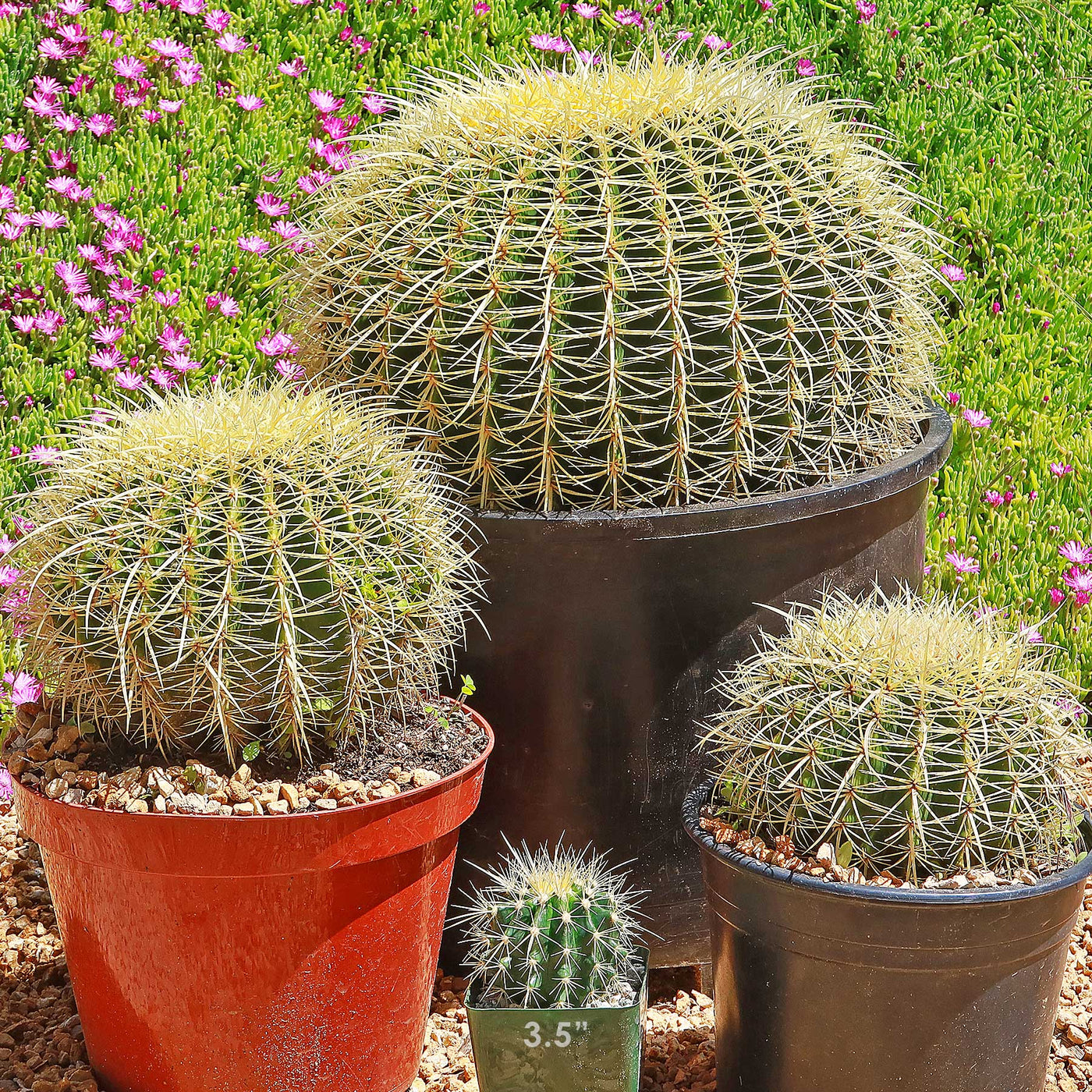
Native to the arid regions of central Mexico, Echinocactus grusonii, known as the golden barrel cactus, is a very popular choice among plant enthusiasts; and it is used a lot in high-end desert landscapes and rock gardens. The golden barrel cactus is a vibrant member of the Echinocactus genus and is also known as a mother-in-law's seat or golden ball cactus. Its distinctive round shape, resembling a barrel, gives it its common name.
The golden barrel cactus has a slow growth rate but can eventually reach an impressive size of around 3 feet in diameter, making it a striking focal point in any garden or indoor space.
And it's not just tough on the outside; it has an impressive lifespan of 100 years if given optimal conditions.
The golden barrel cactus flower rarely blooms indoors, which can take up to 15 years, and produces vibrant orange or yellow flowers that bloom from the top of the cactus.
These flowers are typically tubular and can attract pollinators such as bees and birds. The blooming period is usually in late spring or early summer, and the flowers can last for several weeks.
Key Facts About Golden Barrel Cactus
- The golden barrel cactus can live for over a hundred years, with some reaching 150 years or more.
- This cactus gets its name from the golden-yellow spines that cover its spherical body.
- It can grow to be quite large, reaching heights of up to 3 feet and 2 feet wide.
- The golden barrel cactus is known for its ability to withstand extreme desert conditions, including high temperatures and drought.
- It produces vibrant yellow flowers that bloom in the summer after 15 years, adding a splash of color to its appearance.
- This cactus is a popular choice for desert landscapes, rock gardens, and xeriscaping because of its low maintenance requirements.
At the top of the cylindrical cactus, they form a discreet ring of beautiful spines. Over time, these cacti can take on an oblong shape and tend to lean towards the south. This leaning helps the spines better protect the cactus body from the intense desert sun. It's nature's way of providing shade and ensuring the cactus stays healthy and protected.
The Golden Barrel Cactus is a striking and popular choice for rock gardens, xeriscapes, and arid landscapes, where it serves as a bold focal point. Known for its spherical, ribbed structure covered in golden-yellow spines, this cactus provides both visual interest and texture, making it a standout in dry, minimalist landscapes.
The globular growth habit of golden barrel cactus contrasts beautifully with other succulents, ornamental rocks, and drought-tolerant plants, creating a natural, architectural look that complements desert-themed or low-water gardens. Because of its resilience to heat and low water requirements, the Golden Barrel Cactus is ideal for water-conscious gardening, where it adds structure and a vibrant golden hue that enhances the landscape's aesthetic appeal year-round.
When and How to Water Your Golden Barrel Cactus
Watering your barrel cactus in a new planting container is important, especially during its first season. These cacti need infrequent watering to keep the soil moist but not too wet. Make sure you check the soil before watering, as these cacti do not like to be waterlogged or soggy.
When the cactus is dormant in the winter, water it less, soaking it completely. Despite the right watering frequency, cactus roots can be damaged if the soil is not fast draining.
Light Requirements - Where to Place Your Golden Barrel Cactus
A potted indoor golden barrel cactus requires four hours of direct sunlight, which can be achieved by locating it on a sunny south- or west-facing windowsill. However, be cautious of intense, direct sunlight, as it can scorch the cactus. If you notice the cactus becoming pale or yellowish, it may be an indication that it's receiving too much light. Adjust its placement accordingly to provide the right balance.
If you are growing your barrel cactus outdoors, this cactus is a sun-loving plant and enjoys full sunlight. It thrives in bright, direct sunlight for most of the day.
If you're planning to grow it in your garden or landscape, choose a spot that receives at least six hours of direct sunlight daily. The more sunlight it receives, the better it will flourish.
If they don't receive enough sun exposure, their stems may grow leggy and become paler, and their spines will shorten, so make your Echinocactus grusonii happy and give it plenty of light.
Optimal Soil & Fertilizer Needs
Like many other cacti, golden barrel cactus plants can't avoid excess moisture and favor sandy, well-drained soil because these Echinocactus grusonii plants can promote root and stem rot. Planet Desert specializes in cactus, and we have a Go to soil cactus mix blend 1 gal 4 qt cacti succulent dirt compost growing mediaspecialized cactus potting mix that will help your golden barrel cactus thrive. As an alternative, you can create your customized potting mix by combining equal portions of perlite, coarse sand, and potting soil.
Organic or 100% natural fertilizers (low nitrogen, and high potassium fertilizer) are the best choices. They last longer and keep your soil alive by adding other beneficial compounds and microbes that encourage golden barrel cactus health and nutrient absorption. So, skip those harsh chemicals and give your Echinocactus grusonii some love with a good natural fertilizer, once a year in the spring.
Hardiness Zones & More
When it comes to indoor temperature, the Golden Barrel Cactus prefers a warm and dry environment. It thrives in temperatures between 70 to 90 degrees Fahrenheit. It can tolerate slightly cooler temperatures during the winter months, but it's best to keep it away from drafts and cold windows. As for humidity, this cactus is native to arid regions and prefers low humidity levels. So, it's important to avoid placing it in areas with high humidity, such as bathrooms or kitchens.
For outdoor cultivation, this cactus is typically hardy in USDA zones 9 to 11. These zones generally have mild winters and hot summers, with temperatures ranging from 20 to 50 degrees Fahrenheit in the winter and above 90 degrees Fahrenheit in the summer.
If you live in a colder climate outside of these zones, it's best to grow the Golden Barrel Cactus in containers that can be moved indoors during the winter months. This will protect it from freezing temperatures and ensure its survival.
In their native habitat, the Echinocactus grusonii needs adequate ventilation but not humidity or frost. So, avoid areas with extremely humid climates or low, "airless" areas of your home.
Wildlife - Golden Barrel Cactus Attracts the Following Friendly Pollinators
The Golden Barrel Cactus is a captivating plant that attracts various pollinators and beneficial insects. In its native habitat, the vibrant yellow flowers of this cactus, which bloom in spring or early summer, draw bees and other pollinating insects essential for its reproduction.
The Golden Barrel Cactus is generally considered mildly toxic to humans and pets. Its spines can cause injury if touched or mishandled, posing a slight risk to pets and people unfamiliar with its sharp exterior. The spines can lead to skin irritation or punctures, making it important to handle this cactus with care.
How to Propagate Your Golden Barrel Cactus
To propagate your golden barrel cactus, you can carefully remove offsets or pups that have formed at the base of the plant. Gently separate them from the mother plant and allow them to callous over for a few days before planting them in well-draining soil. Water sparingly until they establish roots and continue to care for them as you would a mature cactus. Additionally, Propagating the golden barrel cactus can also done through seeds. With some patience and care, you can nurture these seeds into new golden barrel cactus plants.
Final Thoughts
Overall, the golden barrel cactus is a stunning succulent with a round shape and pale green stem with golden-yellow spines. This cactus loves bright sunlight and well-draining soil, making it a perfect choice for rock gardens and desert landscapes. Echinocactus are fantastic plants for adding interest and excitement to the garden, and the golden barrel cactus is no exception, with her gorgeous yellow flowers that are sure to stand out! A well-drained potting mix with drainage holes in the potting container will help you maintain temperatures and prevent too much moisture.
Just remember to handle your Echinocactus grusonii, - golden barrel cactus plant - with care because those spines can be sharp!
Shipping Notes
- Free Standard Shipping on $100+ Orders to the USA.
- Except Preorder products are shipped in 48 hours.
- Delivery to the USA:
- Standard Shipping : 3-10 business days
- If time is of the essence, please consider selecting expedited delivery for faster service.
Exchange/Return Notes
- We offer a 30-day return/exchange service after receiving.
- Final sale items are not eligible for returns or exchanges.
- To process your return/exchange, please contact us at [email protected]
- Please click here for more details>>> Return & Exchange Policy