Pay in installments of $6.67 with
 ,
,
 and
and

Shipping Estimate
USA
- USA
- CAN
- USA
- CAN
Ships within 48 hours · Estimated delivery Oct 20 - Oct 25
 Promo Codes Available:
For Your Every Summer RSVP, with Code: SUMMER15
Description
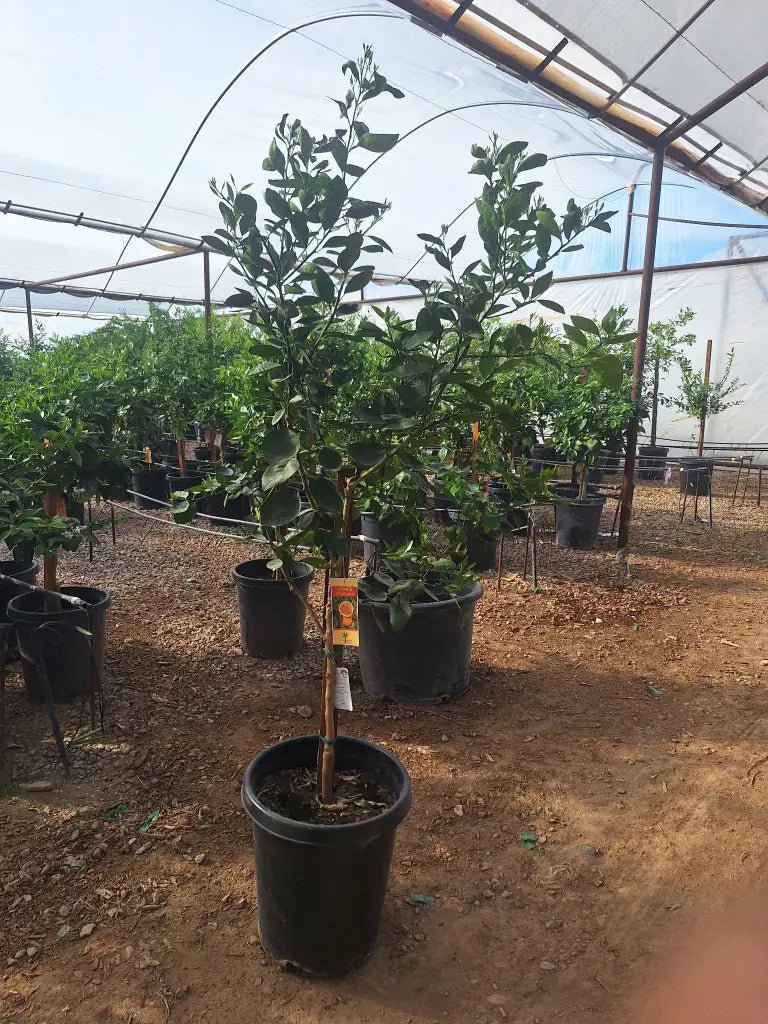
orange tree pot plant Navel Orange Tree Phoenix, AZ | Citrus sinensisSweet Seedless Oranges from Your Own Phoenix Backyard Navel Orange (Citrus sinensis 'Navel') is the classic backyard orange tree for the Phoenix Valley. Famous for its sweet, seedless fruit with the signature navel formation, this evergreen tree produces abundantly in Phoenix's warm climate while providing year round shade, fragrant spring blossoms, and ornamental beauty. The large, easy to peel oranges are perfect for eating fresh, juicing, and
Sweet Seedless Oranges from Your Own Phoenix Backyard
Navel Orange (Citrus sinensis 'Navel') is the classic backyard orange tree for the Phoenix Valley. Famous for its sweet, seedless fruit with the signature navel formation, this evergreen tree produces abundantly in Phoenix's warm climate while providing year-round shade, fragrant spring blossoms, and ornamental beauty. The large, easy-to-peel oranges are perfect for eating fresh, juicing, and sharing with neighbors. Whether you're planting a family fruit tree in Scottsdale, starting a backyard citrus grove in Mesa, or adding an ornamental edible to your Chandler landscape — the Navel Orange is a Phoenix favorite for good reason.
Navel Orange Tree Plant Details
| Attribute | Detail |
|---|---|
| Scientific Name | Citrus sinensis 'Navel' |
| Common Names | Navel Orange, Washington Navel Orange |
| Mature Height | 10–20 feet |
| Mature Width | 10–15 feet |
| Growth Rate | Moderate — 1–2 feet per year in Phoenix |
| Sun | Full sun (6+ hrs). South- or west-facing exposure ideal. |
| Water | Moderate. Regular deep watering needed for optimal fruit production. |
| USDA Zones | 9–11 (Phoenix is Zone 9b–10a) |
| Soil | Well-draining preferred. Amend Arizona caliche soils with compost. |
| Foliage | Evergreen — glossy dark green leaves year-round |
| Fruit | Large sweet seedless oranges, harvest December–March |
Navel Orange Uses in Phoenix Landscapes
Backyard Fruit Production
A mature Navel Orange tree in Phoenix can produce 100–200+ pounds of fruit per season. The harvest window runs from December through March, giving you months of fresh-picked oranges for eating, juicing, and gifting. Plant in a sunny spot with good air circulation for the healthiest tree and best fruit quality. The fruit is large, sweet, and seedless — the gold standard for eating oranges.
Shade & Ornamental Tree
Beyond fruit, the Navel Orange provides valuable evergreen shade in Phoenix's hot climate. The dense canopy, fragrant white spring blossoms, and colorful winter fruit make it one of the most ornamental trees in any landscape. Use it as a specimen shade tree near patios, outdoor dining areas, or play spaces in Gilbert, Tempe, and Peoria yards.
Backyard Citrus Grove
Pair your Navel Orange with other Three Timbers citrus trees — Meyer Lemon, Lisbon Lemon, and Mexican Lime — for a productive home orchard that provides fresh fruit year-round. Space trees 12–15 feet apart for full-size specimens, or 8–10 feet for a denser grove effect. A mixed citrus grove is one of the best investments you can make in a Phoenix backyard.
Best Time to Plant Navel Orange in Phoenix
Spring (March–April) is the ideal planting window. The warming temperatures encourage rapid establishment and new growth before the intense summer heat. Fall (October–November) is the second-best option, giving roots time to establish before winter dormancy. Avoid planting in summer or during cold winter months.
How to Plant Navel Orange
- Dig wide, not deep — hole should be 2–3x the root ball width, same depth. Keep the graft union 2–4 inches above soil level.
- Check for caliche — break through any hardpan layer completely. Citrus demands excellent drainage.
- Backfill with amended soil — mix 30% compost with native soil for richer growing conditions.
- Spacing — 12–15 feet from structures or other trees for full canopy development.
- Water basin — build a wide 4–5 inch soil ring to direct deep watering to the root zone.
- Mulch — 3–4 inches of bark mulch, keeping it 6 inches from the trunk to prevent rot.
Watering Navel Orange in Phoenix
First Year Watering Schedule
Weeks 1–2: Every 2–3 days, deep soak for 30+ minutes. Month 1–3: Every 3–4 days. Month 3–12: Every 5–7 days. After Year 1: Every 7–10 days in summer; every 14–21 days in winter. Consistent moisture during fruit development (October–February) is critical for sweet, juicy oranges.
Drip Irrigation
Place 3–4 emitters (2 GPH each) in a ring around the tree, expanding outward as it grows. Mature trees need a wide irrigation zone that matches the drip line. Deep, infrequent watering produces stronger root systems and better fruit quality.
When do Navel Oranges ripen in Phoenix?
Navel Oranges typically ripen from December through March in Phoenix. The fruit develops best during cool winter nights and warm days. Leave oranges on the tree until fully sweet — they won't continue ripening after picking.
How long until my Navel Orange tree produces fruit?
Container-grown trees from Three Timbers may produce fruit within 1–2 years of planting. Full production typically develops by year 3–4 as the canopy matures. Patience pays off — a well-established tree produces abundantly for decades.
Is Navel Orange cold hardy in Phoenix?
Navel Orange tolerates temperatures down to about 28°F, making it suitable for most Phoenix Valley locations. Young trees should be protected with frost cloth during hard freeze events. Established trees in protected locations rarely suffer frost damage.
Why are my oranges splitting or dropping?
Fruit split and drop are almost always caused by inconsistent watering. Maintain a regular deep watering schedule, especially during fruit development season (October–February). Sudden heavy irrigation after a dry period causes the fruit to expand faster than the rind, resulting in splits.
You May Also Like
Meyer Lemon — sweet hybrid lemon for a complementary citrus pairing.
Mexican Lime — Key Lime tree for fresh limes alongside your oranges.
Lisbon Lemon — classic tart lemon for a complete citrus grove.
Yellow Bells — bright yellow flowers that create a cheerful backdrop for citrus trees.
Heavenly Bamboo — colorful foliage shrub for the base of citrus plantings.
How Many Navel Orange Trees Do I Need?
The Navel Orange reaches 10 to 15 feet wide at maturity, so it is grown as a single specimen or in spaced orchard rows. For a backyard grove, plant trees 14 feet apart on center to give each canopy room to fill out and stay productive. For a tighter, hedge-style citrus row, 10 feet is the close minimum.
| Row Length | Trees at 14 ft (full canopy) | Trees at 10 ft (dense grove) |
|---|---|---|
| 28 ft | 2 trees | 3 trees |
| 42 ft | 3 trees | 4 trees |
| 56 ft | 4 trees | 6 trees |
| 70 ft | 5 trees | 7 trees |
As a single specimen shade-and-fruit tree, give it 12 to 15 feet of clearance from walls, pools, and other trees so the canopy and root zone develop fully.
Navel Orange Season-by-Season in Phoenix
- Spring (Feb–Apr): Fragrant white blossoms open and perfume the yard, setting the next crop. This is the prime planting window and the start of the main growth flush as nights warm.
- Summer (May–Sep): Heat drives steady canopy growth and sizes up the developing fruit. Keep deep, consistent irrigation through the worst heat and monsoon swings. Young bark can scald, so a trunk wrap or shade on the southwest side helps the first couple of seasons.
- Fall (Oct–Nov): Fruit colors up as nights cool. This is the second-best planting window. Consistent water now prevents late-season splitting.
- Winter (Dec–Jan): Peak harvest of sweet, seedless oranges. The tree holds its glossy evergreen canopy. It tolerates brief dips to about 28°F, but cover young trees with frost cloth on hard-freeze nights and hold off picking until the fruit is fully sweet.
At a Glance
✔ Edible ✔ Evergreen ✔ Heat-Loving (Reflected-Heat Tolerant) ✔ Pollinator-Friendly ✔ Shade-Providing ✔ Low-Maintenance ✔ Cold-Hardy to 28°F
Plant It With
- Meyer Lemon: sweet, compact lemon that ripens alongside your oranges for a year-round citrus supply.
- Mexican Lime: fresh Key limes to round out the home citrus grove.
- Lisbon Lemon: classic tart lemon that pairs the sweet-and-sour range of a complete orchard row.
- AZ Sweet Orange: a second sweet orange to extend the fresh-eating and juicing season.
Is Navel Orange Right for Your Yard?
Navel Orange thrives in full Phoenix sun with deep, regular water and well-draining soil amended through caliche. Give it 12 to 15 feet of open space for the canopy and root zone, and a spot protected from the hardest winter wind. It is not the right pick if you only have deep shade, cannot commit to consistent deep watering during fruit set, or have no way to cover a young tree on a hard-freeze night.
Shipping Notes
- Free Standard Shipping on $100+ Orders to the USA.
- Except Preorder products are shipped in 48 hours.
- Delivery to the USA:
- Standard Shipping : 3-10 business days
- If time is of the essence, please consider selecting expedited delivery for faster service.
Exchange/Return Notes
- We offer a 30-day return/exchange service after receiving.
- Final sale items are not eligible for returns or exchanges.
- To process your return/exchange, please contact us at [email protected]
- Please click here for more details>>> Return & Exchange Policy