Pay in installments of $5.19 with
 ,
,
 and
and

Shipping Estimate
USA
- USA
- CAN
- USA
- CAN
Ships within 48 hours · Estimated delivery Jul 29 - Aug 3
 Promo Codes Available:
For Your Every Summer RSVP, with Code: SUMMER15
Description
devil's horn succulent Shop 'Devil Horns Plant - Crassula nudicaulis' Care and Growing GuideIntroducing the stunning devil horns plant, known as Crassula nudicaulis, which is a vibrant member of the Crassula genus. Native to the Western Cape Province of South Africa, the devil horn's plant is also known as, Crassula devils horns, or Naked Stalked Crassula plant. The Devil's Horns plant gets its name from the unique shape of its leaves, which resemble the horns of a devil or a ram. The spiral arrangement of the fleshy, triangular leaves
Introducing the stunning devil horns plant, known as Crassula nudicaulis, which is a vibrant member of the Crassula genus. Native to the Western Cape Province of South Africa, the devil horn's plant is also known as, Crassula devils horns, or Naked-Stalked Crassula plant.
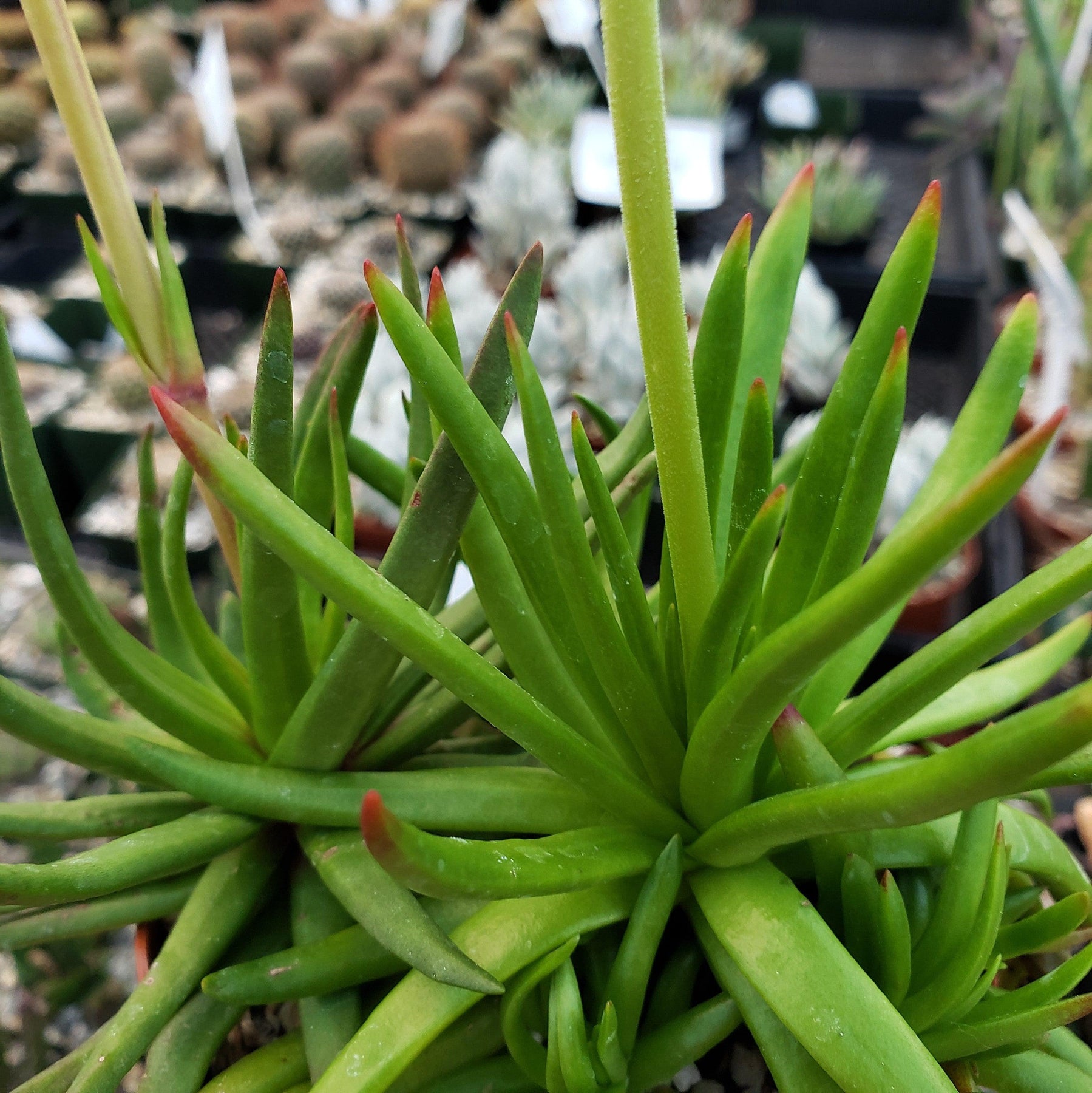
The Devil's Horns plant gets its name from the unique shape of its leaves, which resemble the horns of a devil or a ram. The spiral arrangement of the fleshy, triangular leaves creates a distinctive horn-like appearance, hence the name "Devil's Horns." It can be found growing in rocky areas and cliffs, adapting to the arid and semi-arid conditions of the region.
The Crassula nudicaulis Devil's Horn plant is a unique succulent with long leaves that grow from the center to form a large rosette. When exposed to harsh direct light, the smooth, fleshy, green leaves turn a vivid crimson color. The mature size of Crassula nudicaulis can vary, but on average, it reaches a height of about 8 inches and spreads to about 12 inches.
The devil horn flowers are small, star-shaped, and bloom in clusters. The white-green flowers bloom during the spring and early summer. The delicate flowers add a lovely touch to the plant's overall beauty.
You can propagate Crassula Devil's Horns plants through stem cuttings or leaf cuttings. Simply take a healthy stem or leaf cutting, allow it to callus for a few days, and then place it in well-draining soil. Keep the soil lightly moist until roots develop, and soon you'll have new plants.
Watering Needs
Hailing all the way from South Africa, the devil horns plants are known for their ability to store water in their leaves, stems, or roots, allowing them to withstand periods of drought.
When it comes to watering your plant, it's important to strike the right balance. Overwatering can lead to root rot and other issues, while underwatering can cause your Crassula succulent to become dehydrated. As a general rule of thumb, it's best to water the plant thoroughly but infrequently. This means allowing the soil to dry out completely between waterings.
In the spring, during the growing season, you can water your Devil's Horns plant every 2-3 weeks. Ensure that the soil is completely dry before giving it a good watering. When you do water, make sure to water deeply, allowing the water to penetrate the soil and reach the roots. Avoid getting water on the leaves, as this can lead to rot.
In the summer and fall, during dormant periods the Devil's Horns succulent requires even less water. Reduce the frequency of watering to once a month or even less, as the plant goes into a period of rest. Remember, it's always better to underwater than overwater, as most succulents are more resilient to drought than excess moisture.
Light Requirements
When growing your Devil's Horns plant indoors, it prefers bright, indirect light. Place it near a window where it can receive plenty of bright, filtered sunlight throughout the day. However, be cautious of placing it in direct sunlight, especially during the hottest hours of the day, as this can scorch the leaves. If you notice that the leaves are turning yellow or brown, it might be an indication that the plant is receiving too much direct sunlight.
For outdoor cultivation, this succulent can tolerate more direct sunlight, especially if you live in a region with mild to warm temperatures. It thrives in full sun to partial shade. Find a spot in your garden or patio where it can receive at least 4-6 hours of direct sunlight per day. Just like with indoor plants, be mindful of extremely intense sunlight during the peak hours of the day, as it can still cause leaf burn.
Remember, it's always a good idea to observe your plant and adjust its lighting conditions accordingly. If you notice the leaves stretching or becoming pale, it might be an indication that the plant needs more light. On the other hand, if the leaves start to turn red or brown, it could be a sign of too much direct sunlight. So, finding that sweet spot of bright, indirect light for indoor plants and a balance of direct sunlight and shade for outdoor plants will help your Devil's Horns plant thrive.
Optimal Soil & Fertilizer Needs
When it comes to the soil, the Devil's Horns crassula plant prefers a well-draining soil mix. You can use a combination of regular potting soil and perlite or coarse sand to ensure good drainage. This helps prevent water from sitting around the roots and causing root rot. Instead, make or buy a well-draining potting mix, or ideally use our specialized succulent potting mix that contains 5 natural substrates and mycorrhizae to promote the development of a strong root system that helps your Crassula succulent to thrive.
As for fertilizer, this Crassula plant doesn't require a lot of feeding. Once a year in the spring, you can fertilize your devil horn plant with a balanced (5-10-5), water-soluble NPK fertilizer. Dilute the fertilizer to half the recommended strength and apply it to the soil. Avoid over-fertilizing, as it can lead to excessive growth and weak stems. During the dormant season, you can reduce or stop fertilizing altogether. Remember, less is more when it comes to feeding your Devil's Horns plant.
Hardiness Zones & More
When growing indoors, the Devil's Horn is quite adaptable and can thrive in a range of temperatures. It generally prefers temperatures between 60 to 75 degrees Fahrenheit. It can tolerate slightly cooler temperatures but try to avoid exposing it to extreme cold or frost. As for humidity, this plant is well-suited to average indoor humidity levels, so no need to worry too much about that. Just keep it away from dry drafts or overly dry environments, as it can cause the leaves to dry out.
When it comes to growing the Devil's Horns plant outdoors, your Crassula nudicaulis is typically suited for USDA zones 9 to 11. These zones generally have milder winters and warmer temperatures year-round. If you live in a colder climate, you might want to consider growing it as a houseplant or bringing it indoors during the colder months.
Final Thoughts
Overall, the Devil's Horns plant is a fascinating succulent that captivates with its unique appearance and adaptability. With its spiral arrangement of fleshy, triangular leaves and small, star-shaped flowers, it adds a touch of beauty to any plant collection. Native to the Western Cape Province of South Africa, this plant thrives in arid and semi-arid conditions. Propagation is relatively easy through stem or leaf cuttings. You can grow this outdoors in USDA zones 9-11. For better growth use well-drained soil and bright sunlight. We think succulent lovers will also love this plant – order your very own, Crassula nudicaulis Devil's horns horns for sale today and start enjoying its beauty in no time!
Shipping Notes
- Free Standard Shipping on $100+ Orders to the USA.
- Except Preorder products are shipped in 48 hours.
- Delivery to the USA:
- Standard Shipping : 3-10 business days
- If time is of the essence, please consider selecting expedited delivery for faster service.
Exchange/Return Notes
- We offer a 30-day return/exchange service after receiving.
- Final sale items are not eligible for returns or exchanges.
- To process your return/exchange, please contact us at [email protected]
- Please click here for more details>>> Return & Exchange Policy