Pay in installments of $6.55 with
 ,
,
 and
and

Shipping Estimate
USA
- USA
- CAN
- USA
- CAN
Ships within 48 hours · Estimated delivery Sep 16 - Sep 21
 Promo Codes Available:
For Your Every Summer RSVP, with Code: SUMMER15
Description
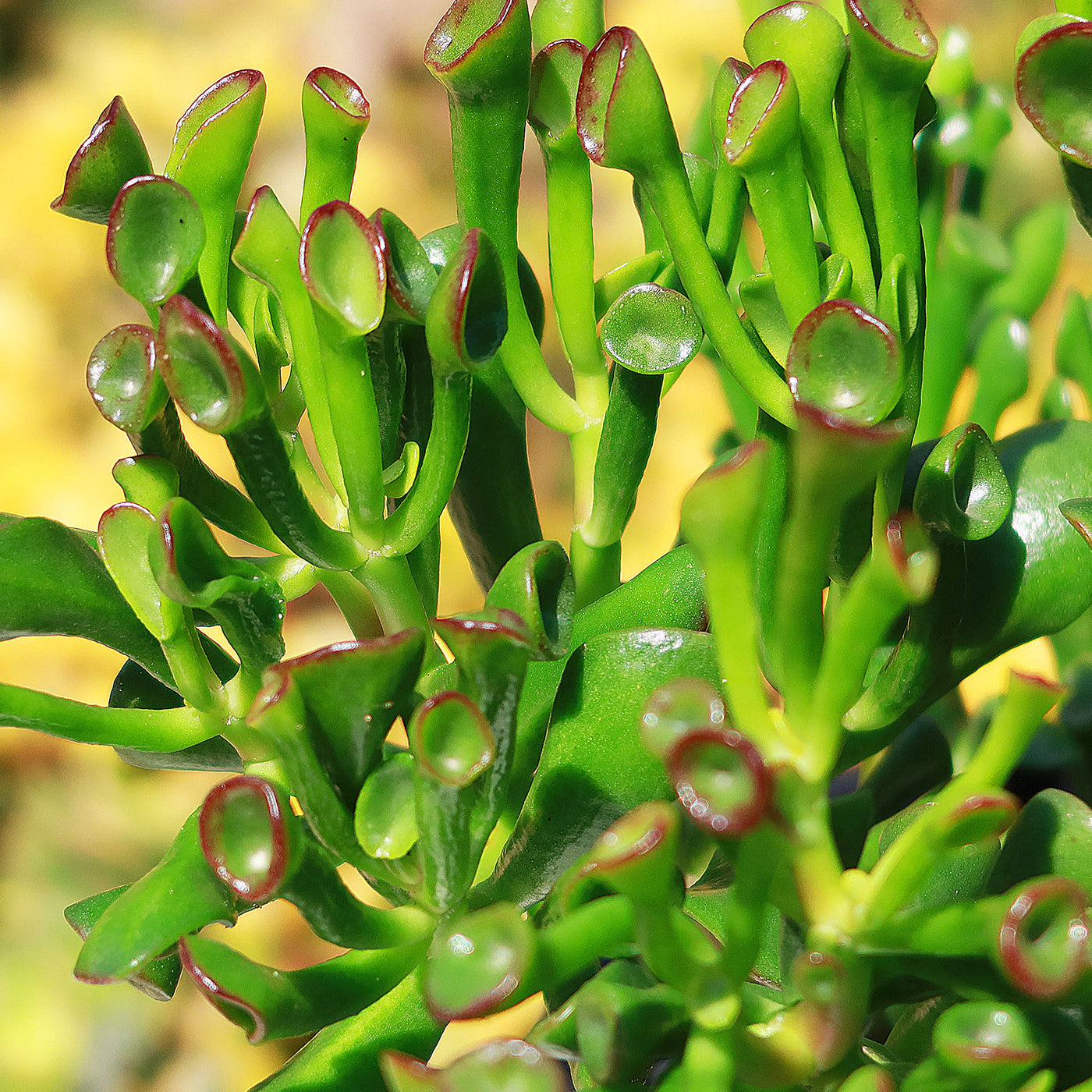
succulent plant that looks like fingers ET's Fingers-Shrek Ears 'Crassula ovata Gollum Jade'The Gollum jade plant is also known as "ET's Fingers" because its fleshy leaves resemble the alien character's long, pointed fingers in the 1982 film "E. T. the Extra Terrestrial." The tips of the plants also look like the ears of the popular animated character Shrek, hence the other popular name, Shrek Ears. The plant's distinctive appearance has made it a favorite among kids who love the common names and like to look at it and touch it. This Gollum
The Gollum jade plant is also known as "ET's Fingers" because its fleshy leaves resemble the alien character's long, pointed fingers in the 1982 film "E.T. the Extra-Terrestrial." The tips of the plants also look like the ears of the popular animated character Shrek, hence the other popular name, Shrek Ears.
The plant's distinctive appearance has made it a favorite among kids who love the common names and like to look at it and touch it. This Gollum jade plant is also easy to care for, which may make it a good choice for families.
Native to South Africa and Mozambique, these evergreen-flowering golumm jade plants can grow up to 3 feet tall and 2 feet wide and are sure to be the talk of your garden or indoor space.
When exposed to bright light, it produces green finger-like leaves with red circles at the tips.
The flowers of your plant bloom during the late spring to early winter, with small, pinkish-white, star-shaped blooms.
The Gollum jade or ET's fingers succulent plant is also considered a symbol of good luck in Chinese culture; that's why sometimes it is also referred to as the money plant.
Taking care of this plant doesn't require any lucky charms. In fact, it's super low-maintenance, easy to keep alive, and pretty.
Crassula ovata ‘Gollum Jade’ is often confused with Crassula ovata ‘Hobbit Jade'Go to jade hobbit plant crassula ovata hobbit due to their similarities and both being named after characters from JRR Tolkien’s stories.
When and How to Water Your Gollum jade
Gollum jade plants are extremly drought tolerant requiring minimal watering. It's important to only water them when the soil has dried out, as overwatering can cause root rot. Succulents, including these ET's fingers, are prone to rot if their roots are constantly submerged in moisture.
The Gollum jade should be watered 10-14 days in growing season and reduce reduce watering to once every 3-4 weeks during the dormant season, with very light moisture.
During the growing season, control watering to allow the soil to dry out completely between waterings to prevent root rot. Good airflow and well-draining soil are also essential to keep the plant healthy and resilient throughout its active growth period.
During the dormant season, reduce watering since excess moisture can easily lead to root rot. Fertilizing is not necessary during this time, as the plant is not actively growing. It is best to keep it in a bright location with indirect sunlight and protect it from cold drafts or temperatures below 10°C, as the plant is sensitive to frost. Keeping conditions stable will help it rest properly and prepare for healthier growth in the next season.
Light Requirements - Where to Place Your Golumm Jade Plant
When growing indoors, providing enough light for these desert ET's fingers is one of the most important aspects of their care.
Place your jade plant directly in front of a west- or south-facing window where it can receive about 4 to 6 hours of direct sunlight daily.
Rotate the plant occasionally to help it grow evenly and keep its tubular leaves compact and well-shaped.
When growing outdoors, it thrives best in a location where it can receive about 4 to 6 hours of direct sunlight daily, with some protection from intense midday sun to prevent leaf burn.
A spot with partial shade during the hottest part of the day works well, especially in warmer climates.
If grown in pots, you can move it to a sheltered area during bad weather. With the right balance of sunlight, your Gollum jade can develop stronger stems and more vibrant leaf color.
Pro Tip
- If they don't receive enough light, their stems may grow leggy and become pale green or yellow, so make your succulents happy and give them plenty of light.
- If you notice the Gollum jade ET's fingers leaves are turning yellow or brown, it may be a sign that the plant is getting too much direct sunlight.
Optimal Soil & Fertilizer Needs
The Gollum jade prefers a light, airy, and well-draining soil that is slightly acidic, with a pH between 5.6 and 6.5. Like most succulents, it does best in soil that dries out completely between waterings. A sandy, loose texture is ideal, similar to what you would find in desert conditions. Soil that stays wet for too long can harm the plant, leading to bacterial and fungal rot.
You can also make your own mix by combining equal parts perlite, coarse sand, and a good-quality potting soil. This blend helps improve drainage while still providing enough nutrients. You can also use our specialized succulents potting mix that includes organic mycorrhizae – perfect for promoting healthy roots and happy plants.
Gollum jade is not a heavy feeder, but it can benefit from light fertilizing during its active growing season. A balanced fertilizer, such as a 5-10-5 NPK formula, works well. Apply it once during spring to support healthy growth. Avoid fertilizing during the dormant months in fall and winter, as the plant is resting and does not need extra nutrients.
Hardiness Zones & More
In the United States, this ET's fingers plant is mostly an indoor plant, but if you live in Southern Florida or Hawaii, then you can cultivate it outdoors in USDA zones 9-12.
They prefer constant temperatures above 70°F and can tolerate triple digits in the summer, so don't worry if your succulent gets too hot.
They cannot handle frost, cold, or freezing temperatures, so make sure it doesn't get below 45°F in its environment. It can be grown as a houseplant in colder climates. ET's fingers prefers average to low humidity environments. These plants are adapted to arid conditions and have thick, fleshy leaves that store water.
So, you don't need to worry too much about providing extra humidity for them. Just make sure the air isn't excessively dry, especially during winter months when indoor heating can reduce humidity levels.
How to Grow Indoors as a Houseplant
Your ET's Fingers plant will do best when placed directly in front of a south or west facing window where it can receive around four to six hours of direct sunlight each day. Make sure to let the soil dry out completely before watering again, and avoid leaving the pot sitting in water since this can quickly lead to root rot.
Keep it in a room with average temperatures between 60°F and 75°F for healthy growth. Use a fast draining succulent mix to keep the roots dry and well aerated, and choose a pot with drainage holes so excess water can escape and the soil can dry faster.
Wildlife - Golumm Jade Flowers Attract the Following Friendly Pollinators
The Golumm Jade can attract friendly pollinators such as bees, butterflies, hummingbirds, and other beneficial insects. These pollinators play a crucial role in the ecosystem by aiding in the reproduction of plants and ensuring biodiversity.
According to ASPCA, the Crassula ovata Gollum Jade is considered mildly toxic to humans or pets. It's always a good idea to practice caution and keep plants out of reach of curious pets or small children.
How to Propagate Your Gollum Jade - ET's Fingers
You can propagate your Gollum jade (Et's Fingers) by stem cuttings. After cutting the stem, place it in a warm, shaded, and well ventilated area for about 2 to 5 days.
Once ready, plant the stem cuttings directly into a pot filled with a fast draining succulent or cactus mix. Keep the soil lightly moist but not soggy by misting or watering every few days until the cuttings begin to establish roots. Place the plant in bright, indirect light and avoid direct sunlight at this stage to prevent sunburn.
Key Takeaways
- Golumm Jade is known for its tubular, finger like leaves with red tips that resemble ET’s fingers or Shrek’s ears, making it a fun and eye catching plant for any space.
- It is very low maintenance and easy to care for, making it a great choice for beginners or busy plant owners who want a plant that does not require constant attention to stay healthy.
- It needs minimal watering and can go for weeks without care, as it stores water in its leaves, making it ideal for those who sometimes forget to water their plants.
- Often called a money plant, it is believed to attract good fortune and positive energy, which makes it a meaningful gift for friends, family, or even as a lucky addition to your own home.
- It develops vibrant green leaves with red accents under bright light and can produce delicate pinkish-white flowers, adding extra visual appeal.
Final Thoughts
Overall, the ET's Fingers or Shrek ears (Crassula ovata 'Gollum' Jade) is a unique and fascinating succulent that captures attention with its unusual finger-like leaves. This plant is a cultivar of the popular Jade Plant, known for its resilience and easy care. The ET's Fingers variety features tubular, elongated leaves with a greenish hue and red tips, resembling the fingers of the iconic extraterrestrial character. It thrives in bright, indirect light and prefers well-draining soil. Like other succulents, it has low water requirements and should be watered sparingly to prevent overwatering.
Be sure to add this unique plant with the tips of the tubular leaves that look like golumm jade to your home or garden and enjoy its low maintenance care while admiring its impressive display year after year.
Shipping Notes
- Free Standard Shipping on $100+ Orders to the USA.
- Except Preorder products are shipped in 48 hours.
- Delivery to the USA:
- Standard Shipping : 3-10 business days
- If time is of the essence, please consider selecting expedited delivery for faster service.
Exchange/Return Notes
- We offer a 30-day return/exchange service after receiving.
- Final sale items are not eligible for returns or exchanges.
- To process your return/exchange, please contact us at [email protected]
- Please click here for more details>>> Return & Exchange Policy