SKU: 85062542994
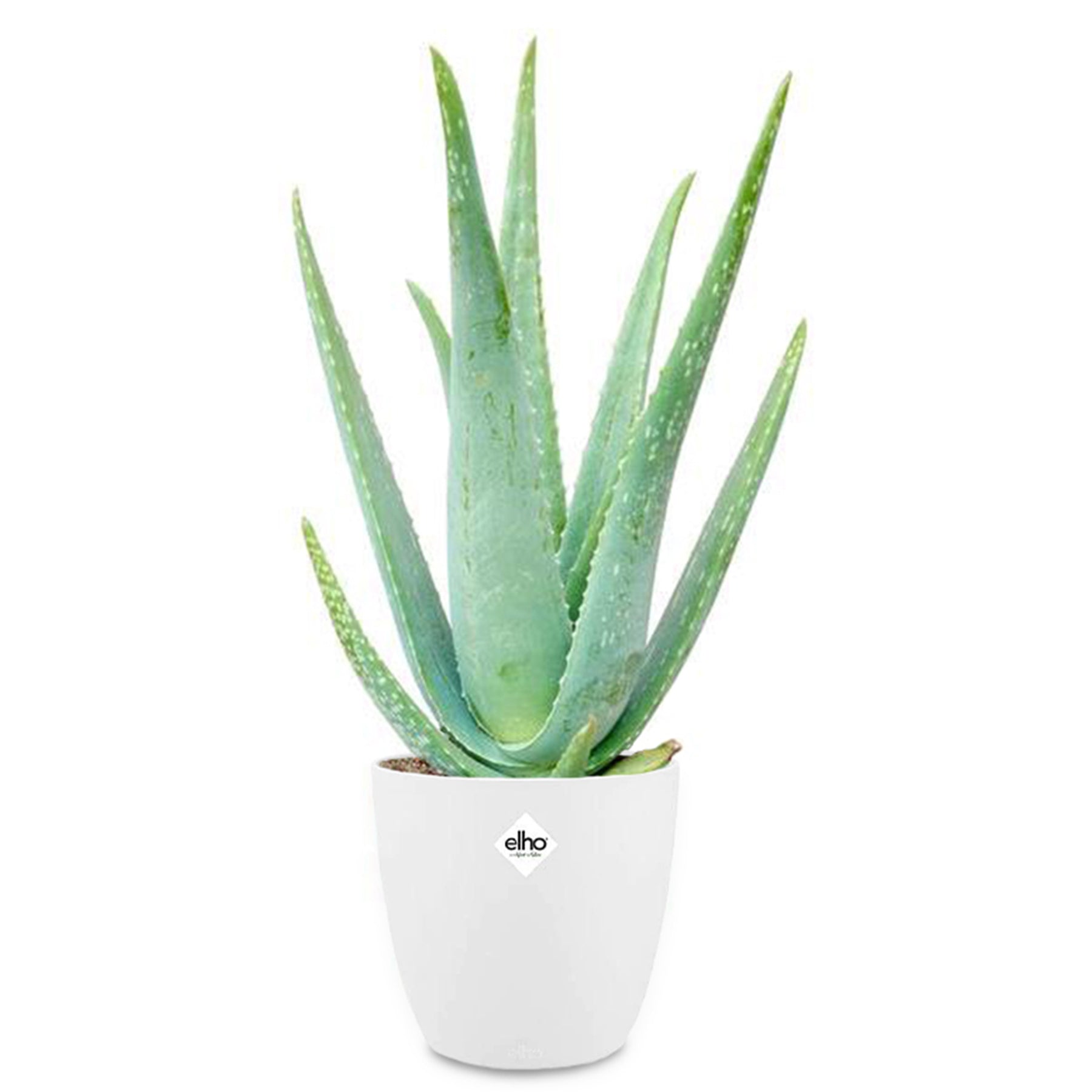
planter aloe vera en pleine terre

planter aloe vera en pleine terre Aloe vera et son cache-pot blanc ELHO

Sale price$21.68 Regular price$24.09
Save 10%

Pay in installments of $6.02 with ShopPay, AfterPay and Klarna

Shipping Estimate
USA
  • USA
  • CAN

Ships within 48 hours · Estimated delivery Sep 16 - Sep 21

Promo Codes Available:

For Your Every Summer RSVP, with Code: SUMMER15

Description

planter aloe vera en pleine terre Aloe vera et son cache-pot blanc ELHOAloe vera: Un lixir de Vie L'Aloe vera, emblme des plantes intrieures, se dmarque par son allure sculpturale et ses multiples vertus. Leurs feuilles robustes, vritables rservoirs d'un gel prcieux, offrent des proprits bienfaisantes reconnues travers les ges. Ces Aloe veras, en plus d'embellir nos espaces, purifient l'air ambiant et s'intgrent harmonieusement tout dcor. Leur entretien facile en fait un choix privilgi pour embellir et cultiver une

Aloe vera: Un Élixir de Vie

L'Aloe vera, emblème des plantes intérieures, se démarque par son allure sculpturale et ses multiples vertus. Leurs feuilles robustes, véritables réservoirs d'un gel précieux, offrent des propriétés bienfaisantes reconnues à travers les âges. Ces Aloe veras, en plus d'embellir nos espaces, purifient l'air ambiant et s'intègrent harmonieusement à tout décor. Leur entretien facile en fait un choix privilégié pour embellir et cultiver une atmosphère saine et sereine. Adopter l'Aloe vera, c'est opter pour une alliance parfaite entre élégance naturelle et bénéfices pratiques au quotidien.

L'Aloe vera, cette plante majestueuse, apporte une touche de beauté et de fonctionnalité à tout espace. Avec ses feuilles effilées, charnues et peu épineuses, elle s'adapte facilement à différents environnements. Choisissez-la pour découvrir tous ses atouts qui a su traverser les siècles pour devenir un incontournable dans le monde de la botanique.

Description d’Aloe barbadensis

L'Aloe vera, également connue sous le nom d'Aloe barbadensis, peut atteindre une hauteur impressionnante de 1 à 1,5 mètres. Cette beauté solaire s'épanouit pleinement au soleil, offrant une silhouette sculpturale à votre espace de vie. Peu difficile, elle s'adapte à presque tous les sols, sauf les calcaires et trop humides. Les experts Willemse vous conseillent de considérer cette plante comme une compagne idéale qui demande juste un peu d'attention. Ses feuilles charnues et succulentes sont recouvertes d'une peau verte brillante. De plus, elles sont bordées de dents épineuses qui lui confèrent un aspect unique et fascinant.

Plantation d’Aloe vera

Pour assurer la croissance et l'épanouissement de votre Aloe vera, choisissez un pot spacieux avec un bon drainage. Les spécialistes Willemse vous préconisent de préparer un mélange de terreau bien drainé et de sable. Cela crée un environnement propice à la croissance de cette plante succulente. Lors de la transplantation, manipulez délicatement les racines pour éviter tout dommage. Une fois plantée, placez-la dans un endroit ensoleillé où elle pourra profiter pleinement de la lumière du soleil. Avec les bons soins et l'attention appropriée, votre Aloe vera sera prêt à embellir votre espace de vie avec ses feuilles gracieuses et sa beauté naturelle.

Entretien d’Aloe

En été, gardez un œil espiègle sur l'humidité du sol et arrosez-la régulièrement, mais évitez les excès d'eau comme un enfant avec trop de bonbons. En hiver, les experts Willemse vous suggèrent de réduire les arrosages pour éviter tout risque de pourriture racinaire. Veillez également à protéger la plante des températures froides en la plaçant dans un endroit abrité ou en la rentrant à l'intérieur, loin des courants d'air. Pour maintenir sa beauté, pensez à retirer régulièrement les feuilles mortes ou abîmées.

Les associations possibles

L'Aloe vera, cette plante succulente, se marie parfaitement avec d'autres plantes succulentes et cactus pour créer des arrangements spectaculaires. Pour créer un jardin ou un espace de vie dynamique et harmonieux, associez-la à des plantes aux formes et aux textures variées. Essayez par exemple les Echeveria, les Sempervivum ou les Sedum.

Bon à savoir

L'Aloe vera, une plante aux origines fascinantes, tire son nom du mot arabe "alloeh" signifiant "substance amère" et du mot latin "vera" signifiant "véritable". Cette plante succulente a été utilisée depuis des siècles pour ses propriétés médicinales et cosmétiques. Les Égyptiens, les Grecs et les Romains l'utilisaient déjà pour soigner les brûlures et les plaies. Aujourd'hui encore, son gel est largement utilisé dans l'industrie cosmétique pour ses vertus apaisantes et hydratantes. Avec son histoire riche et ses multiples bienfaits, l'Aloe vera reste une plante incontournable dans le monde de la botanique. Savez-vous que ses feuilles peuvent être utilisées pour faire de délicieux jus rafraîchissants ? Laissez-vous surprendre par tous les secrets de cette plante fascinante.

Shipping Notes
  • Free Standard Shipping on $100+ Orders to the USA.
  • Except Preorder products are shipped in 48 hours.
  • Delivery to the USA:
  1. Standard Shipping : 3-10 business days
  • If time is of the essence, please consider selecting expedited delivery for faster service.
Exchange/Return Notes
  • We offer a 30-day return/exchange service after receiving.
  • Final sale items are not eligible for returns or exchanges.
  • To process your return/exchange, please contact us at [email protected]
  • Please click here for more details>>> Return & Exchange Policy
SKU: 85062542994

Discover Niche Categories That Outsell planter aloe vera en pleine terre

Top-Converting Item to Boost Your Average Order

4.1 ★★★★★
Based on 7 reviews
Sort
Highest Rating
Newest First
Oldest First
Product Reviews
J
Verified Purchase
Jane
Boise, US
★★★★★ 5
Beautiful Journal
Format: Paperback
This journal which includes paintings and quotes from Lilias Trotter is lovely. In fact you may enjoy looking at the pages even more than journaling. Excellent gift for friends.
WAS THIS REVIEW HELPFUL?YesReportShare
Reviewed in the United States on February 7, 2022
M
Verified Purchase
Miriam Dixon
Los Angeles, US
★★★★★ 5
Lilias Trotter is amazing!
Format: Paperback
Lilias Trotter is inspired in her prose and beautiful watercolors. Wonderful!
WAS THIS REVIEW HELPFUL?YesReportShare
Reviewed in the United States on February 27, 2022
D
Darcy W.
Cuba, US
★★★★★ 5
A beautifully crafted invitation to journal
Format: Paperback
Lilias Trotter Legacy’s latest book Beholdings is not so much a text as it is a beautifully crafted invitation. Inspired by the journals and sketches of Lilias Trotter (1853-1928—English missionary to Algeria, artist, writer, and journaler par excellence), biographer Miriam Rockness invites the reader to try their own hand at journaling, using Trotter as a model and guide. Rockness herself is no stranger to journaling, and her Preface to Beholdings enumerates the many benefits that await any reader who is willing to commit to the discipline for a period of time. In the short term, Rockness describes how journaling encourages one to focus, to pay attention, to take the time to behold the beauty in the world before one’s very eyes. Each page following the Preface includes a quote designed to stir the imagination, and an image from Trotter’s journals to illustrate what it means to behold an acorn, a flower petal, a sunrise in the Algerian desert. It is not just to see what is before one’s eyes, but to hold it in the mind’s eye and cherish it. As Simone Weil said, “Attention, taken to its highest degree, is the same thing as prayer. It presupposes faith and love.” It is this kind of attention that Rockness encourages the journaler to cultivate, and it is the kind of attention that Lilias Trotter so artfully illustrates. There is ample space on each page for the journaler, thus inspired, to record his or her observations, musings, sketches, or doodles. In the longer term, Rockness suggests that journaling helps cultivate a sense of proportion and perspective. She describes looking back with her husband over her journals from years before, reliving the moments that might otherwise have been forgotten, and allowing those glimpses in the rear view mirror to inform present day experience. Sometimes one finds that images seen in the rear view mirror really are smaller than they appeared at the time! In addition to being an incitement to journaling, Beholdings is a beautifully produced creation in its own right. Great thought has gone into the selection of the typeface, the texture and feel of the paper, the quality of the images reproduced. This makes Beholdings not only a delight to own, but also an exquisite gift to offer. My advice: buy one for yourself, and another for someone you love.
WAS THIS REVIEW HELPFUL?YesReportShare
Reviewed in the United States on January 16, 2022
W
Verified Purchase
WellBCare
Port Orchard, US
★★★★★ 2
Be clear that it's a blank journal you create, with brief quotes and thumbnail art
Format: Paperback
If one is looking for a personal journal of empty lined pages ~ and a brief Lilias Trotter quote with a thumbnail-size photo of her art on each page then this is for you. I understood it was a book of her journalling with more viewable-size sketches.
WAS THIS REVIEW HELPFUL?YesReportShare
Reviewed in the United States on May 13, 2022
E
Verified Purchase
Eric Balkan
Carnegie, US
★★★★★ 5
When and where economics went wrong
Format: Paperback
This is one of those books that can provide an epiphany to the reader -- but not very many American readers have even heard of it, unfortunately. That could be due to it's being a book primarily about English economic history, with assumptions that the reader is familiar to some extent with things like the Poor Laws and Tory socialism. But I wasn't, and was still able to glean some great insights from the work. That could be because Polanyi is not afraid of repetition. :-) A key insight, and the one that could be summed up as the theme of the book, is Polanyi's realization that prior to about 1830, the market and the economy were considered part of society. That is, economic activity was something that people did along with everything else they did, like engage in social/familial relationships, religious rituals, etc. But with the 1830s came a paradigm shift: the advent of rational capitalism. Now, the market was considered an entity by itself, outside of society. This market entity was viewed as governed by universal laws. Like laws of physics, these market laws were independent of culture, independent of social group, independent of time period, and, in fact, independent of human behavior. While any observer of human nature would say that people often make decisions for emotional reasons -- and modern neurological research shows that virtually every decision we make is a combination of the rational and the emotional -- these market laws assumed only rational behavior on the part of economic actors. Though Polanyi doesn't mention it, it's now easy to see how Alfred Marshall could get carried away with creating a mathematical foundation for microeconomics and how Leon Walras could, reportedly, say that if something couldn't be studied mathematically, it wasn't worth studying. There's no current way to model emotions with math, and so the Ricardian prototype of an emotion-less economics continues into the modern economics of today. These universal market laws frees the market from any social constraints. A number of modern neo-classical economists assert that this makes economics purely amoral, i.e., without regard for any ethics. Therefore any attempts by the public, by politicians, or by workers to add ethics to the market is an interference with pure market workings, which, according to their interpretation of Adam Smith's "invisible hand", will produce optimal results if just left alone. But Smith never said that, and in fact rational capitalism, in elevating greed and selfishness to the status of goals -- see the Ayn Rand work "The Virtue Of Selfishness" -- is, IMO, not amoral at all, but rather is a morality of its own. Anyway, back to Polanyi's insights. Another key one is the concept of a "double movement" in 19th century England. Each move to create a purer market created an ad-hoc counter move. E.g., Ricardian free trade was faced with opposition from workers losing their jobs and local firms losing business Americans can easily think of another example: where the employment of children (eventually) led to laws restricting that employment, simply because human beings have too much of a sympathetic nature to sit still for children losing limbs in the dangerous factories and mines of the time. Polanyi notes that capitalists often blame these anti-capitalist laws on planned activity by socialist anti-market groups, but he says they're actually the result of the recognition by the general public that they don't want to live under a pure market system. Yet another good insight is Polanyi's recognition that market laws treat labor, land, and money as commodities. We can see that today, where neo-classical economists assert that the law of supply and demand should apply to workers as it applies to anything else in the economy. That is, if there's a surplus of workers in one area and a shortage in another, supply and demand dictates the flow of workers from the one area to the other. But a laid-off textile worker in South Carolina is not going to move to China for a job. That's my own example, but Polanyi offers his own from modern English history. The book isn't perfect. Polanyi does have a tendency to generalize, a common failing among authors, IMO. E.g., in discussing the rise of fascism in the 1930s, he's on very shaky ground when he starts talking about the US or about Russian policy intentions during that period. I gave The Great Transformation 5 stars because, even with its faults, the reader will be thinking about Polanyi's insights for some time to come. I am.
WAS THIS REVIEW HELPFUL?YesReportShare
Reviewed in the United States on May 18, 2009

recommand products