SKU: 85173360100
planting gourds from seeds

planting gourds from seeds Corsican Gourd Seeds - For 2026 Planting Hard-Shelled Ornamental

Sale price$20.24 Regular price$22.49
Save 10%

Pay in installments of $5.62 with ShopPay, AfterPay and Klarna

Shipping Estimate
USA
  • USA
  • CAN

Ships within 48 hours · Estimated delivery Jul 18 - Jul 23

Promo Codes Available:

For Your Every Summer RSVP, with Code: SUMMER15

Description

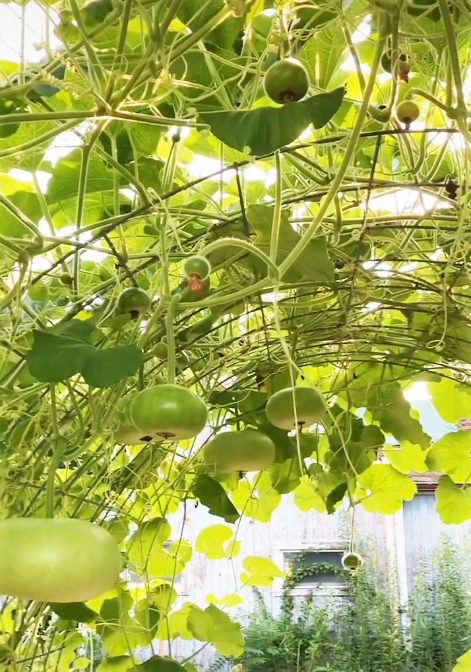
planting gourds from seeds Corsican Gourd Seeds - For 2026 Planting Hard-Shelled OrnamentalCorsican Gourds are a subspecies of the Bottle Gourd, Lagenaria siceria, and are considered one of the earliest domesticated plants, dating back as early as 13,000 BC! They have been used throughout history as kitchen tools, bowls and drinking vessels, musical instruments, jewelry, and a wide variety of crafts. Corsican Gourds are round and flat in shape, growing up to 8 12 inches in diameter and 5 inches tall. These light green gourds dangle on

Corsican Gourds are a subspecies of the Bottle Gourd, Lagenaria siceria, and are considered one of the earliest domesticated plants, dating back as early as 13,000 BC! They have been used throughout history as kitchen tools, bowls and drinking vessels, musical instruments, jewelry, and a wide variety of crafts. Corsican Gourds are round and flat in shape, growing up to 8-12-inches in diameter and 5-inches tall. These light-green gourds dangle on sturdy, long 15-30-foot vines and left to cure. Once cured, they become hard-shelled and tan, and can be carved, drilled, pyro-engraved, cut, and painted like a wood canvas! Use to make unique crafts and decorations, like hand-painted bowls, flower pots, lanterns, birdhouses, canteens, instruments, lamps, and any creation to your imagination!

Also Known As: Corsican Basket Gourd, Corsican Flat Gourd, Hard Shelled Gourd, Green Gourd, Basket Gourd, Canteen Gourd, Bushel Gourd, Cheese Wheel Gourd, Lagenaria Gourd, Calabash Gourd, Bottle Gourd, Ornamental Gourd, Ornamental Pumpkin.

Plant Name: Gourd, Corsican
Latin Name: Lagenaria siceraria
Days to Germinate: 7-14
Days to Harvest: 140
Plant Height: 2 - 3 Feet
Spread: 12 - 16 Feet
Growth Habit: Vining
USDA Zones: 2-11
Lifespan: Annual
Brand: TomorrowSeeds
Sunlight: Full Sun, Partial Shade
Pollination: Heirloom, Open-Pollinated
GMO: No
Fungicide-Treated Seeds*: No
Seeds Packed For**: 2026
*Fungicide-treated seeds protect the seedlings from diseases until they are up and growing. Do not eat treated seeds.
**Seeds are freshly packed for the growing season of the year listed. Seeds are still viable beyond pack date. Store in a cool and dry location such as the refrigerator or basement to best preserve germination rates.


Planting Instructions:

Soil Preparation:

Choose an area with heavy, well-draining soil that receives at least 6 hours of sunlight each day. Remove weeds, large rocks, and litter from the planting area. Leave small weeds and dead grass, they will enrich the soil when turned under. Spade or till the soil 8-12 inches deep. Loosening the soil will help the plant establish strong roots.

Plants grow best in soil with lots of organic matter. You may optionally add fertilizer or organic material such as compost, leaves, or rotted hay to mix into the soil at this point. For small gardens, scatter 2-3 tablespoons of fertilizer evenly and work into the top 2-3 inches of soil for each hill or 2 foot by 2 foot planting area. For larger gardens, scatter 2-3 pounds of a complete fertilizer for each 100 square feet of planting area. Work fertilizer or organic material into the soil and leave the surface smooth.

Form rows of soil beds 4-6 inches high and at least 4 feet apart. This formation of ridges will help with drainage.

Planting:

Gourds grows best in warm weather.

Starting Indoors: For an earlier harvest, you may optionally start planting indoors in containers 3-4 weeks before the last expected frost date in Spring, keeping seedlings at least 70F. Harden off then transplant seedlings outdoors in a sunny location when the soil temperature is above 65F. To transplant seedlings, prepare a transplant hole outdoors in a sunny location. Remove the plants carefully from the pots or flats and set them in the holes, burying some of the stem in the ground. Pack the soil loosely around the plant and leave a slightly sunken area around each plant to hold water. Water the plants after transplanting. Train plants to climb a 6-8 foot trellis or fence as they establish.

Directly Sowing: If directly sowing Gourds outdoors, plant in mid-late spring when the soil warms to at least 70F. Fall planting is not typically recommended but is possible in climates with mild winters (USDA Zones 9-11), or if growing indoors >70F and using supplemental grow lights.

To plant, make holes 1 inch deep and spaced 4 feet apart down the rows of raised beds. Plant 2-3 seeds per hole. If choosing to thin to the strongest plant, determine the strongest and healthiest plant, then remove all other plants, narrowing to a single plant per hole. Cover seeds thinly with soil and water after planting. Train plants to climb a 6-8 foot trellis or fence as they establish.


Planting Depth: 1 inch
Within-Row Spacing: 4 feet
Between-Row Spacing: 3 feet (trellis) or 8 feet (sprawl)


Care During the Season:

Watering: Water the plants deeply, soaking the soil to a depth of 6-8 inches, once to twice a week. If there is no rainfall, water 3-4 times a week. Sandy soils may need to be watered more often than heavy clay soils. Mulching around plants can help retain moisture.

Weeding: Keeping plants weed-free improves production. If plowing or hoeing, do not dig deeper than 1 inch to prevent from cutting the feeder roots.

Fertilizing: Once seedlings are established, 2-3 weeks after germination, you may optionally apply 2 tablespoons of a complete fertilizer around each hole, or 1-2 pounds per 100 square feet, without letting the fertilizer touch the plants. Optionally, continue fertilizing every 3-4 weeks as plants grow, especially after flowering begins. Water plants after fertilizing.

Insecticides: Insecticides may be used to protect plants. Bt-based insecticides and sulfur are organic options that can be used for prevention. Sulfur also has fungicidal properties and helps in controlling many diseases. Before using a pesticide, read the label and follow cautions, warnings and directions.

Diseases: If spots or mold appear, treat plants with an approved fungicide. Neem oil, sulfur, and other fungicides may be used. When using fungicides always follow label directions.

Harvesting:

Harvest ornamental gourds when they reach their full color and the stems start to dry out and turn brown, typically 90-120 days after planting. Use pruning shears or a sharp knife to cut the gourds from the vine, leaving a few inches of stem attached to help with curing and preservation. Harvest before the first hard frost, as cold temperatures can damage them. After harvesting, cure the gourds by placing them in a warm, dry, and well-ventilated area for several weeks until the skin hardens. Gourds are fully dried when they are light in weight and the seeds can be heard rattling inside when the gourd is shaken. Disinfect gourds by gently washing in mild detergent and rinsing thoroughly, or wiping with household disinfectant or rubbing alcohol. Allow gourds to dry and cure for at least 7 days. When fully dried, coat gourds in paste wax or dip in shellac and hang by the stems to preserve.

Shipping Notes
  • Free Standard Shipping on $100+ Orders to the USA.
  • Except Preorder products are shipped in 48 hours.
  • Delivery to the USA:
  1. Standard Shipping : 3-10 business days
  • If time is of the essence, please consider selecting expedited delivery for faster service.
Exchange/Return Notes
  • We offer a 30-day return/exchange service after receiving.
  • Final sale items are not eligible for returns or exchanges.
  • To process your return/exchange, please contact us at [email protected]
  • Please click here for more details>>> Return & Exchange Policy
SKU: 85173360100

Discover Niche Categories That Outsell planting gourds from seeds

Top-Converting Item to Boost Your Average Order

4.7 ★★★★★
Based on 23 reviews
Sort
Highest Rating
Newest First
Oldest First
Product Reviews
D
Verified Purchase
Darrell Criswell
Cuba, US
★★★★★ 5
Excellent book!
Format: Paperback
I think this is a fabulous book. I have always been interested in the causes of the civil war and this book presents an interesting, almost fascinating perspective, which I havent' seen in other books. I have also been reading James Oakes fabulous "Freedom National" and the two books complement each other extremely well. McCurry's book is not of the quality that Oakes book is but not much is. I cannot understand the criticism of her writing. I find her writing to be very good...admittedly some of the sentences are too long and a few ill defined names but this is a very well written book. Although we have all studied some version of much of this material before I find it hard to believe that almost anyone won't be astonished by the magnitude of the task the confederacy was attempting to take and its inherent stupidity or maybe a better description would be craziness of these people. Good book!
WAS THIS REVIEW HELPFUL?YesReportShare
Reviewed in the United States on May 21, 2013
G
Verified Purchase
gloine36
Los Angeles, US
★★★★★ 4
Outstanding exploration of the Confederacy's domestic divisions which helped contribute to its ultimate defeat.
Format: Paperback
This is an extremely powerful interpretation of the political forces at play in the Civil War South. Like it or not, Stephanie McCurry delivers a careful exploration of the domestic forces which were occurring during the Civil War in the Confederacy. The result is illuminating and exposes issues with great depth that have been overlooked in the study of the conflict. Much as domestic issues influenced government policies in the United States during the war as well as constantly in US history, domestic issues played an important role in influencing the actions of the Confederate government. Despite the Confederacy being an attempt to create an elite class system of rule, those without a voice in government found a way to be heard partly through their own actions, but also due to the democratic nature of American government. McCurry, the Christopher H. Browne Distinguished Professor of History at the University of Pennsylvania has definitely opened a can of worms with the release of this book. It was a finalist for the Pulitzer Prize for History in 2011 losing out to Eric Foner’s The Fiery Trial: Abraham Lincoln and American Slavery, itself a great work on the Civil War. Just how important were the actions of women and slaves in the Confederacy during the Civil War? McCurry states that their actions helped drive government policies. Based upon her work as well as others I would say she was correct. Others disagree. I think the thing to consider here is that the Confederacy, despite setting up a government ruled by the elite class of slave owners, was still responsive to the majority of the people inhabiting it. While it was an attempt to create a new nation, it was still required to adhere to some of the principles of the American Revolution. In order to establish the nation, the slave owners were going to have to wage an insurrection and for that they needed the help of the non-slave owners who would compose the majority of its armies. McCurry notes this and shows that this was just the first example of the elites compromising to achieve their goals. No matter what the elites desired, it could only happen with the support of the people in the Confederacy. It would be that support which was critical for the survival of the Confederacy. Without it, the Confederacy had no chance. This is often overlooked. First, many people think the Confederacy enjoyed the support of the people of the slave states. They did not. Of the 15 slave states in 1860, only 11 would join the Confederacy. Of those 11 states, a full third of the white men in them actually opposed secession. From the very beginning, the Confederacy had to deal with an active resistance inside its borders from whites who rejected their authority and slaves who would contribute as little as possible to the Confederate war effort. Later, soldier wives would riot as well as shield deserters. McCurry wrote extensively about these features. Just how much these factors played in the ultimate defeat of the Confederacy is going to be a guess and is open to debate. Did they cause the Confederacy to lose? Not of their own accord, but they did contribute to the defeat of the South over time. There is no doubt that the use of slaves by the Confederate armies was challenged from the very beginning of the war to the final end of it. The facts are undeniable on this matter and McCurry is not the first historian to note this nor will she be the last. The inability of the Confederacy to use its manpower to the maximum capacity was a crippling factor. The issue of slave labor and slave soldiers reflects the deep divisions within the Confederacy and exposes the rotten foundation which the slave owners tried to build their nation upon. All in all I liked the book. As some of the other comments show, the writing style could have been better. She repeated herself in multiple spots. This I think is a reflection of her still emerging writing style. Confederate Reckoning is only her second published book. She has written many articles, but those are different methods of writing compared to books. It takes some time for historians to really find their voice when writing monographs. She does have a Coursera course available, “The History of the Slave South,” which was offered in both 2014 and 2015. I think McCurry does a good job in opening up our eyes to the domestic issues on the Confederate home front. The real question which will be debated is just how much impact they had. I suspect that will be the argument for many.
WAS THIS REVIEW HELPFUL?YesReportShare
Reviewed in the United States on December 13, 2015
L
Verified Purchase
Lydia E. York
Port Orchard, US
★★★★★ 5
Hidden History
Format: Paperback
Dr. McCurry has no dog in this fight. She is Irish by birth, and raised in Canada. However, she brings a fresh perspective to the Confederate enterprise. From its foundation to the bitter end, the life of the Confederate state is documented in the words of the people who lived it. Dr. McCurry includes all the people embraced by the Confederacy, even if they weren't considered "citizens." This includes women and the enslaved people; two thirds of the Confederacy's population. The only battles documented are the struggles of an infant state professing to have perfected the US Constitution that had birthed into war. It didn't all work out as planned. But there are important lessons to be learned that aren't usually taught about the Civil War.
WAS THIS REVIEW HELPFUL?YesReportShare
Reviewed in the United States on September 18, 2020
W
Verified Purchase
White Crow
Bozeman, US
★★★★★ 5
Excellently written behind the scenes history
Format: Paperback
This is one of the best books on the irony of the Civil War. It is a different perspective that focuses on the misjudgement and arrogance of the confederacy. Food wars and manipulation of the slaves they were not part of their ill-conceived strategy to establish a states based totally on inequality. Too bad that today's politicans are trying to repeat the same mistakes. I would highly recommend this book to students of the Civil War and anybody who looks at today's politics and wonders where their southern strategy got its roots.
WAS THIS REVIEW HELPFUL?YesReportShare
Reviewed in the United States on April 21, 2013
V
Verified Purchase
Van
Lexington, US
★★★★★ 5
Women and slave power in the C.S.A.
Format: Paperback
Fascinating, well documented description of the influential roles played by women and slaves in the Confederated States of America. The author demonstrates that the principal focus of the C.S.A. was first and foremost on the preservation of its 'peculiar institution', i.e., slavery, and the how this, along with the increasing politization of women, undermined its viabilty in many ways. The author's style is a bit turgid and academic at times, but well worth the effort to gain a better understanding of the Civil War from the South's perspective.
WAS THIS REVIEW HELPFUL?YesReportShare
Reviewed in the United States on August 6, 2014

recommand products