SKU: 86642973587
can you plant lavender with peppers

can you plant lavender with peppers Lilac Bell Pepper Seeds - For 2026 Planting Lavender To Red California

Sale price$18.77 Regular price$20.85
Save 10%

Pay in installments of $5.21 with ShopPay, AfterPay and Klarna

Shipping Estimate
USA
  • USA
  • CAN

Ships within 48 hours · Estimated delivery Jul 27 - Aug 1

Promo Codes Available:

For Your Every Summer RSVP, with Code: SUMMER15

Description

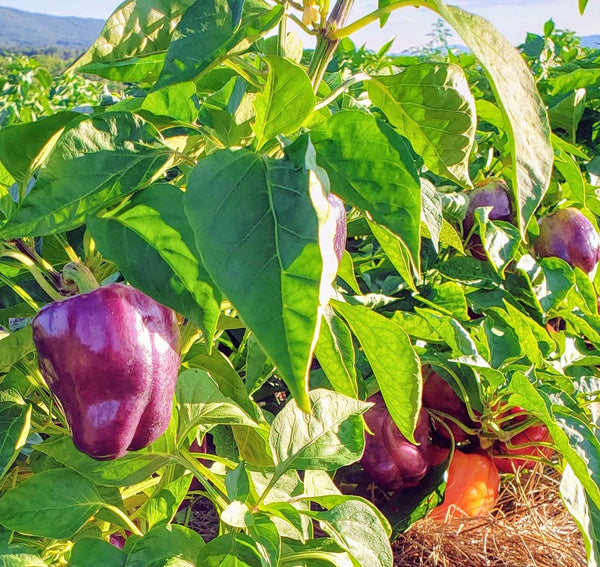
can you plant lavender with peppers Lilac Bell Pepper Seeds - For 2026 Planting Lavender To Red CaliforniaThe Lilac Bell Pepper is an enchanting sweet pepper that starts out with unique lavender purple peppers that mature to red! No more waiting for green peppers to change shades! This compact 2 foot plant is a reliable producer of lovely three to four lobed lilac colored bell peppers that add a touch of elegance to your garden. With their mild and sweet flavor, these bell peppers are a versatile delight in the kitchen. Roast them for a delectable smoky

The Lilac Bell Pepper is an enchanting sweet pepper that starts out with unique lavender-purple peppers that mature to red! No more waiting for green peppers to change shades! This compact 2-foot plant is a reliable producer of lovely three-to-four-lobed lilac-colored bell peppers that add a touch of elegance to your garden. With their mild and sweet flavor, these bell peppers are a versatile delight in the kitchen. Roast them for a delectable smoky flavor, slice them for crisp salads and vegetable trays, or use them as beautiful vessels for stuffing. However these Lilac Bell Peppers are prepared, they are sure to impress!  

Also Known As: Lilac Sweet Pepper, Lavender Pepper, Violet Bell Pepper, Purple Belle Peppers, Purple Holland, Purple Beauty, UFO Pepper, Merlot Pepper, Tequila Pepper.


Plant Name: Pepper, Lilac Bell
Latin Name: Capsicum anuum
Days to Germinate: 14-21
Days to Harvest: 80
Plant Height: 18 - 30 Inches
Spread: 18 - 24 Inches
Growth Habit: Bush, Upright
USDA Zones: 4-11
Lifespan: Annual, Perennial in Zones 9-11
Brand: TomorrowSeeds
Sunlight: Full Sun, Partial Shade
Pollination: Heirloom, Open-Pollinated
GMO: No
Fungicide-Treated Seeds*: No
Seeds Packed For**: 2026
*Fungicide-treated seeds protect the seedlings from diseases until they are up and growing. Do not eat treated seeds.
**Seeds are freshly packed for the growing season of the year listed. Seeds are still viable beyond pack date. Store in a cool and dry location such as the refrigerator or basement to best preserve germination rates.


Planting Instructions:

Soil Preparation:

Choose an area with heavy, well-draining soil that receives at least 6 hours of sunlight each day. Remove weeds, large rocks, and litter from the planting area. Leave small weeds and dead grass, they will enrich the soil when turned under. Spade or till the soil 8-12 inches deep. Loosening the soil will help the plant establish strong roots.

Plants grow best in soil with lots of organic matter. You may optionally add fertilizer or organic material such as compost, leaves, or rotted hay to mix into the soil at this point. For small gardens, scatter 2-3 tablespoons of a complete fertilizer evenly and work into the top 2-3 inches of soil for each hill or 2 foot by 2 foot planting area. For larger gardens, scatter 2-3 pounds of a complete fertilizer for each 100 square feet of planting area. Work fertilizer or organic material into the soil and leave the surface smooth.

Form rows of soil beds 4-6 inches high and at least 3 feet apart. This formation of ridges will help with drainage.

Planting:

Peppers grows best in warm weather, with ideal temperatures of between 65F-80F during the day and nighttime temperatures of between 60F-70F.

Starting Indoors: For an earlier pepper harvest, you may optionally start planting indoors in containers 8-10 weeks before the last expected frost date in Spring, keeping seedlings at least 70F. Harden off then transplant seedlings outdoors in a sunny location when the soil temperature is above 65F. To transplant seedlings, prepare a transplant hole outdoors in a sunny location. Remove the plants carefully from the pots or flats and set them in the holes, burying some of the stem in the ground. Pack the soil loosely around the plant and leave a slightly sunken area around each plant to hold water. Water the plants after transplanting.

Directly Sowing: If directly sowing peppers outdoors, plant peppers in late spring when the soil warms to at least 65F. Fall planting is not typically recommended but is possible in climates with mild winters, with consistent 70-80F conditions, or if growing indoors >70F and using supplemental grow lights.

To plant, make holes 1/2 inch deep and spaced 18 inches apart down the rows of raised beds. Plant 2-3 seeds per hole. If choosing to thin to the strongest plant, determine the strongest and healthiest plant, then remove all other plants, narrowing to a single plant per hole. Cover seeds thinly with soil and water after planting.


Planting Depth: 1/2 inch
Within-Row Spacing: 18 inches
Between-Row Spacing: 3 feet


Care During the Season:

Watering: Water the plants deeply, soaking the soil to a depth of 6-8 inches, once to twice a week. If there is no rainfall, water 3-4 times a week. Sandy soils may need to be watered more often than heavy clay soils. Mulching around plants can help retain moisture.

Weeding: Keeping plants weed-free improves production. If plowing or hoeing, do not dig deeper than 1 inch to prevent from cutting the feeder roots.

Fertilizing: Once seedlings are established, 2-3 weeks after germination, you may optionally apply 2 tablespoons of a complete fertilizer around each hole, or 1-2 pounds per 100 square feet, without letting the fertilizer touch the plants. Optionally, continue fertilizing every 1-2 weeks as plants grow. Water plants after fertilizing.

Insecticides: Insecticides may be used to protect plants. Bt-based insecticides and sulfur are organic options that can be used for prevention. Sulfur also has fungicidal properties and helps in controlling many diseases. Before using a pesticide, read the label and follow cautions, warnings and directions.

Diseases: If spots or mold appear, treat plants with an approved fungicide. Neem oil, sulfur, and other fungicides may be used. When using fungicides always follow label directions.

Harvesting:

Bell peppers are ready to harvest when they reach their full size, about 3-4 inches long. They can be picked green or allowed to ripen to their mature color, such as red, yellow, orange, or purple, depending on the type. Peppers left to ripen fully on the plant will develop sweeter and more complex flavors. To harvest, use scissors or garden shears to cut the pepper from the plant, leaving a short stem attached to prevent damage.

Shipping Notes
  • Free Standard Shipping on $100+ Orders to the USA.
  • Except Preorder products are shipped in 48 hours.
  • Delivery to the USA:
  1. Standard Shipping : 3-10 business days
  • If time is of the essence, please consider selecting expedited delivery for faster service.
Exchange/Return Notes
  • We offer a 30-day return/exchange service after receiving.
  • Final sale items are not eligible for returns or exchanges.
  • To process your return/exchange, please contact us at [email protected]
  • Please click here for more details>>> Return & Exchange Policy
SKU: 86642973587

Discover Niche Categories That Outsell can you plant lavender with peppers

Top-Converting Item to Boost Your Average Order

4.5 ★★★★★
Based on 5 reviews
Sort
Highest Rating
Newest First
Oldest First
Product Reviews
A
Amy Sullivan
Birmingham, US
★★★★★ 5
Provocative and fascinating read
Format: Paperback
Justin Driver's excellent book makes the case that conservatives may come to regret the Supreme Court's 2023 decision striking down affirmative action in college admissions. He argues that, rather than simply check a box to indicate their race, the decision will force non-white applicants to "perform their trauma" in application essays in ways that conservatives may find even more corrosive. And affluent non-white candidates--the people conservatives say should not be benefiting from affirmative action--will be the ones best-positioned to take advantage of the opportunity, since they are most equipped to exploit the loopholes and work-arounds that the Roberts decision created. A truly provocative read.
WAS THIS REVIEW HELPFUL?YesReportShare
Reviewed in the United States on October 1, 2025
K
Kindle Customer
Battle Creek, US
★★★★★ 5
A Powerful and Timely Book about Fairness and Equality in America
Format: Kindle
This book is beautifully written and deeply engaging. As a non-lawyer, I appreciated the author's ability to cut through legal abstraction to reveal what is truly at stake as the Supreme Court turns away from policies designed to expand opportunity. Driver writes, with clarity and conviction, that genuine equality demands more than the pretense that race no longer matters. The result is a powerful and thought-provoking work that reminds us the pursuit of fairness in America remains unfinished.
WAS THIS REVIEW HELPFUL?YesReportShare
Reviewed in the United States on October 5, 2025
D
Verified Purchase
Darryl L. Rowe
Port Orchard, US
★★★★★ 5
Awesome
Format: Kindle
Exactly what I needed to get started, and with a lot of useful tips on getting started. Highly recommend this book.
WAS THIS REVIEW HELPFUL?YesReportShare
Reviewed in the United States on November 3, 2024
J
Verified Purchase
Joan Phraner
Carnegie, US
★★★★★ 5
ADHD symptoms explain our behavior, BUT they do not EXCUSE it!
Format: Paperback
I read this to my 6 year old to help reinforce his own personal awareness with topics that he struggles with or to help prevent a struggle due to his ADHD. Being aware of what we need to work on is the first step to making changes and hopefully by doing this we can prevent our children from future frustrations and disappointments within themselves. It is easier to mold them into respectful, responsible children at a younger age than it will be to break bad habits later on in life. With that said this book is one of many that we read as our "self help" kinda books. Every night I choose 1 book to add to the mix of his own book choices, depending on what I am trying to make him aware of and teach him coping skills in regards to things he struggled with that day or week. I hope this list is helpful. I know I always LOVE finding someone’s review that lists more great books on these kind of topics as I am always looking for more resources! This is a list of a few of my personal favorites age range about 4-8 Helping kids about making good choices: • That Rule Doesn't Apply to Me! (Responsible Me!) • But It's Not My Fault! (Responsible Me!) • What Were You Thinking? Learning to Control Your Impulses (Executive Function) • My Mouth Is a Volcano! (talking over/interrupting people) • What If Everybody Did That? (environmental awareness) • LarryBoy and the Foolish Fig from Faraway (making good choices when friends aren’t) • The Berenstain Bears Show Some Respect (talking nice to others) • The Berenstain Bears and the Trouble with Chores • Squirmy Wormy: How I Learned to Help Myself (more autism focused) • God, I Need to Talk to You about…. Series (very short and to the point! from child’s point of view) Lying, Bad Manners, Whining, Laziness, Sharing, Stealing, My Bad Temper, Paying Attention, Hurting Others, Disrespect, Greed, vandalism, bad words, being a bad sport, video games, bullying, cheating, homework, healthy eating. Helping kids handle their anger: • Mad Isn't Bad: A Child's Book about Anger (Elf-Help Books for Kids) • I Just Don't Like the Sound of No! My Story About Accepting No for an Answer and Disagreeing the Right Way! (Best Me I Can Be) (WE LOVE THIS BOOK!!!!) • Angry Octopus: An Anger Management Story Helping Kids keep themselves safe: In all reality we aren’t always around to keep our kids safe, but we can give them the tools they need to handle themselves if a situation arises. • A Little Book About Safety (teaches kids exactly what to do in case they get lost) (WE LOVE THIS BOOK!! Perfect for 3-5yr olds, special needs children, ALL CHILDREN) Please read these books before reading them to your child ensure they are age/maturity level appropriate. I chose just a few pages here or there when my son was 4 as a preventative measure. • An Exceptional Children's Guide to Touch: Teaching Social and Physical Boundaries to Kids (Good book to help discuss a difficult topic! I have passed this book around to many friends! Awareness is key to Prevention) • I Said No! A kid-to-kid guide to keeping your private parts private • My Body Belongs to Me Helping kids Learn about God and teaching good Morals to live by (VeggieTales) • Every Day with God: 365 Daily Devos for Boys • Growing Day by Day: 365 Daily Devos for Boys Helping Kids learn responsibility with money: • Junior's Adventures: the Boxed Set • The Berenstain Bears' Dollars and Sense • Financial Peace Junior Parent books: I have read over 30 books and these are the ones I liked • Raising Boys With ADHD: Secrets for Parenting Healthy, Happy Sons (LOVE this book, great resources. I have been using it for 3 years now. It is categorized by age and the challenges that come with that age) • Parenting Children with ADHD: 10 Lessons That Medicine Cannot Teach (APA Lifetools) • Smart Money Smart Kids: Raising the Next Generation to Win with Money • Driven to distraction • The strong willed child • Parenting isn’t for cowards (I just started reading but seem good so far)
WAS THIS REVIEW HELPFUL?YesReportShare
Reviewed in the United States on March 10, 2017
G
Verified Purchase
gayle h. swift
Boise, US
★★★★★ 5
Good Reminders to Parents & Kids, e.g., Identifying Something as "Funny" Does Not Make It Less Hurtful
Format: Paperback
What Were You Thinking? by Bryan Smith and illustrated by Lisa M. Griffin addresses common moments from a child’s life. As many parents and teachers can vouch, the answer to the title question is frequently that the child wasn’t thinking at all; they operated on impulse. Or, they were thinking but their behavior was highly unlikely to produce their expected result. This book helps kids see that doing the first thing that comes to mind may not be their best choice. It might even accomplish the opposite of their intended goal. It also shows how kids sometimes expect something to be funny when it can actually cause others–classmates, teachers, coaches and parents– to be annoyed instead of entertained. Sometimes the “cost” of the laughter they seek, far exceeds the momentary rush of any attention. The illustrations invite exploration of the book’s theme and make obvious that Braden’s idea of funny does not necessarily match his classmates” feelings. This can lead to conversations about the range of responses one can see within an entire classroom of kids. What Were You Thinking? outlines a simple four step strategy which kids can practice to help them smooth out their responses and ensure that the result they get is the one which they want. A brief Tips for Parents and Educators is included which offers further information on how to guide children to develop better impulse control. Can also open conversation about intentions & how humor doesn’t lessen the pain of hurtful remarks/behavior. AQ Lens: Kids who have experienced trauma, grief and or loss may have weak impulse control, high distractibility. Or they may have been taught negative and/or inadequate behavior strategies. In addition to learning better strategies, these kids may also have to unlearn negative strategies. This book offers another tool for helping kids fine-tune their emotional literacy and expand their menu of choices. By exploring the gap between intended goal and actual results, families can teach kids to recognize and choose strategies that serves them better. --Gayle H. Swift, ABC, Adoption & Me: A Multicultural Picture Book"
WAS THIS REVIEW HELPFUL?YesReportShare
Reviewed in the United States on July 12, 2016

recommand products