Pay in installments of $5.22 with
 ,
,
 and
and

Shipping Estimate
USA
- USA
- CAN
- USA
- CAN
Ships within 48 hours · Estimated delivery Sep 11 - Sep 16
 Promo Codes Available:
For Your Every Summer RSVP, with Code: SUMMER15
Description
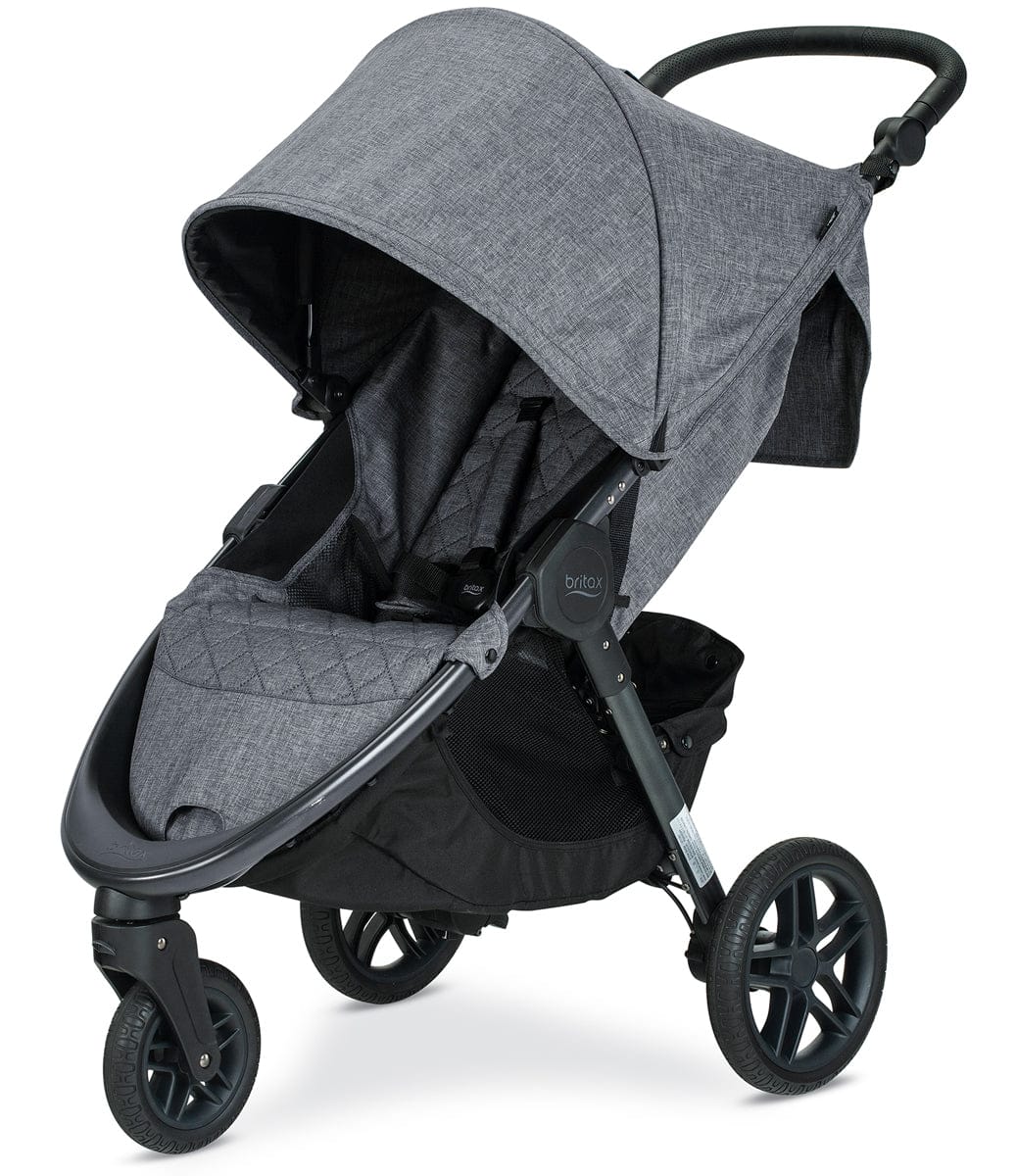
britax b free vibe BritaxSPECIFICATIONS STROLLER WEIGHT: 22 lbs AGE WEIGHT CAPACITY: Birth to 65 lbs OPEN DIMENSIONS: 44 L x 24 W x 42 H FOLDED DIMENSIONS: 32 L x 24 W x 15 H WHAT'S NOT INCLUDED: Cup holder, tray, rain cover TRAVEL SYSTEM CAPABLE Attach a Britax infant car seat for a safe and convenient travel solution. INFINITE RECLINE Adjust the seat to the perfect position for naps or adventures. EXTRA STORAGE The B Free is designed with seven storage pockets and a roomy
22 lbs
Birth to 65 lbs
44 L x 24 W x 42 H
32 L x 24 W x 15 H
TRAVEL SYSTEM CAPABLE
Attach a Britax infant car seat for a safe and convenient travel solution.
INFINITE RECLINE
Adjust the seat to the perfect position for naps or adventures.
EXTRA STORAGE
The B-Free is designed with seven storage pockets and a roomy underseat basket so you can take everything you need.
ADJUSTABLE HANDLEBAR
The adjustable handlebar makes it easy to find a comfortable grip.
NO-FLAT TIRES
The all-terrain rubber tires means you can stroll worry-free.
ONE-HAND QUICK FOLD
Easily folds in seconds, so you can store or stay on the move.
The B-Free Stroller makes family life easy and convenient. Seven storage pockets and an extra-large storage basket offer more room for baby gear. The canopy extends to protect your baby from the sun, and 3-wheel configuration provides ultimate maneuverability.
- Birth to 65 lbs
- One-hand fold
- Lightweight frame
- Travel system compatible
- 3-wheel configuration with front swivel wheel
- All-wheel suspension
- All-terrain wheels (no flat tires!)
- Infinite recline seat back
- Adjustable handlebar
- Foot-operated parking brake
- Extra-large underseat storage
- Flip-up calf rest to access storage from front of stroller
- 7 additional storage pockets throughout stroller
- Extra large canopy with expandable canopy
- From birth up to 65 lbs
- Product Weight: 22 lbs
- Open Dimensions: 44"L x 24"W x 42"H
- Folded Dimensions: 32"L x 24"W x 15"H
- Interior Seat Width: 13"
Shipping Notes
- Free Standard Shipping on $100+ Orders to the USA.
- Except Preorder products are shipped in 48 hours.
- Delivery to the USA:
- Standard Shipping : 3-10 business days
- If time is of the essence, please consider selecting expedited delivery for faster service.
Exchange/Return Notes
- We offer a 30-day return/exchange service after receiving.
- Final sale items are not eligible for returns or exchanges.
- To process your return/exchange, please contact us at [email protected]
- Please click here for more details>>> Return & Exchange Policy
4.9 ★★★★★
Based on 16 reviews
Sort
Product Reviews
★★★★★ 5
Awesome
Organization is good fit for all my jewels
WAS THIS REVIEW HELPFUL?YesReportShare
Reviewed in the United States on March 26, 2026
★★★★★ 5
So cutie
Color: Cloud White, Material Type: Paper, PU
This is a bit large for a travel size jewelry box lol I really thought it was going to be a bit smaller than what it was. I can see why some of the ladies in the comments are saying they’re using it as their main jewelry box since they don’t have much jewelry for a standard sized jewelry box.
With that being said, it’s cute and CAN be small enough for travel. It fits a lot and I got this one in particular bc I like that it has a bigger lower compartment for larger pieces. It’s a nice quality travel jewelry box. It’ll fit my needs. But if you have a knack for packing small and you value space. I’d say skip on this one or do due diligence to double check the measurements to see if it’s something you’re okay with packing.
WAS THIS REVIEW HELPFUL?YesReportShare
Reviewed in the United States on January 31, 2026
★★★★★ 5
Good value
Color: Jelly Pink, Material Type: Paper, PU
This is a great jewelry box for travel or to just keep at home. Very stylish and holds more than it looks like it would.
WAS THIS REVIEW HELPFUL?YesReportShare
Reviewed in the United States on February 10, 2026
★★★★★ 5
CUTE
Color: Cloud White, Material Type: Paper, PU
I absolutely love this jewelry organizer! The 2-layer design gives it plenty of space without being bulky, making it perfect for travel. I was able to neatly store my earrings, necklaces, rings, and bracelets without anything getting tangled.
The interior is soft and protects my jewelry really well, and the compartments are thoughtfully designed to keep everything in place. The compact size fits easily in my suitcase or handbag, which is a huge plus.
The cloud white color looks elegant and makes it feel like a great gift option too. Overall, it’s practical, stylish, and very convenient for keeping jewelry organized on the go. Highly
WAS THIS REVIEW HELPFUL?YesReportShare
Reviewed in the United States on April 20, 2026
★★★★★ 5
I bought myself one and this one was gift for a friend.
Color: Cloud White, Material Type: Paper, PU
Very classy travel jewelry box. Just the size. Made well.
WAS THIS REVIEW HELPFUL?YesReportShare
Reviewed in the United States on May 19, 2026