Pay in installments of $7.34 with
 ,
,
 and
and

Shipping Estimate
USA
- USA
- CAN
- USA
- CAN
Ships within 48 hours · Estimated delivery Sep 8 - Sep 13
 Promo Codes Available:
For Your Every Summer RSVP, with Code: SUMMER15
Description
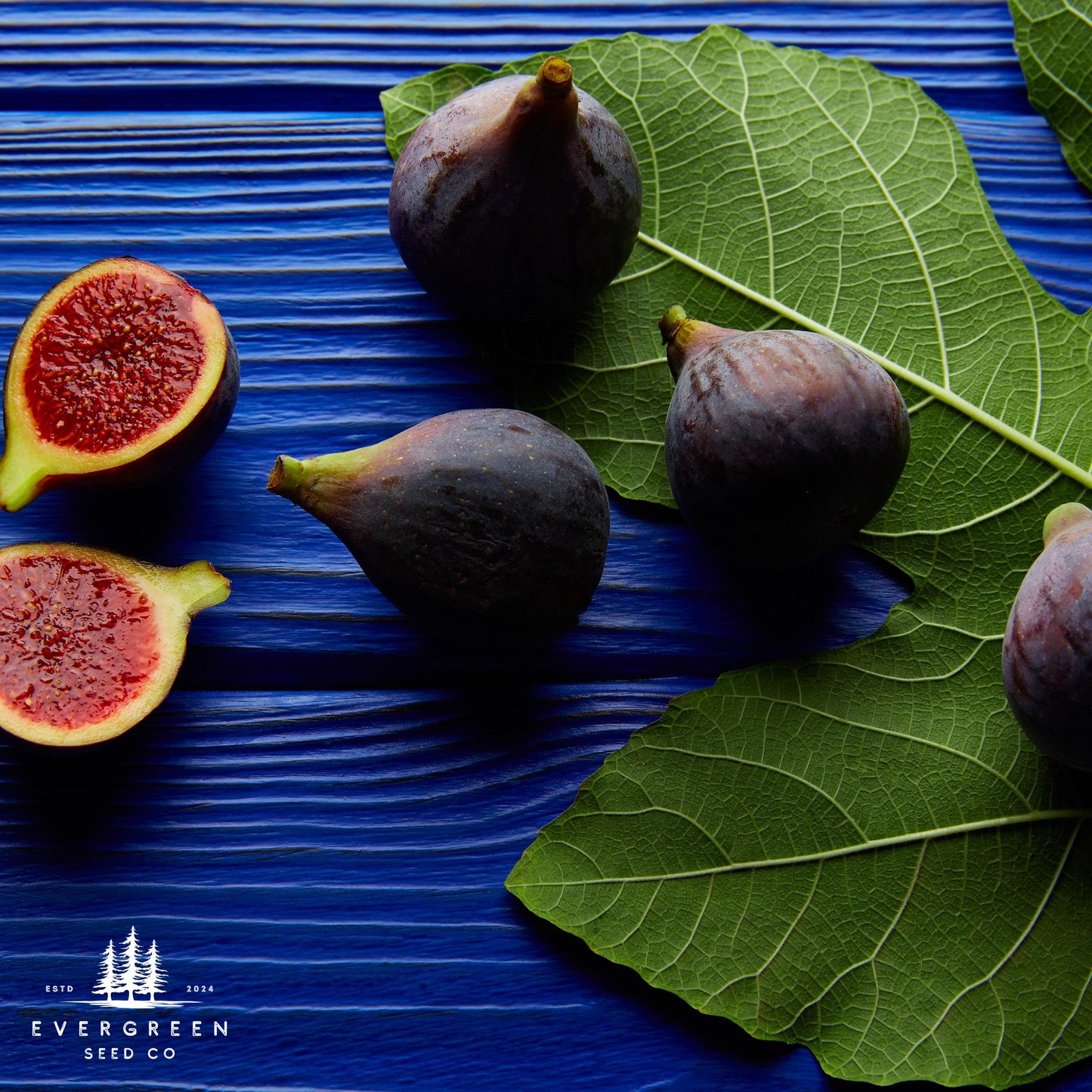
plant fig seeds Common Fig Tree Seeds (Ficus carica)The oldest cultivated fruit tree. Still the sweetest thing you can grow from seed. Ficus carica, the Common Fig, is among the oldest cultivated plants in human history, with archaeological evidence of fig cultivation in the Jordan Valley dating to 11,400 years ago, making it older than wheat, barley, or any cereal crop. Its plump, honey sweet fruit has been eaten across the Mediterranean and Middle East for millennia, its distinctive lobed leaves have
The oldest cultivated fruit tree. Still the sweetest thing you can grow from seed.
Ficus carica, the Common Fig, is among the oldest cultivated plants in human history, with archaeological evidence of fig cultivation in the Jordan Valley dating to 11,400 years ago, making it older than wheat, barley, or any cereal crop. Its plump, honey-sweet fruit has been eaten across the Mediterranean and Middle East for millennia, its distinctive lobed leaves have appeared in art from ancient Egypt to the Renaissance, and its tolerance for drought, poor soils, and neglect makes it one of the most forgiving edible trees available to the home grower. Seed-grown figs develop their own genetics, producing trees with individual fruit characteristics that may vary from the parent, and develop the deep, spreading root systems that make established fig trees nearly impossible to kill. If you are looking to buy Fig tree seeds or grow figs from seed, you are beginning a cultivation tradition that goes back to the very beginning of human agriculture.
- One of the oldest cultivated fruits in human history, grown continuously for over 11,000 years
- Produces sweet, honey-rich fruit in summer and fall with minimal care once established
- Drought-tolerant and heat-loving, thriving in poor soils and hot dry conditions
- Can be grown as a container plant in cold climates and overwintered indoors
- Distinctive architectural lobed leaves making it one of the most recognizable ornamental edible trees
Things you probably did not know about the Fig
Figs are not actually a fruit. What we call a fig is a syconium, an inverted flower structure with hundreds of tiny flowers lining the inside of a fleshy receptacle. What you eat when you eat a fig is the swollen receptacle surrounding what are technically hundreds of individual fruits. The crunchy seeds inside are the actual fruits. The fig is one of the most unusual reproductive structures in the plant kingdom.
The fig and the fig wasp cannot survive without each other. Most fig species in the wild are pollinated by highly specific fig wasps that crawl inside the syconium through a tiny opening to lay eggs and collect pollen. Without the wasp, the fig cannot produce viable seeds. Without the fig, the wasp cannot reproduce. This mutualistic relationship has been evolving for over 80 million years and is one of the most studied examples of coevolution in natural history. Edible cultivated figs are parthenocarpic varieties that produce fruit without pollination and do not require the wasp.
Adam and Eve wore fig leaves for a reason. The fig was the first plant named in the Bible. The specific choice of fig leaves for clothing in Genesis reflects the large, multi-lobed leaves of Ficus carica that are among the most dramatically shaped and distinctively useful of any tree in the Middle East. The fig has been woven into human religious and cultural symbolism across every civilization that encountered it.
The milky latex in the sap is caustic enough to tenderize meat. The white latex produced by fig leaves and unripe fruit contains enzymes called ficins that break down proteins. In traditional cooking across the Mediterranean and Middle East, fig latex was used as a meat tenderizer and cheese-curdling agent. The same enzymes cause skin irritation in sensitive individuals handling fresh fig leaves or unripe fruit.
Growing Details
- Botanical Name: Ficus carica
- Stratification: Recommended, 30 to 60 days cold stratification
- USDA Zones: 7 to 11 outdoors, container grown with winter protection in zones 5 to 6
- Soil: Well-drained, poor to moderate fertility, tolerates drought once established
- Light: Full sun
- Height: 10 to 30 feet
- Spread: 10 to 25 feet
- Growth Rate: Moderate to fast, 1 to 2 feet per year in warm climates
Plant it against a south-facing wall in a cool climate to extend its range. In a warm climate, plant it anywhere and wait for the first ripe fig you pick warm from the tree. Nothing tastes more like summer.
Shipping Notes
- Free Standard Shipping on $100+ Orders to the USA.
- Except Preorder products are shipped in 48 hours.
- Delivery to the USA:
- Standard Shipping : 3-10 business days
- If time is of the essence, please consider selecting expedited delivery for faster service.
Exchange/Return Notes
- We offer a 30-day return/exchange service after receiving.
- Final sale items are not eligible for returns or exchanges.
- To process your return/exchange, please contact us at [email protected]
- Please click here for more details>>> Return & Exchange Policy