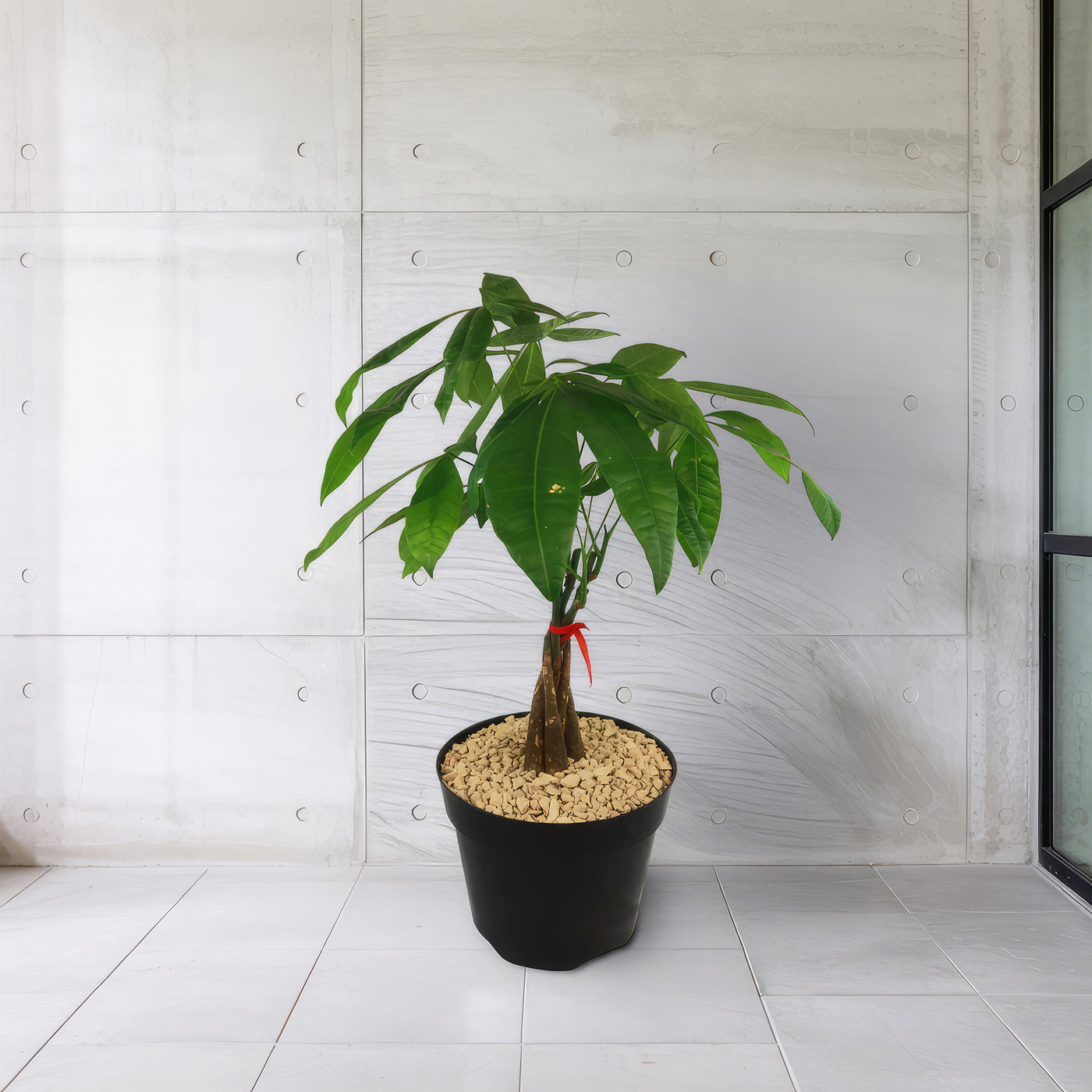
SKU: 90300862853
braided trunk money tree

braided trunk money tree Money Tree Plants ‘Pachira aquatica’ 8" Pot / Self Watering / With Pot

Sale price$21.31 Regular price$23.68
Save 10%

Pay in installments of $5.92 with ShopPay, AfterPay and Klarna

Shipping Estimate
USA
  • USA
  • CAN

Ships within 48 hours · Estimated delivery Sep 8 - Sep 13

Promo Codes Available:

For Your Every Summer RSVP, with Code: SUMMER15

Description

braided trunk money tree Money Tree Plants ‘Pachira aquatica’ 8" Pot / Self Watering / With PotThe Money Tree Plant, known as Pachira aquatica, is one of the best low maintenance houseplants prized for its braided trunk, lush green leaves, and association with prosperity and good fortune. In short, it's called the Money Tree because of its symbolic ties to luck, wealth, and good fortune, not because it actually grows money, though some people do jokingly wish it did! Originating from tropical wetlands, this plant has gained immense popularity

The Money Tree Plant, known as Pachira aquatica, is one of the best low-maintenance houseplants prized for its braided trunk, lush green leaves, and association with prosperity and good fortune. In short, it's called the Money Tree because of its symbolic ties to luck, wealth, and good fortune, not because it actually grows money, though some people do jokingly wish it did! 

Originating from tropical wetlands, this plant has gained immense popularity in modern homes, offices, and even business spaces across the world. The Money tree bonsai is a compact, artistic version of the traditional plant, often used to symbolize wealth and harmony in feng shui practices. 

According to the principles of Feng Shui, the Money Tree is believed to bring luck, financial prosperity, and positive energy when placed in specific areas of a home or office. It is commonly placed in the southeast corner—known as the "wealth corner"—to invite abundance and growth. The braided trunk is said to trap fortune within its folds, while the five-lobed leaves represent the five fundamental elements: earth, water, fire, wind, and metal, creating a balanced flow of chi (energy). 

The Pachira aquatica extremely fast growing up to 24 inches per year.

In its natural habitat, the Money Tree can grow up to 60 feet tall, but as a houseplant it can grow up to 6 feet tall indoors, and up to 12 feet tall outdoors in ideal your garden.

Native to Central and South America, the money tree plant has several other common names such as Malabar Chestnut, Guiana Chestnut, Chinese money tree, and Provision Tree.

The Money tree is admired for its glossy, hand-shaped palmate leaves that radiate from a central point, often with five to seven leaflets per stem, resembling an open hand.

The most iconic form features a braided trunk, achieved when several young stems are woven together while pliable and then grow as one. This braided appearance adds a sculptural quality and is often viewed as a symbolic protection of wealth.

The Money tree blooms during spring with large, showy white or cream-colored flowers with long stamens and a pleasant fragrance. These flowers later develop into large, woody seed pods containing edible chestnut-like nuts. 

One of the plant’s most unique qualities is its adaptability to various environments—it can thrive indoors with minimal care, tolerate low humidity if acclimated properly, and purify indoor air. Its symbolic significance, combined with its ornamental structure, makes it a favorite for gifting during housewarmings, business openings, and holidays.  

When and How to Water Your Monet Tree Plant 

The Money Tree is moderately drought-tolerant due to its thick, water-storing trunk, but it thrives with a consistent watering schedule that avoids soggy roots. Always check the top 2 inches of soil for dryness before watering to prevent overwatering. Water your Money Tree every 7–10 days during the growing season with deep watering and reduce to once every 3–4 weeks in the dormant season.  

From March to August, during the growing season, water thoroughly once every 7–10 days, ensuring excess water drains out of the pot. This is the Money tree plant’s active period, when it needs more hydration to support new foliage growth. Make sure the soil remains moist but never soggy, and consider misting the leaves lightly to increase humidity. 

From September to February, in the dormant season, reduce watering to once every 3–4 weeks, providing just enough to prevent the roots from drying out. Overwatering in winter is a common mistake that can lead to root rot. Keep it in a warm spot and ensure proper drainage during these cooler months. 

Light Requirements – Where to Place Your Money Tree 

When growing indoors, the Money tree plant thrives in bright, indirect light for 6–8 hours a day.

Place them near east- or south-facing windows, but avoid direct sunlight, which can scorch the leaves.

They also adapt well to fluorescent lighting, making them ideal for offices and low-light homes.

When grown outdoors, place your Pachira Money Tree in a location that receives partial shade or filtered sunlight for 4–6 hours daily.

Direct outdoor sun, especially in hot climates, can burn the leaves. A shaded patio, balcony, or under taller plants works well, as long as there's good airflow. 

Avoid low-light environments indoors or full sun outdoors, as both can cause stress. While adaptable, poor lighting leads to slow growth, leaf drop, or legginess. Rotate the plant occasionally for even light exposure and symmetrical growth. 

Optimal Soil & Fertilizer Needs 

Use a well-draining peat-based soil mixed with perlite or sand and fertilize once a year in the spring. The goal is to prevent waterlogging while retaining enough moisture for root absorption. Avoid heavy or clay-based soil. Planet Desert has specialized potting soil, opens in a new tabGo to Soil cactus mix blend 1 gal 4 qt cacti succulent dirt compost growing media that includes an organic substrate with mycorrhizae to help with the growth of a healthy root system, to help your money plant thrive. 

Fertilize once a year in the spring with a balanced, water-soluble NPK fertilizer of about 5-10-5. Do not fertilize in the dormant months, as the plant's growth slows and excess nutrients can harm it. Adding organic matter such as worm castings or compost can enhance soil fertility, especially in pots. Make sure the container has drainage holes and never let the plant sit in standing water. 

Indoor Money Tree Growing Requirements 

When growing indoors, the Money Tree prefers temperatures between 65°F and 80°F, moderate humidity, and bright indirect light. To keep it healthy, place it near a bright window where it can receive 6–8 hours of filtered sunlight daily—east, south, or west-facing windows are ideal. Avoid direct sun, which can scorch the leaves, and supplement with a grow light if natural light is limited. The plant thrives in humidity levels of around 50–60%, which you can maintain with a humidifier, pebble tray, or regular misting, especially during dry winter months. Consistent temperatures are important; keep the plant away from drafts, heaters, or AC vents, as sudden changes can lead to leaf drop or stress. With stable conditions and good light, the Money Tree makes a striking and low-maintenance indoor companion. 

Hardiness Zones & More 

In the United States, this is mostly grown as an indoor plant, but if you live in warmer climates like southern Florida or Hawaii, specifically in USDA Zones 10-12, you may be able to cultivate it outdoors year-round with care.

In these zones, choose a location that receives bright morning sunlight with partial shade in the afternoon to avoid scorching the leaves.

Humidity should be maintained at moderate to high levels, ideally above 50%, to support healthy growth and prevent leaf drop. Use a humidity tray or humidifier to maintain 40–60% humidity indoors during winter. 

Wildlife – Money Tree Flower Attracts the Following Friendly Pollinators 

The Money Tree Flower is known to attract a variety of friendly pollinators, including butterflies, bees, bats, and hummingbirds. These creatures play a crucial role in the ecosystem by helping to pollinate plants and ensure their reproduction.  

Butterflies
Bees
Hummingbirds
Lady Bugs
Multi Pollinators
Other Birds

According to the ASPCA, the Pachira aquatica is non-toxic to humans, cats, dogs, and horses. This makes it a great option for pet-friendly households. However, ingestion of large amounts may still cause mild stomach upset.

How to propagate a Money Tree 

The Chinese money tree can be propagated easily through stem cuttings taken during spring or early summer. Choose a healthy branch with at least two leaf nodes and cut it using clean, sharp scissors. Dip the cut end in rooting hormone and plant it in moist, well-draining soil. Keep the pot in bright, indirect light and maintain consistent humidity using a plastic dome or humidity tray. Roots typically form in 3–4 weeks. Once rooted, treat the new plant like a mature specimen. 

Key Takeaways

  1. According to feng shui, the popular houseplant money tree is a symbol that, when placed in homes or offices, attracts wealth, good fortune, and positive energy.
  2. This tropical plant can grow up to 24 inches per year, making it extremely fast-growing option for indoor greenery.
  3. According to ASPCA, it is non-toxic to cats and dogs, making it a pet-friendly houseplant.
  4. Money Tree plants are often grown and styled as bonsai, featuring braided trunks and compact foliage for decorative appeal.
  5. The plant thrives indoors with bright, indirect light and is easy to maintain with moderate watering and occasional pruning.

The Bottom Line 

Overall, the Money Tree ‘Pachira aquatica’ is a stylish, popular houseplant with braided stems and lush green leaves. It thrives with moderate watering, bright indirect light, and well-draining soil. Known for its symbolism of good fortune and prosperity, it is a popular choice for both indoor and outdoor décor. With its non-toxic nature, humidity tolerance, and low maintenance needs, it’s an excellent plant for beginners and collectors alike. As both a botanical treasure and a Feng Shui favorite, the Money Tree truly lives up to its name—bringing a sense of calm, balance, and prosperity to all who grow it. Order your very own Money tree for sale today! 

Shipping Notes
  • Free Standard Shipping on $100+ Orders to the USA.
  • Except Preorder products are shipped in 48 hours.
  • Delivery to the USA:
  1. Standard Shipping : 3-10 business days
  • If time is of the essence, please consider selecting expedited delivery for faster service.
Exchange/Return Notes
  • We offer a 30-day return/exchange service after receiving.
  • Final sale items are not eligible for returns or exchanges.
  • To process your return/exchange, please contact us at [email protected]
  • Please click here for more details>>> Return & Exchange Policy
SKU: 90300862853

Discover Niche Categories That Outsell braided trunk money tree

Top-Converting Item to Boost Your Average Order

4.8 ★★★★★
Based on 20 reviews
Sort
Highest Rating
Newest First
Oldest First
Product Reviews
A
Verified Purchase
Allegra C.
Grantham, US
★★★★★ 5
Worth the hype on NPR that led me here--I've found my new favorite book!
Format: Hardcover
As an Asian-American creative, I knew I'd love this when I first read a positive review for this online, and I was not disappointed once! The perspective is so unique--a Chinese girl in 1800s Georgia!--and the writing's mesmerizing. I wished this book could never end, and LOVED it for so many reasons: The quick version: -Have you ever read anything about Chinese-Americans living in the Reconstructionist South? Thought not. This book provides such a necessary historical lens into highly underrepresented people and untold stories--and does it with remarkable talent and grace. This alone is worth heavy consideration. -Jo is a protagonist you can't help admiring - she's witty, a nonconformist by circumstance and by choice, and unafraid of getting back a little (or a lot) at people who've done her wrong. -The narrative voice is unlike any I've ever seen before ("Mischief dangles from his smile") and there are great humorous moments. -Great pun one-liners here and there - even Yours Truly, who admits to hating puns, likes how they're done here. -A wonderful and dynamic supporting cast, including Jo's wry adoptive father, a socialite who reveals her cleverness with pepper, an enigmatic Southern Belle who becomes Jo's employer for the second time, and a stout-of-heart black boy that'll melt your cold dead heart. Also a very enthusiastic herding dog. -A climax that honestly almost moved me to tears from the poignancy, but also the deep symbolism of how Jo's actions come to stand for so, so much more in those several pages. -If you like to learn cool new words, you'll definitely learn a few by reading this. -On a personal note, I was ecstatic to find references to Chinese knotting and barley tea, which I've grown up with, but never encountered in print before. Stacey Lee isn't afraid to show how difficult it was to be Asian-American in post-Civil War Georgia: In the opening scene, Jo is fired from her job at a hat shop because of her ethnicity. Due to the Chinese Exclusion Act in effect at the time, Jo and her adoptive father are legally not US citizens and cannot even own land or rent; they're forced to live secretly as squatters in the basement of a family who prints a struggling local newspaper. We also see realistic depictions of other social issues, like the initial implementation of segregation laws (which confuses Jo and her father, as they're neither black nor white), the erecting of Confederate statues, calls for women's suffrage (as well as the emergence of modern bicycles) treated with derision by many women who think the idea foolish, and white suffragists rejecting black women who support their ideals. In all seriousness, get this book. If you have kids, get this for your kids. I rarely write book reviews, but I'm breaking the pattern because this novel is THAT good. Come for the incredibly unique historical perspective that's surely the first of its kind ever published and shines a spotlight on sorely underwritten stories. Stay for Jo's incredible strength, role model-ism, one-of-a-kind journey, and how her story reminds us all not just of the power of devastatingly clever puns, but the power that words give all of us in finding who we are and making the world a better place.
WAS THIS REVIEW HELPFUL?YesReportShare
Reviewed in the United States on September 25, 2019
J
Verified Purchase
Jamie McQuiston
Cuba, US
★★★★★ 4
"Luck rides a horse named Joy"
Format: Kindle
What a delightful book! I was constantly rooting for the protagonist, Jo. She grew up without a true mother or father but found guidance and love with a Chinese man named Old Gin. They both found work with an aristocratic family as servants, while living secretly in the basement of a printing company. It was there that Jo learned to read and write through listening to the family who owned the printing press upstairs. She discovers the paper they publish, The Focus is in trouble and decides to help them out by secretly writing a column under the name Miss Sweetie. An adventure begins and secrets are revealed, but Jo emerges as a local hero as a result. I loved the author's prose and they way she incorporated Chinese anecdotes. I laughed out loud and cried in equal measure. It is a story about overcoming the struggle of race and poverty, but also about love and fighting for what you believe in. I highly recommend if your in the mood for something uplifting to read.
WAS THIS REVIEW HELPFUL?YesReportShare
Reviewed in the United States on May 14, 2021
N
Verified Purchase
Nicole @ Nicoles' Novel Reads
Whiting, US
★★★★★ 5
Excellent historical novel during the Gilded Age
Format: Hardcover
During the late 1800's Jo Kuan lives with her stand-in father, Old Gin, in a basement. She works as a milliner's assistant until she is let go one day because her employer deems that she is too opinionated and makes customers uncomfortable. However, there is one customer, Mrs. Bell, who admires Jo's craftmanship making intricate knots, which happens to be the lady who resides in the same residence as Jo. However, Mrs. Bell doesn't know Jo and Old Gin take refuge below the residence. Jo is given the opportunity to write as Miss Sweetie for the Focus's advice column when she sends an anonymous letter to the Bells. Miss Sweetie creates a huge buzz in her community. Jo anonymously writes articles regarding societal norms during the Gilded Age time period. What a great opportunity for someone who is "too opinionated." While she works as a lady's maid at the Paynes household during the day, she moonlights as Miss Sweetie at night. Stacey Lee tells a wonderful and insightful story of what it means to be Asian in the South of the United States in the late 1800's. I am always delighted to read historical fiction with characters I can relate to. I often wonder how life was for Chinese-Americans in the past. There is hardly any information about the history of Chinese-Americans living in the United States and how life was for them. Lee is one of my favorite historical fiction novelists. Her characters are relatable and I love being transported to a different time period and a different location every time I pick up one of her books. I absolutely love the voice of Jo. She is sassy but she knows her place. Jo is an advocate of women's rights and equality for all races. Being of Chinese descent, she teeters in between Whites and Blacks. It's hard to find a place in society, especially since there are not many Asian people living in the United States at the time. Most Chinese in the States at the time are men working on the railroad. Jo is longing to know more information regarding her parents. Who is her birth father? Who is her birth mother? Why was she given up? Jo is fortunate to have Old Gin raise her. The twist at the end caught me off guard for sure. Although Jo may feel out of place, she has Old Gin as her family. I also enjoyed reading how Jo finds solace in Sweet Potato and she finds friendship with Noemi. Jo even has a complex relationship with Caroline Payne, who can be very cruel. The Downstairs Girl shows readers a glimpse of the Gilded Age and what is it like to live as an Asian American during that time period. Jo defies the stereotype of Asian women being docile and quiet. Not only does she defy the stereotype for Asian women but she defies the gender stereotype of being a lady. Jo is quite capable of doing what a man does and she is quite outspoken. From writing in a newspaper to horse racing, Jo can do anything!
WAS THIS REVIEW HELPFUL?YesReportShare
Reviewed in the United States on September 11, 2019
G
Verified Purchase
G. R. Jack
Dallas, US
★★★★★ 5
A story of someone who refuses to settle for less
Format: Hardcover
Stacey Lee takes you into a world you’re probably familiar with if you paid any attention in your U.S. History class and helps you see it in new ways. Most of us are familiar with the agonies of post reconstruction era South, but few stories shine a spotlight on the Chinese laborers who were shipped in by Southern plantation owners to replace emancipated slaves. This is the world seventeen-year-old Jo Kwan lives in. Much of Jo’s life is lived in secret. She can’t rent, let alone own, property, so she’s forced to live with her uncle in the basement of a white family who owns a failing newspaper. She can’t interact directly with the white patrons of the hat store because her boss says she makes the customers “uncomfortable.” She can’t even participate in the growing Suffrage movement because the women are only concerned with advancing the rights of white women. What’s a strong, opinionated girl to do? Start an advice column. She starts submitting columns to the paper under the pseudonym Miss Sweetie and immediately attracts attention, both good and bad, from Atlanta’s high society. Through the column, Jo finds her voice and an outlet to express views on her segregated and chauvinistic society. The more freedom she experiences, the more she wants and soon she is uncovering secrets of her past that threaten to ruin her. The Downstairs Girl never lets the reader forget how crushing life was for Chinese and Black Americans during this time, but the book isn’t a downer. Mostly this is due to Jo Kwan being such a spirited and sympathetic character. Her story is one of someone who refuses to settle for less and it’s fun watching her get the best of some of her antagonists. Lee’s writing is also witty and engaging, filled with the kind of southern colloquialisms that help transport the reader to this time and place.
WAS THIS REVIEW HELPFUL?YesReportShare
Reviewed in the United States on December 4, 2019
K
Verified Purchase
KKV
Natrona Heights, US
★★★★★ 4
A great vacation read
Format: Kindle
I was looking for something interesting but not a lengthy novel. Really enjoyed this book. It was a quick read while on vacation and is anchored in a historical perspective I had not ever considered, that of being both Chinese and a woman in the South (Atlanta) at the time of the Women’s suffrage movement. The character is subject to the same segregation laws and lack of rights as a Black woman at the time. This is a clever, strong, female character who surmounts several obstacles created by the environment in which she lives.
WAS THIS REVIEW HELPFUL?YesReportShare
Reviewed in the United States on July 27, 2021

recommand products