SKU: 91875092706
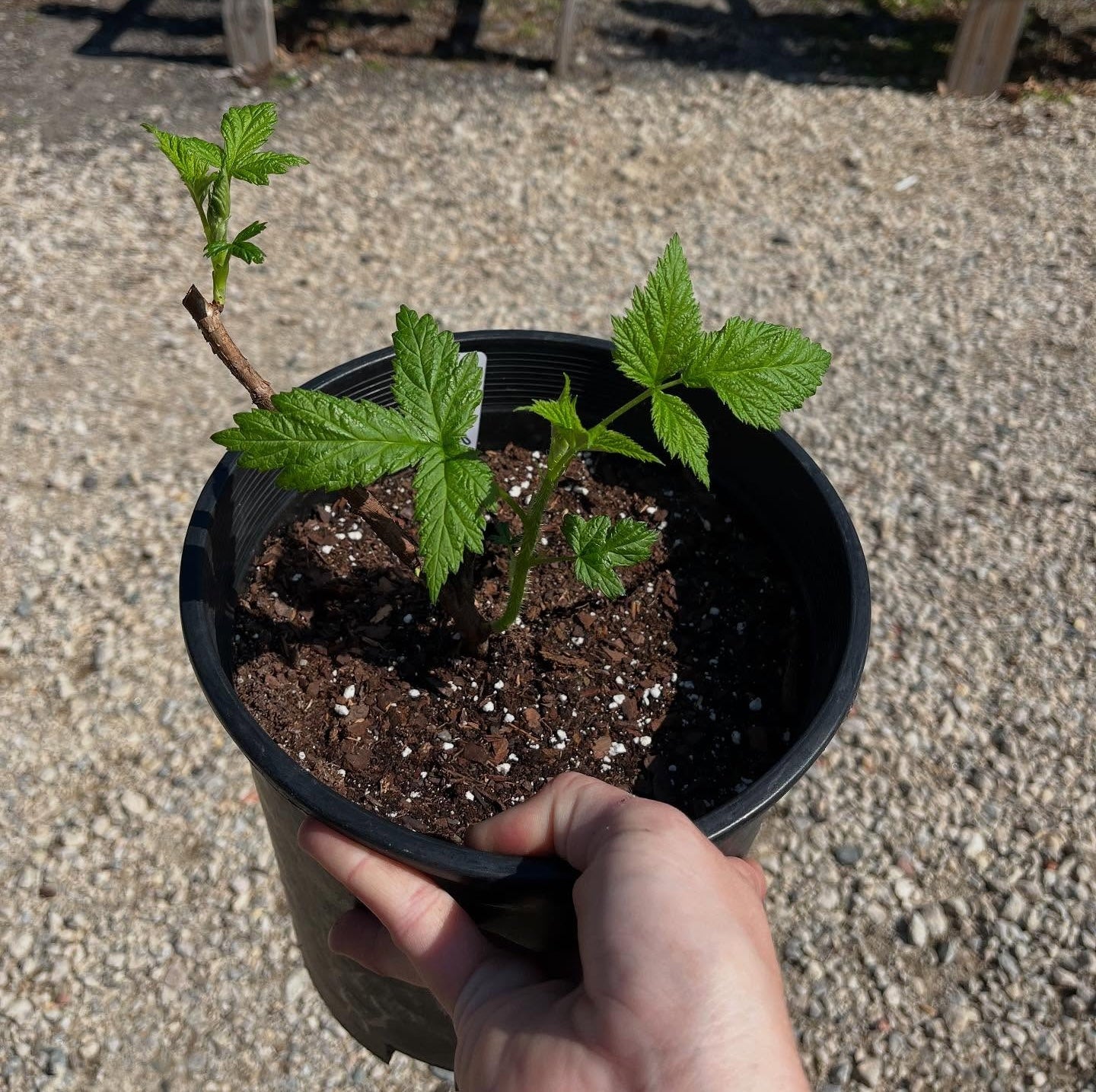
raspberry plant in pot

raspberry plant in pot Heritage Raspberry Plant

Sale price$19.19 Regular price$21.32
Save 10%

Pay in installments of $5.33 with ShopPay, AfterPay and Klarna

Shipping Estimate
USA
  • USA
  • CAN

Ships within 48 hours · Estimated delivery Sep 11 - Sep 16

Promo Codes Available:

For Your Every Summer RSVP, with Code: SUMMER15

Description

raspberry plant in pot Heritage Raspberry PlantHeritage Raspberry is one of the most trusted and widely grown everbearing red raspberries, valued for its delicious flavor, firm berries, and reliable performance. With the right care, Heritage produces two harvests per yeara summer crop and a fall cropmaking it ideal for gardeners seeking extended fruiting. Why Grow Heritage Raspberries? Everbearing Variety: Produces fruit in both summer and fall. Sweet, Firm Flavor: Excellent for fresh eating,

Heritage Raspberry is one of the most trusted and widely grown everbearing red raspberries, valued for its delicious flavor, firm berries, and reliable performance. With the right care, Heritage produces two harvests per year—a summer crop and a fall crop—making it ideal for gardeners seeking extended fruiting.

🌱 Why Grow Heritage Raspberries?

  • Everbearing Variety: Produces fruit in both summer and fall.
  • Sweet, Firm Flavor: Excellent for fresh eating, canning, or freezing.
  • High Yield: Upright, vigorous canes deliver abundant harvests.
  • Cold Hardy & Disease Resistant: Performs well in USDA Zones 4–8.
  • Reliable & Low Maintenance: Perfect for both beginners and experienced growers.

☀️ Planting & Care Instructions

  • Plant Form: Bare root cane, 1-year-old, ships dormant.
  • Zones: 4–8.
  • Sunlight: Full sun (6–8 hours/day).
  • Soil: Well-drained, fertile soil; pH 6.0–6.5.
  • Spacing: 2–3 ft between plants; 6–8 ft between rows.
  • Watering: 1–1.5 inches per week during growing season.
  • Support: Trellising recommended for airflow and cane management.

✂️ Pruning Options

  • Two crops: Remove spent canes after summer harvest; leave primocanes for fall.
  • Fall-only crop: Cut all canes to the ground in late winter.

📅 Harvest Windows

  • Summer crop: Late June–early July.
  • Fall crop: Late August–October.

Heritage raspberry plants combine flavor, reliability, and productivity, making them a top choice for backyard gardens and small orchards.

Shipping Notes
  • Free Standard Shipping on $100+ Orders to the USA.
  • Except Preorder products are shipped in 48 hours.
  • Delivery to the USA:
  1. Standard Shipping : 3-10 business days
  • If time is of the essence, please consider selecting expedited delivery for faster service.
Exchange/Return Notes
  • We offer a 30-day return/exchange service after receiving.
  • Final sale items are not eligible for returns or exchanges.
  • To process your return/exchange, please contact us at [email protected]
  • Please click here for more details>>> Return & Exchange Policy
SKU: 91875092706

Discover Niche Categories That Outsell raspberry plant in pot

Top-Converting Item to Boost Your Average Order

4.5 ★★★★★
Based on 28 reviews
Sort
Highest Rating
Newest First
Oldest First
Product Reviews
I
Verified Purchase
india
Battle Creek, US
★★★★★ 1
not “new”
Format: Paperback, Format: Paperback
Book came “new” with cover ripped to shreds. Dont trust it
WAS THIS REVIEW HELPFUL?YesReportShare
Reviewed in the United States on August 17, 2024
T
Verified Purchase
Thomas D. Mackie Ph.D.
Chelsea, US
★★★★★ 5
Know the Church Fathers
Format: Paperback
This was a profoundly useful study for the Church fathers to identify how the Church grew in a hostile world.
WAS THIS REVIEW HELPFUL?YesReportShare
Reviewed in the United States on May 21, 2026
J
Verified Purchase
Jason
Cuba, US
★★★★★ 5
Incredible & Absolutely Fascinating
Format: Paperback
This book is incredible. Very well researched and balanced in approach. It is the best book I've ever read on the early church and the most inspiring book I've read on how the church can be powerful without seeking worldly power. I would highly recommend this to every pastor and serious Christian. I wouldn't advocate for adopting everything the early church did (Kreider doesn't either), but there is so much to learn. Especially the church in the West, and specifically in America, where Christian nationalism is on the rise. This book could not be more timely or important in helping people understand the relationship between the church and government, and why discipleship that actually changes the habits, values, and lives of Christians must become the hallmark of the church again.
WAS THIS REVIEW HELPFUL?YesReportShare
Reviewed in the United States on March 25, 2026
J
Verified Purchase
Jeffrey P. Wright
Bozeman, US
★★★★★ 5
So much I never realized about the shaping of the early Church
Format: Paperback
This is one of the best books I've read. Really well researched. It is interesting in its empahsize on the virtue of patience from the perspective of the early church as it was shaped and formed into what we recognize as The Church.
WAS THIS REVIEW HELPFUL?YesReportShare
Reviewed in the United States on June 27, 2024
D
Verified Purchase
D. Hesselbarth
New York, US
★★★★★ 5
Profoundly challenging; I'm going back to this over and over
Format: Paperback
The remarkable growth of the early church has puzzled and challenged scholars. How did a tiny sect that attracted mainly the poor and unimportant and faced waves of persecution grow? How did they sustain their vigor and their distinctiveness such that well into the third century they were still well known for their non violence and care of the poor and downtrodden? Why did the church make baptism and membership so difficult? I've never found satisfactory answers. Kreider's exhaustively researched book did more than answer those questions. It stirred and challenged my thinking about how to "do church." He argues, with compelling evidence, that a central conviction by the early Christians had much to do with their sustained vitality. They centered on the teachings of Jesus, in particular the sermon on the mount. They actually believed they were to live in obedience to the upside down Way of Jesus. It was this distinctive and intriguing lifestyle - Kreider uses the term "habitus" or their habitual behavior - that the church insisted upon and that attracted others. They patiently lived in community, expecting that over time, the impact of the light of their lives would "bubble up" or ferment in the lives of their neighbors. So, rather than emphasize evangelism, the early Christians emphasized catechesis - careful formation and teaching. Only after a lengthy period of time - up to three years! - during which the prospective member was mentored and drilled in the life of Christ, was the person allowed to be baptized and take the Lord's Supper. They had to demonstrate, prove, that they were indeed genuinely living the life of Christ. Caring for the poor, sharing their resources, returning good for evil, turning the other cheek - those things had to be demonstrably evident. Kreider ends by contrasting this patient habitus with the changing focus after Constantine. His examination of Augustine's redefinition of faithful Christian living that provided a way for Christians to both claim allegiance to Jesus' teachings yet use force and violence was both incisive and deeply saddening. These days, most followers of Jesus do a better job of rationalizing why they can't take the Sermon on the Mount as more than platitudes. This book further challenges me, and I hope, the church at large, to actually live like Jesus! What a novel idea. There are just a handful of books that have deeply influenced me, books that I find myself returning to again and again. The Patient Ferment is one of those books now. I hope this book becomes widely read, and even more, widely influential. May it disturb our comfort...
WAS THIS REVIEW HELPFUL?YesReportShare
Reviewed in the United States on May 8, 2017

recommand products