Pay in installments of $5.95 with
 ,
,
 and
and

Shipping Estimate
USA
- USA
- CAN
- USA
- CAN
Ships within 48 hours · Estimated delivery Sep 5 - Sep 10
 Promo Codes Available:
For Your Every Summer RSVP, with Code: SUMMER15
Description
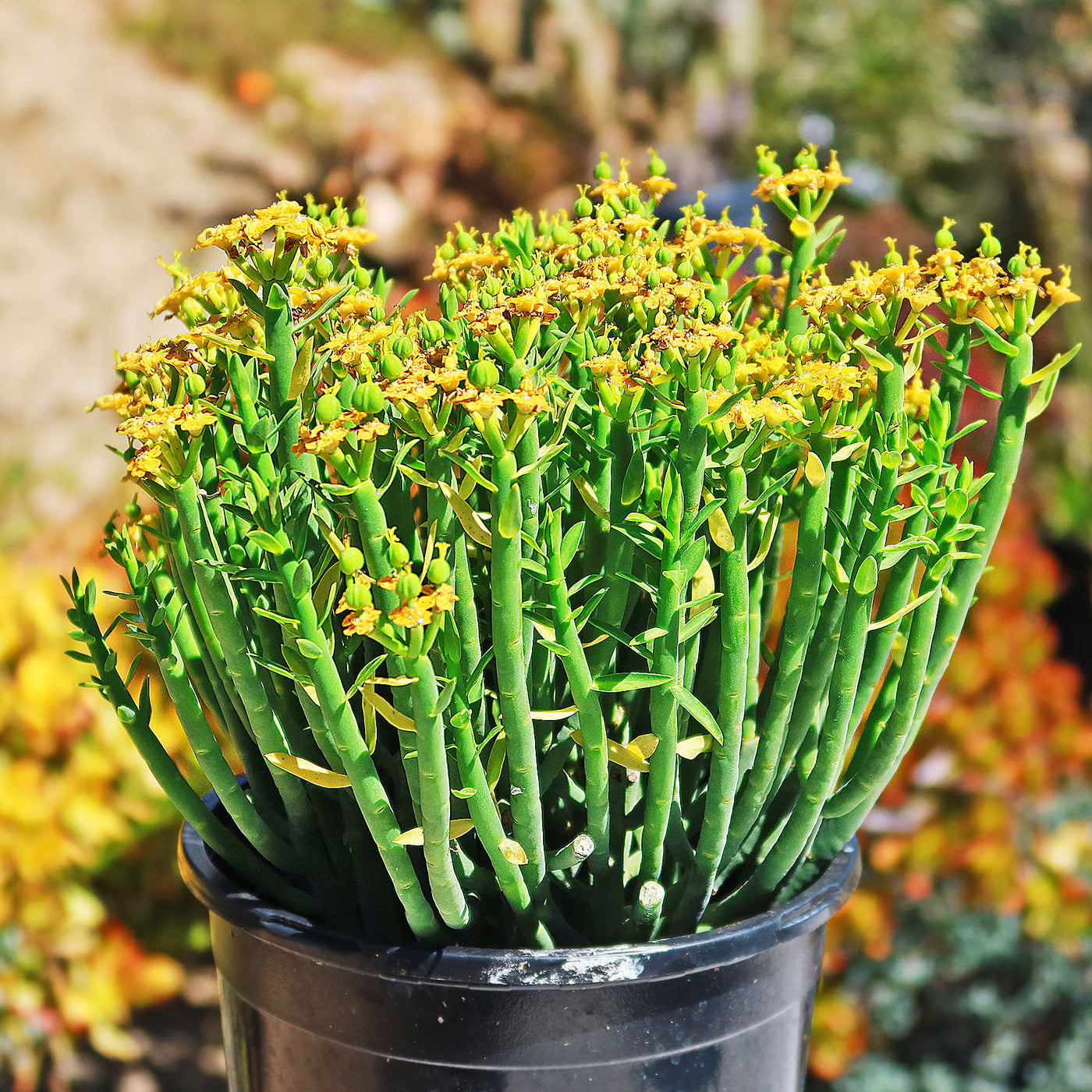
long finger like succulent Pencil Milk BushIntroducing the stunning Pencil Milk Bush, known as Euphorbia mauritanica, is a fascinating succulent plant that belongs to the Euphorbiaceae family. The Pencil Milk Bush gets its name from its slender, pencil like stems and its milky sap. The stems of this euphorbia plant resemble pencils, while the milky sap it produces is characteristic of many Go to Search results page? q=Euphorbia+ . The combination of these features gives it the unique and
Introducing the stunning Pencil Milk Bush, known as Euphorbia mauritanica, is a fascinating succulent plant that belongs to the Euphorbiaceae family. The Pencil Milk Bush gets its name from its slender, pencil-like stems and its milky sap.
The stems of this euphorbia plant resemble pencils, while the milky sap it produces is characteristic of many Go to Search-results-page?q=Euphorbia+ . The combination of these features gives it the unique and descriptive name of "Pencil Milk Bush." Additionally, it also goes by the names "jackal's food", "pencil milk bush," and "yellow milk bush or golden spurge."
This unusual Euphorbia mauritanica, which originates in Southern Africa and North Africa, is distinguished by its yellowish green, smooth, pencil-thin upright branches with alternate leaf scars that are up to 3 feet tall and 6 feet wide, from a central thick root growth. One of the distinctive features of the Pencil Milk Bush is its silver-gray leaves, which are small, rounded, and arranged in pairs along the cylindrical stems.
In addition to its interesting appearance, the Pencil Milk Bush also produces clusters of small, bright yellow flowers. Not only are these flowers aesthetically pleasing, but they also draw pollinators like bees and butterflies. The flowering period usually occurs during the winter to spring months, adding a burst of color to your garden or indoor space.
Propagation of pencil milk bush can be done through stem cuttings. It is important to choose a healthy and mature stem for propagation. However, it's important to note that the sap of the Pencil Milk Bush is toxic if ingested and can cause skin irritation, so it's advisable to handle it with care. It has also been shown to be resistant to gopher, rabbit, and deer predation because it is a poisonous plant if ingested. This stunning plant occurs extensively throughout the Northern Cape, Western Cape, Eastern Cape, Free State, KwaZulu-Natal, as well as in Namibia.
Watering Needs
Like other succulents, the Pencil Milk Bush has low watering needs because it stores water in its leaves and stems, allowing it to withstand periods of drought. This drought-tolerant succulent shrub is adapted to arid conditions, but like the Pencil cactus (Euphorbia tirucalli) it requires an excessive amount of water during the hot summer months.
When watering the Euphorbia mauritanica, it is important to allow the soil to dry out between waterings. Overwatering can be detrimental to this euphorbia plant, as it is susceptible to root rot. It is best to water the plant thoroughly and then let the soil dry out completely before watering again.
During the growing season, which is typically spring and summer, you can water your euphorbia once every two to three weeks. In the winter months, when your milk bush plant is in its dormant phase, you can reduce the watering frequency to once a month or even less.
Remember to always check the moisture level of the soil before watering and adjust the frequency based on the specific conditions of your environment. By providing the Euphorbia mauritanica pencil milkbush with proper watering, you can help it thrive and maintain its unique beauty.
Light Requirements
The Euphorbia mauritanica, thrives in full sun to light shade conditions. Place it near a sunny window where it can receive 4-6 hours of bright, indirect sunlight (partial shade) each day. However, be cautious of exposing it to intense, direct sunlight for extended periods as it can cause sunburn and damage the pencil bush.
If you're growing the Pencil Milk Bush indoors, ensure it receives enough light by placing it near a window with filtered sunlight or using artificial grow lights. If you notice your euphorbia plant stretching or its leaves losing color, it may be an indication that it needs more light. On the other hand, if the leaves start turning yellow or brown, they might be getting too much direct sunlight. Adjust the placement accordingly to provide the ideal lighting conditions for your Pencil Milk Bush.
Optimal Soil & Fertilizer Needs
The Euphorbia mauritanica, prefers well-drained soil with a loamy or sandy soil texture. It is important to use a soil mix that allows excess water to drain away quickly, as this plant is susceptible to root rot if the soil becomes waterlogged. Ideally, you want to use our specialized succulent potting mix that contains 5 natural substrates and organic mycorrhizae to promote the development of a strong root system that helps your succulent to thrive.
When it comes to fertilizing the Pencil Milk Bush, it is generally a low-maintenance plant that doesn't require frequent fertilization. You can apply a balanced natural fertilizer with low nitrogen once in the growing season in the spring. However, be cautious not to over-fertilize, as this can lead to excessive growth and weak stems.
Remember, the Pencil Milk Bush is a hardy and adaptable euphorbia succulent, so as long as you provide it with well-draining soil and occasional fertilization, it should thrive and bring beauty to your space.
Hardiness Zone & More
The Euphorbia mauritanica, is typically hardy in USDA hardiness zones 9-11. It prefers warm temperatures ranging from 60°F to 85°F. The minimum frost won't harm these hardy euphorbia plants, but it shouldn't get below 35 degrees Fahrenheit; in this case, you can bring them indoors. It can tolerate higher temperatures, but it may require more frequent watering during hot weather to prevent dehydration.
In terms of humidity, the Pencil Milk Bush is adaptable and can tolerate a range of humidity levels. It can thrive in both low-humidity environments, such as indoors with central heating or air conditioning, as well as higher humidity levels found in tropical regions. However, it is important to avoid excessively dry conditions, as it can cause the leaves to wilt and the milk bush to become stressed. Regular misting or placing a tray of water nearby can help increase humidity levels if needed.
With the help of Euphorbia mauritanica - Pencil milk bush, you'll start to spend less time maintaining your garden and more time taking in its beauty! Overall, these South African shrubby euphorbias are resilient plants that can tolerate a variety of temperature and humidity conditions, making them a versatile choice for both indoor and outdoor gardens.
Shipping Notes
- Free Standard Shipping on $100+ Orders to the USA.
- Except Preorder products are shipped in 48 hours.
- Delivery to the USA:
- Standard Shipping : 3-10 business days
- If time is of the essence, please consider selecting expedited delivery for faster service.
Exchange/Return Notes
- We offer a 30-day return/exchange service after receiving.
- Final sale items are not eligible for returns or exchanges.
- To process your return/exchange, please contact us at [email protected]
- Please click here for more details>>> Return & Exchange Policy