Pay in installments of $5.62 with
 ,
,
 and
and

Shipping Estimate
USA
- USA
- CAN
- USA
- CAN
Ships within 48 hours · Estimated delivery Oct 20 - Oct 25
 Promo Codes Available:
For Your Every Summer RSVP, with Code: SUMMER15
Description
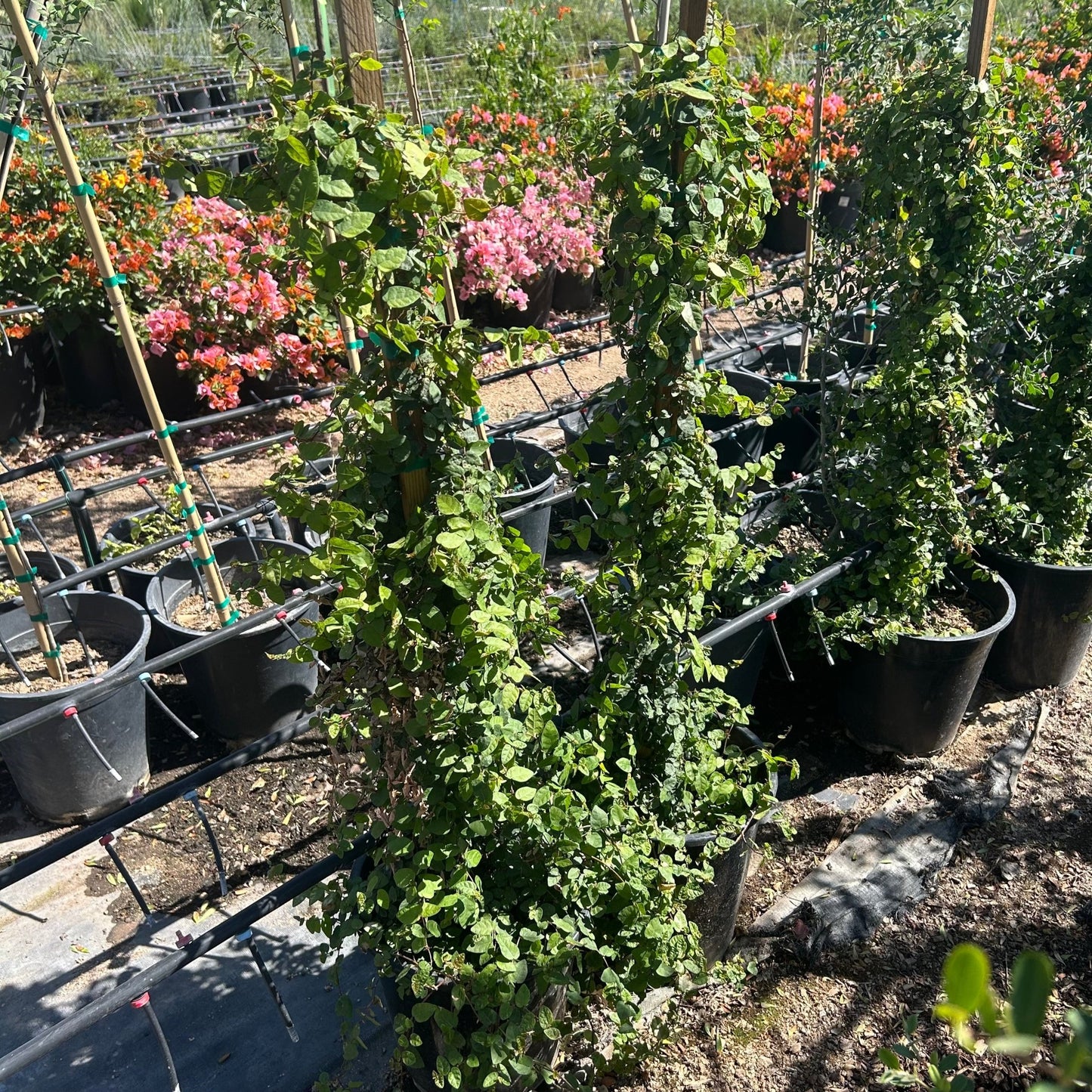
trellis plants arizona Buy Creeping Fig Staked Phoenix, AZ | Ficus pumilaPhoenix's Top Wall Coverage Vine Creeping Fig for Dense, Fine Textured Screening Creeping Fig (Ficus pumila), also known as Climbing Fig, is one of the most attractive wall covering vines in the Phoenix Valley. With small, heart shaped leaves that create an incredibly fine textured, moss like surface on walls, it turns plain block walls and concrete structures into stunning living backdrops. Its self clinging aerial rootlets grip masonry tightly
Phoenix's Top Wall Coverage Vine — Creeping Fig for Dense, Fine-Textured Screening
Creeping Fig (Ficus pumila), also known as Climbing Fig, is one of the most attractive wall-covering vines in the Phoenix Valley. With small, heart-shaped leaves that create an incredibly fine-textured, moss-like surface on walls, it turns plain block walls and concrete structures into stunning living backdrops. Its self-clinging aerial rootlets grip masonry tightly without hardware — covering walls evenly from bottom to top. Whether you're beautifying a block wall in Scottsdale, adding a lush green element to a modern desert home in Chandler, or covering an unsightly concrete wall in Tempe — Creeping Fig delivers refined, elegant coverage that grows more beautiful with every passing year.
Creeping Fig Plant Details
| Attribute | Detail |
| Scientific Name | Ficus pumila |
| Common Names | Creeping Fig, Climbing Fig, Creeping Rubber Plant |
| Mature Height | Climbs to 30+ feet on walls and structures |
| Mature Width | Spreads laterally to fill available wall surface |
| Growth Rate | Moderate — accelerates to fast after establishment (3–5 ft per year) |
| Sun | Full sun to full shade. Highly adaptable — one of few vines that covers shaded north-facing walls. |
| Water | Low to moderate once established. Drought-tolerant after year one. |
| USDA Zones | 8–11 (Phoenix is Zone 9b–10a) |
| Soil | Well-draining. Adapts well to Arizona caliche soils with proper drainage. |
| Foliage | Evergreen — dense, small heart-shaped leaves year-round |
| Special Feature | Pre-staked for easy training; self-clinging — no hardware needed |
Creeping Fig Uses in Phoenix Landscapes
Block Wall and Concrete Coverage
Creeping Fig is the premier vine for covering flat masonry surfaces in Phoenix. Its tiny aerial rootlets grip concrete and block wall surfaces directly without wire or fasteners, and it spreads evenly across the wall surface with a neat, uniform texture. Unlike Cat Claw Vine, Creeping Fig stays compact and manageable — making it ideal for formal garden settings in Scottsdale and Paradise Valley. One plant covers 15–20 square feet in its first 2–3 years, and ultimately covers entire walls. Plant one vine per 10–15 linear feet of wall for full coverage.
Shade Walls and North-Facing Exposures
Creeping Fig is one of the few climbing vines that performs well in low-light and shaded conditions — making it ideal for north-facing walls, courtyard walls, and areas under deep overhangs where other vines struggle. Its ability to cover walls in shade makes it valuable in Chandler, Gilbert, and Tempe landscapes where design often includes shaded courtyard spaces. Pair with Boston Fern or Philodendron in shaded settings for a tropical, lush look.
Modern Desert Wall Art
Trained over decorative screens, lattice panels, or modern steel structures, Creeping Fig creates a stunning "living wall" effect that's become popular in contemporary Phoenix landscape design. Architects and designers in Scottsdale frequently specify Creeping Fig for its ability to cover structures uniformly with a fine, architectural texture. Pre-staked plants from Three Timbers are ready to begin climbing immediately after planting.
Privacy Fence Covering
Creeping Fig covers wood slat, chain link, and wrought iron fences quickly and densely. Plant 6–8 feet apart along a fence line for coverage that fills in within 2–3 seasons. It's particularly effective at softening the appearance of metal and concrete fences in Mesa, Peoria, and Glendale neighborhoods where functional fences need a more attractive finish.
Best Time to Plant Creeping Fig in Phoenix
Fall (October–November) is the ideal planting window. Cooler temperatures reduce transplant stress while warm soil allows roots to establish before winter. Spring (February–April) is the second-best window. Creeping Fig handles Phoenix summers well once established, but new transplants benefit from extra irrigation attention during their first summer — especially during peak heat in July–August when temperatures regularly exceed 110°F.
How to Plant Creeping Fig
- Dig wide, not deep — excavate 2–3x the root ball width at the same depth. Creeping Fig roots want to spread laterally.
- Check for caliche — break through any hardpan layer. Caliche prevents drainage and can cause root issues in wet monsoon periods.
- Backfill with native soil — add 15–20% organic compost to support establishment. Don't over-amend.
- Spacing — 8–10 feet apart for wall coverage; 6 feet apart for fence coverage; single plants for small accent walls.
- Position near the wall — plant 6–12 inches from the base of the wall to encourage the vine to reach and begin climbing.
- Mulch — 2–3 inches of bark mulch or decomposed granite retains moisture and regulates root temperature.
Watering Creeping Fig in Phoenix
First Year Watering Schedule
- Weeks 1–2: Every 1–2 days, deep and slow (20–30 min per session)
- Month 1–2: Every 3–4 days
- Month 3–6: Every 7–10 days (every 5 days during July–September peak heat)
- After Year 1: Every 14–21 days in summer; monthly in winter
Drip Irrigation
Install 1–2 GPH drip emitters 12–18 inches from the base of the plant. Run 30–45 minutes per cycle during year one. Once established, Creeping Fig is moderately drought-tolerant — reduce irrigation significantly. In full-sun Phoenix exposures, maintain regular summer drip irrigation even on established plants to keep foliage lush and prevent summer scorch.
Does Creeping Fig stay green year-round in Phoenix?
Yes. Creeping Fig is fully evergreen in Phoenix's Zone 9b–10a climate, maintaining dense green foliage throughout the year. It may show minor leaf drop during an unusually cold winter frost but recovers quickly in spring.
How fast does Creeping Fig grow on walls in Phoenix?
After a slow first year while roots establish, Creeping Fig accelerates to 3–5 feet per year in Phoenix. A pre-staked plant typically begins climbing its adjacent wall within its first season after planting.
Does Creeping Fig damage block walls or concrete?
Creeping Fig's rootlets grip the surface of masonry but don't penetrate sound concrete or block walls. It can be challenging to remove from older walls with deteriorating mortar. For new, sound walls in good condition, it's considered safe for long-term use.
Can Creeping Fig grow in full shade in Phoenix?
Yes — Creeping Fig is one of very few wall-climbing vines that tolerates deep shade. It grows more slowly in shade but remains healthy. This makes it uniquely valuable for north-facing courtyard and garden walls in Phoenix where sun-loving vines fail.
What is a "staked" Creeping Fig?
At Three Timbers, our Creeping Fig plants are pre-staked — meaning they've already been trained up a support stake in the nursery. This gives them a head start and makes installation easier. Simply plant near a wall or fence, and the vine will begin reaching and adhering to the surface immediately.
You May Also Like
Cat Claw Vine — The fastest wall-covering vine in Phoenix, with bold yellow trumpet blooms each spring.
Hacienda Creeper — Beautiful flowering vine with burgundy-red blooms for Phoenix walls and fences.
Bower Vine — Fast-growing, flowering coverage vine with pink and white blooms ideal for Phoenix fences.
Green Hopseed Bush — Tall privacy hedge for Phoenix; provides screening along walls and fences.
Boxwood Beauty — Compact dense hedge for manicured borders and lower wall plantings in Phoenix.
How Many Creeping Fig Do I Need?
Creeping Fig is a self-clinging wall cover, so you space starter plants and let each one spread across the masonry. For a solid wall, plant one vine every 10 to 12 feet of run; along a fence, tighten to 6 to 8 feet apart for faster fill.
| Wall run | Starter plants (at ~12 ft spacing) |
|---|---|
| 12 ft wall | 1 plant |
| 24 ft wall | 2 plants |
| 36 ft wall | 3 plants |
| 48 ft wall | 4 plants |
For a small accent wall or pillar, a single pre-staked plant set 6 to 12 inches from the base will cover it on its own over 2 to 3 seasons. No trellis or wire is needed; the rootlets grip the surface directly.
Creeping Fig Season-by-Season in Phoenix
- Spring (Feb–Apr): New growth flush sends fresh tendrils climbing. Best second window to plant and start training onto a wall.
- Summer (May–Sep): Tolerates full-sun reflected heat off block walls but appreciates steady drip through 110°F+ days to prevent leaf scorch. Monsoon humidity drives strong wall coverage.
- Fall (Oct–Nov): Prime planting season. Roots establish in warm soil ahead of winter for a strong start.
- Winter (Dec–Jan): Stays evergreen and holds its fine green texture. Cold-hardy for the Valley; an unusually hard frost may cause minor leaf drop, with quick spring recovery.
At a Glance
✔ Evergreen ✔ Heat-Loving (Reflected-Heat Tolerant) ✔ Drought-Tolerant ✔ Low-Maintenance ✔ Shade-Providing ✔ Cold-Hardy to 15°F
Plant It With
- Cat Claw Vine: a faster self-clinging vine for large bare walls where speed matters more than tidiness.
- Hacienda Creeper: adds burgundy-red seasonal color on an adjacent fence or panel.
- Bower Vine: a flowering coverage vine to mix blooms into a green wall scheme.
- Green Hopseed Bush: a tall evergreen screen to plant in front of the wall base for layered privacy.
Is Creeping Fig Right for Your Yard?
Creeping Fig is the right pick when you want to soften a sound block wall, concrete surface, or metal fence with a fine, even green texture, including shaded north-facing walls where other vines fail. It handles caliche soil with good drainage and reflected heat once established. Not a fit if your wall has crumbling old mortar (the rootlets are hard to remove and can worsen weak surfaces), or if you want flowers rather than foliage.
Shipping Notes
- Free Standard Shipping on $100+ Orders to the USA.
- Except Preorder products are shipped in 48 hours.
- Delivery to the USA:
- Standard Shipping : 3-10 business days
- If time is of the essence, please consider selecting expedited delivery for faster service.
Exchange/Return Notes
- We offer a 30-day return/exchange service after receiving.
- Final sale items are not eligible for returns or exchanges.
- To process your return/exchange, please contact us at [email protected]
- Please click here for more details>>> Return & Exchange Policy