SKU: 94464034416
san pedro cactus crested

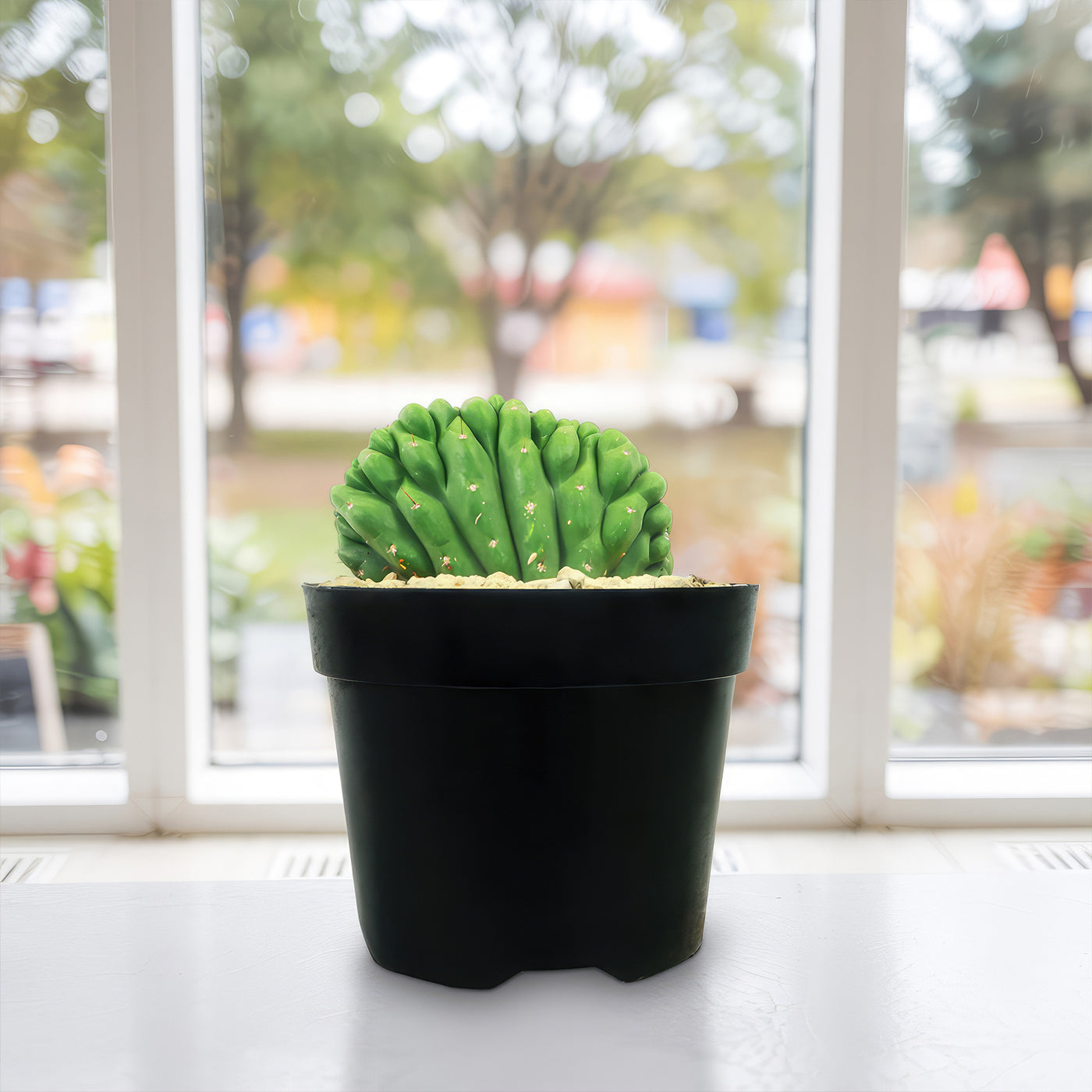
san pedro cactus crested Crested San Pedro Cactus 'Echinopsis pachanoi cristata'

Sale price$20.71 Regular price$23.01
Save 10%

Pay in installments of $5.75 with ShopPay, AfterPay and Klarna

Shipping Estimate
USA
  • USA
  • CAN

Ships within 48 hours · Estimated delivery Aug 30 - Sep 4

Promo Codes Available:

For Your Every Summer RSVP, with Code: SUMMER15

Description

san pedro cactus crested Crested San Pedro Cactus 'Echinopsis pachanoi cristata'Introducing the crested San Pedro cactus, also known as Echinopsis pachanoi cristata (Trichocereus pachanoi cristata), is a unique and rare variety of Echinopsis pachanoi because of its crested growth pattern. This crested form adds an extra level of visual interest to this already stunning San Pedro. Native to the Andes Mountains in Peru and Ecuador, where it thrives in high altitudes and arid conditions, this extraordinary San Pedro cactus is a true

Introducing the crested San Pedro cactus, also known as Echinopsis pachanoi cristata (Trichocereus pachanoi cristata), is a unique and rare variety of Echinopsis pachanoi because of its crested growth pattern. This crested form adds an extra level of visual interest to this already stunning San Pedro. Native to the Andes Mountains in Peru and Ecuador, where it thrives in high altitudes and arid conditions, this extraordinary San Pedro cactus is a true sight to behold.  

This crested San Pedro cactus, which grows slowly, has a stunning fan-shaped stem that forms as a result of cristation. It can grow up to 3 feet tall and develops over time into jaw-dropping brain-like mounds, with the stem displaying vivid shades of green to bluish-green when it is young and dark green when it is ripe. It has whitish areoles that sprout up to seven spines ranging from dark yellow to light brown – talk about an edgy fashion statement! It also produced large white San Pedro cactus flowers during summer. 

San Pedro Crested is a unique and fascinating cactus variety that is highly sought after by collectors and enthusiasts. Propagating this Echinopsis plant can be done through various methods, such as grafting or taking San Pedro cactus cuttings from the crest. Additionally, it is a friendly plant for both pets and humans. It contains mescaline, an alkaloid that has tremendous healing potential and produces psychedelic effects. 

Watering Needs

The watering needs of the San Pedro crested cactus are similar to those of other cacti. It is important to remember that cacti are adapted to survive in arid environments with limited water availability. 

To keep your crested San Pedro cactus healthy, it is best to water it sparingly. Allow the soil to completely dry between waterings to avoid overwatering, which can cause root rot. During the growing season, typically spring and summer, you can water the cactus once every two to three weeks. In the dormant season, which is usually fall and winter, reduce watering frequency to once a month or even less. 

When watering, make sure to thoroughly saturate the soil, allowing the excess water to drain out completely. Avoid leaving the cactus sitting in standing water, as this can also lead to root rot in your Echinopsis pachanoi cristata. 

Light Requirements

The crested San Pedro cactus thrives in bright sunlight. It prefers to be placed in a location where it can receive at least six hours of direct sunlight each day. This cactus variety is adapted to high-altitude regions in Peru and Ecuador, where it is exposed to intense sunlight. 

When growing the San Pedro crested cactus indoors, it's important to place it near a sunny window or provide it with artificial grow lights that mimic natural sunlight. If you notice that your San Pedro cactus is stretching or leaning towards one side, it may be an indication that it is not receiving enough light and needs to be moved to a brighter location. 

However, it's important to avoid exposing this crested echinopsis to extreme temperatures, especially during the hottest part of the day. If you live in a region with scorching summers, it's a good idea to provide some shade or protect the cactus from intense afternoon sun. 

Optimal Soil & Fertilizer Needs

The San Pedro crested cactus requires well-drained soil to prevent root rot. To promote drainage, a suitable soil mix for this Echinopsis pachanoi can be a blend of cactus potting mix and perlite or pumice. Avoid using normal potting soil since it holds too much moisture. Planet Desert has got your back with our specialized cactus potting mix that includes 5 natural substrates with organic mycorrhizae – perfect for promoting healthy roots and happy plants.  

When it comes to fertilizing the San Pedro crested cactus, it's best to do so sparingly. During the growing season, you can fertilize the cactus once a month with a balanced, water-soluble cactus fertilizer. Overfertilizing can lead to excessive growth and may harm the San Pedro cactus. Remember, it's important to allow the cactus to rest during the dormant season, typically in fall and winter, and refrain from fertilizing during this time.  

Hardiness Zone & More

The San Pedro crested cactus is hardy in USDA hardiness zones 9-11. It can tolerate temperatures down to 20°F, but it's best to protect it from freezing temperatures. In terms of temperature preferences, this cactus San Pedro thrives in warm to hot conditions, ideally between 70-90°F. 

When it comes to humidity, the crested San Pedro cactus prefers low to moderate humidity levels. It can tolerate dry air, but it's important to provide some humidity during hot and dry periods, such as misting the cactus or placing a tray of water nearby. However, be cautious not to create excessively humid conditions, as it can lead to fungal issues. 

Overall, the San Pedro crested cactus is adaptable to a range of temperature conditions, but it's important to protect it from freezing temperatures and provide some humidity during dry periods to ensure its optimal growth and health. Be sure to add Echinopsis pachanoi Cristata – crested San Pedro cactus for sale to your collection today and elevate the beauty of your home or garden, with this stunning-looking plant. 

Shipping Notes
  • Free Standard Shipping on $100+ Orders to the USA.
  • Except Preorder products are shipped in 48 hours.
  • Delivery to the USA:
  1. Standard Shipping : 3-10 business days
  • If time is of the essence, please consider selecting expedited delivery for faster service.
Exchange/Return Notes
  • We offer a 30-day return/exchange service after receiving.
  • Final sale items are not eligible for returns or exchanges.
  • To process your return/exchange, please contact us at [email protected]
  • Please click here for more details>>> Return & Exchange Policy
SKU: 94464034416

Discover Niche Categories That Outsell san pedro cactus crested

Top-Converting Item to Boost Your Average Order

4.5 ★★★★★
Based on 11 reviews
Sort
Highest Rating
Newest First
Oldest First
Product Reviews
D
Verified Purchase
Dejah
Lowell, US
★★★★★ 5
Good!
Format: Paperback
In great condition, shipping took a few days though.
WAS THIS REVIEW HELPFUL?YesReportShare
Reviewed in the United States on February 9, 2023
A
Verified Purchase
Amazon Customer
Waukegan, US
★★★★★ 3
Disappointed
Format: Paperback
Two chapters in the book are upside down.
WAS THIS REVIEW HELPFUL?YesReportShare
Reviewed in the United States on January 12, 2022
A
Verified Purchase
Adagg
Pawtucket, US
★★★★★ 1
Awful textbook
Format: Paperback
I think this is the most poorly written textbook I have ever used. The JBL site for this book is garbage. So many spelling mistakes and publishing errors. Rent this book do not buy, your program will most likely not keep this crap around for long.
WAS THIS REVIEW HELPFUL?YesReportShare
Reviewed in the United States on December 20, 2021
A
Verified Purchase
alexandria
Battle Creek, US
★★★★★ 1
Beware there are no page numbers.
Format: Kindle, Format: Kindle
it is not mentioned anywhere for E-textbook kindle version. Only displays location. If you need this for a class it will be impossible to know what exactly needs to be read.
WAS THIS REVIEW HELPFUL?YesReportShare
Reviewed in the United States on June 11, 2023
T
Verified Purchase
Thaumagnost
Alexandria, US
★★★★★ 5
An Informative Introduction Based on Current Academic Studies of Western Esotericism
Format: Hardcover
This introductory text is the fruit of a fairly new field of recognized academic studies which developed as a result of the pioneering literary efforts of scholars such as D. P. Walker (1914 - 1985) and Frances A. Yates (1899 - 1981) who took the subject of Western esotericism seriously rather than denigrate it as an area filled with superstition and irrationalism as many earlier scholars in different specialized fields had done. Other scholars of esotericism who have contributed to this growing field include but are not limited to Henry Corbin, Francois Secret, Antoine Faivre, Arthur Versluis, Joscelyn Godwin, and Wouter Hanegraaff, the last being the senior editor of the landmark Dictionary of Gnosis and Western Esotericism (2005), a collaborative effort by many scholars. Goodrick-Clarke is also a recognized scholar in this field and introduces it to the reader in his own introduction which also addresses the question of how esotericism is defined by those dedicated to studying it. As clarified in the introduction, Western esotericism is rooted in the Hellenistic philosophy of classical paganism as expressed in Alexandrian Hermeticism, Neoplatonism, and Gnosticism which have syncretized with the three Abrahamic religions of Judaism, Christianity and Islam, leaving vital traces within each. Through the Italian Renaissance, a Hermetic revival occurred as a result of the rediscovery of ancient texts which further resulted in the development of magic, astrology, alchemy, and Cabala through prominent individuals such as Marcilio Ficino, Pico della Mirandola, Johannes Reuchlin, Johann Trithemius, Henry Cornelius Agrippa, John Dee, and Paracelsus, each given significant attention. The development of German Naturphilosophie, Christian theosophy through Jacob Boehme and his followers (such as Gichtel, Pordage and Law), and Pietism are also covered before thoroughly introducing us to Rosicrucianism in the early 17th century, high-grade Freemasonry and Illuminism in the 18th century, and the ideas and practices of Emanuel Swedenborg and Franz Anton Mesmer which significantly impacted esotericism. Within the context of Rosicrucianism, the content of the manifestos are discussed along with Johann Valentin Andreae and the Tubingen Circle; in England, Michael Maier, Robert Fludd, and Comenius and the Origins of the Royal Society are covered. The impact of Rosicrucianism and theosophy on Freemasonry are explored as well as the following types of Freemasonry: "Scottish" and Chivalric, German Templar, and Egyptian. Within the context of Freemasonry and Illuminism, the following are also discussed: Martines de Pasqually and the Elect Coens, Louis Claude de Saint-Martin, Martinesism, Martinism, Willermozism, The Illumines of Avignon, and Count Cagliostro. Not only are the ideas of Swedenborg and Mesmer presented but also how they contributed to spiritualism and healing movements in the 19th century, including the United States which birthed Andrew Jackson Davis as the main theologian for spiritualism; Phineas Parkhurst Quimby, Warren Felt Evans and others who developed the New Thought Movement; and Mary Baker Eddy who founded Christian Science. A separate chapter is dedicated to ritual magic from 1850 to the present. Within this chapter, one is introduced to Eliphas Levi and the French Occult Revival, the Hermetic Order of the Golden Dawn and its members, and special attention is given to the contributions of A. E. Waite, Aleister Crowley and Thelemic magick, and Dion Fortune and the Inner Light. I was, however, disappointed to see the section on Crowley end with the following: "Gerald Gardner (1884 - 1964), the founder of modern witchcraft, introduced Crowleyan magick into the neopagan Wiccan movement." For a better understanding of the influential role of Crowley and ritual magic, including the grimoires, on Wiccan practices, I recommend Wicca: Magickal Beginnings (2008) by Sorita d'Este and David Rankine. Helena Blavatsky and her Theosophical Society are given a separate chapter which expounds on her influences, travels, developing doctrines, and legacy. The last chapter titled "Modern Esotericism and New Paradigms" discusses theosophical heirs such as Annie Besant, Charles W. Leadbeater, and Rudolph Steiner (who developed his own religious system called "Anthroposophy"). It also has a section on Fourth Way Groups, introducing Gurdjieff and Ouspensky. Additionally, it covers the scientization of esotericism, New Age science, and Carl Jung's influence on esotericism. One individual I would have liked to see introduced within the context of Steiner is Valentin Tomberg who anonymously wrote Meditations on the Tarot: A Journey into Christian Hermeticism which is recognized by some, including esoteric scholar Antoine Faivre, as a masterpiece of 20th century esoteric/mystical literature. Goodrick-Clarke's book not only includes valuable footnotes and recommendations for further reading for each chapter, but also includes a helpful index as well as over 30 illustrations comprised of portraits, diagrams, plates, charts and other relevant pictures to supplement the text. This historical introduction to Western esotericism deserves wide readership.
WAS THIS REVIEW HELPFUL?YesReportShare
Reviewed in the United States on February 26, 2009

recommand products