Pay in installments of $5.05 with
 ,
,
 and
and

Shipping Estimate
USA
- USA
- CAN
- USA
- CAN
Ships within 48 hours · Estimated delivery Sep 4 - Sep 9
 Promo Codes Available:
For Your Every Summer RSVP, with Code: SUMMER15
Description
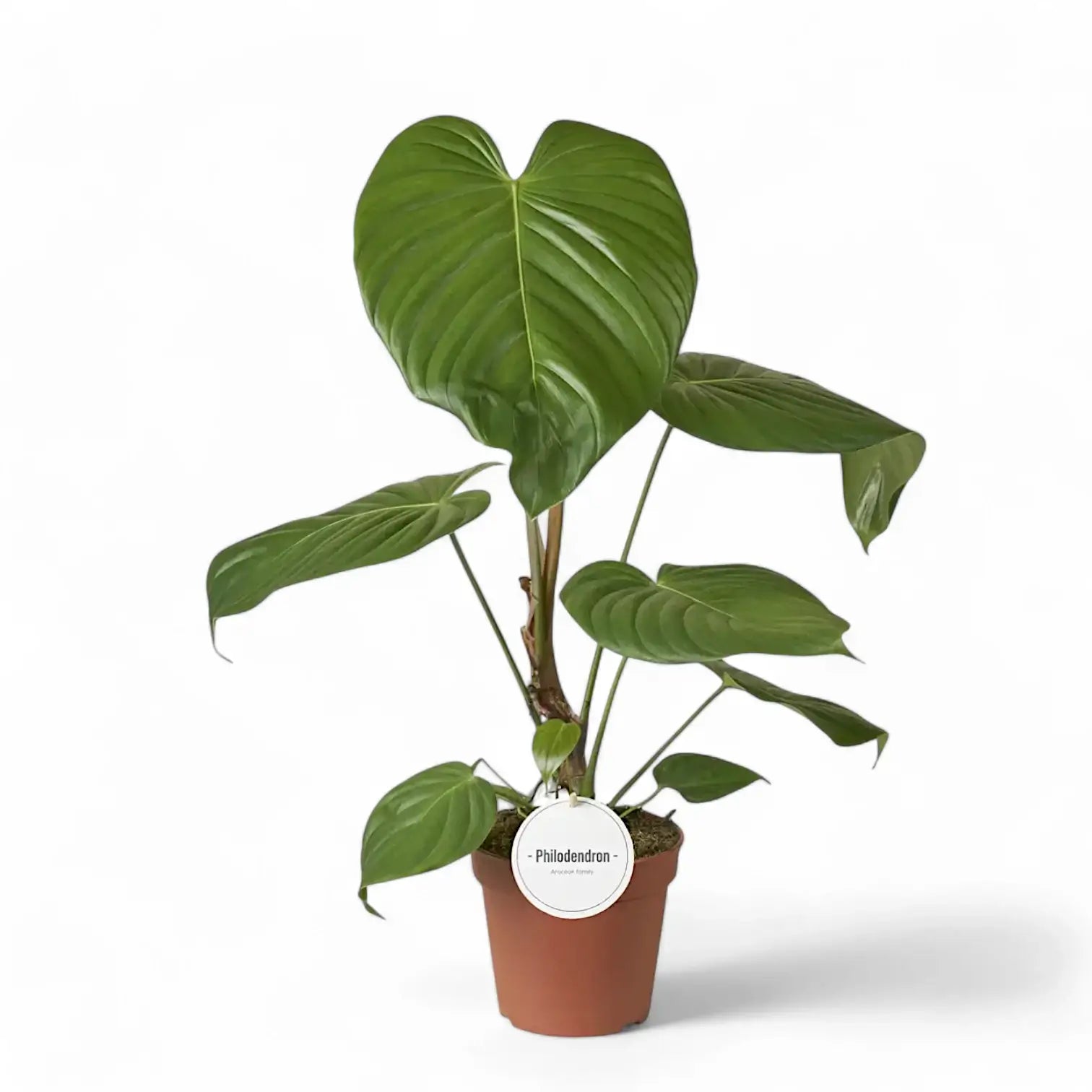
drought tolerant philodendron Philodendron grandipes – Foliage FactoryPhilodendron grandipes Philodendron grandipes is a Central and South American Philodendron with long petioles and broad green, cordate blades. Leaves can arch outward or hang slightly on long petioles, creating an open plant with a wider outline than the pot may suggest. This species ranges from southeastern Nicaragua to Ecuador and grows in wet tropical regions as a scrambling epiphyte. In a pot, the long petioles carry the leaves outward, shift the
Philodendron grandipes
Philodendron grandipes is a Central and South American Philodendron with long petioles and broad green, cordate blades. Leaves can arch outward or hang slightly on long petioles, creating an open plant with a wider outline than the pot may suggest.
This species ranges from southeastern Nicaragua to Ecuador and grows in wet tropical regions as a scrambling epiphyte. In a pot, the long petioles carry the leaves outward, shift the plant’s balance and make stable potting important as the plant matures.
Philodendron grandipes long petioles and leaves
- Leaf shape: Broad, cordate green blades sit on long petioles and widen the plant’s outline.
- Petioles: Long, slender petioles can arch outward or hang slightly as leaves mature.
- Growth habit: The species is described as a scrambling epiphyte in wet forest.
- Indoor size: Mature plants can become wide, so pot balance matters as the leaves lengthen.
How Philodendron grandipes uses space
Philodendron grandipes has elongated petioles and broad blades. The petioles can carry the leaves in an arching or outward direction, so the plant often needs more horizontal space than its pot diameter suggests.
Warmth, moderate to high humidity and a moist but airy root zone suit its wet-forest growth. A dense, soggy mix can hold too much water around the roots, while a very dry setup can lead to weak leaf expansion and crisping edges.
Care for Philodendron grandipes petiole growth
- Pot stability: Use a stable container as the long petioles can shift the plant’s balance.
- Light: Use bright indirect light to keep petioles sturdy and leaves well sized.
- Watering: Water after the upper 25–35% of the pot has dried, then empty any standing water.
- Humidity: Moderate to high humidity helps broad leaves open evenly and reduces edge stress.
- Substrate: Choose a chunky, moisture-retentive aroid mix with bark, perlite and a light organic component.
- Temperature: Keep at 18–28 °C and avoid cold root conditions.
- Repotting: Repot when roots fill the pot or the plant becomes difficult to water evenly.
- Feeding: Feed lightly during active growth with a balanced fertiliser, especially while new leaves are expanding.
- Propagation: Propagate from stem sections with at least one viable node; single leaves without a node will not produce a new plant.
- Pruning: Remove damaged leaves close to the base and trim only node-bearing stems if size control is needed.
- Semi-hydroponics: Can adapt to mineral substrates such as pon, pumice, lava or LECA if the root zone stays evenly moist and well aerated.
- Growth rate: Usually moderate indoors, with wider growth developing as the root system and petioles mature.
Philodendron grandipes petiole and leaf issues
- Leaning growth: Rotate the pot gradually and check whether the plant is reaching strongly toward the light.
- Yellow leaves: Inspect the root zone for staying wet too long in dense substrate.
- Crisp margins: Check humidity, watering rhythm and heat from nearby radiators or strong sun.
- Thin, stretched petioles: Increase indirect light and make sure the plant is not crowded by taller foliage.
- Pests: Check petioles, leaf undersides and new growth for spider mites, thrips, mealybugs or scale.
Pet safety for Philodendron grandipes
Philodendron grandipes is toxic if eaten. The plant contains calcium oxalate crystals that can irritate the mouth, so keep it out of reach of pets that chew plants.
Philodendron grandipes etymology and species background
The genus name Philodendron comes from Greek roots meaning tree-loving. Philodendron grandipes was described by Kurt Krause and published in Engler’s Pflanzenreich in 1913. The epithet grandipes combines Latin roots for large and foot.
Order Philodendron grandipes for long petioles, broad green leaves and an open shape that becomes more pronounced with maturity.
Shipping Notes
- Free Standard Shipping on $100+ Orders to the USA.
- Except Preorder products are shipped in 48 hours.
- Delivery to the USA:
- Standard Shipping : 3-10 business days
- If time is of the essence, please consider selecting expedited delivery for faster service.
Exchange/Return Notes
- We offer a 30-day return/exchange service after receiving.
- Final sale items are not eligible for returns or exchanges.
- To process your return/exchange, please contact us at [email protected]
- Please click here for more details>>> Return & Exchange Policy