SKU: 95416964038
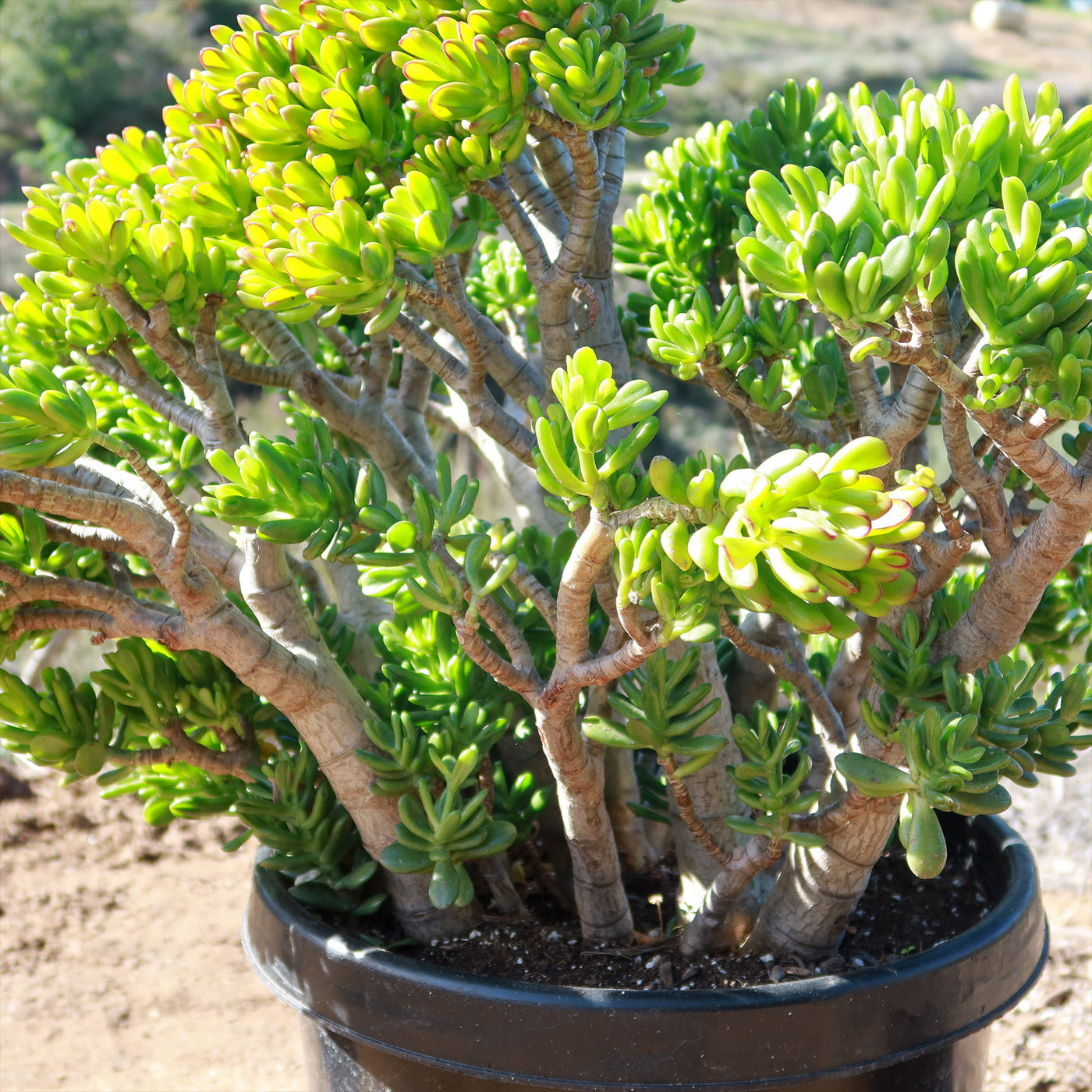
jade plant in big pot

jade plant in big pot Jade Bonsai Tree

Sale price$23.59 Regular price$26.21
Save 10%

Pay in installments of $6.55 with ShopPay, AfterPay and Klarna

Shipping Estimate
USA
  • USA
  • CAN

Ships within 48 hours · Estimated delivery Jul 18 - Jul 23

Promo Codes Available:

For Your Every Summer RSVP, with Code: SUMMER15

Description

jade plant in big pot Jade Bonsai TreeIntroducing a stunning jade bonsai tree plant, also known as Crassula ovata 'Hobbit', similar to Gollum jade. It is a cultivar of the Crassula ovata species, originally from South Africa. This lovely plant goes by several common names, such as Hobbit Jade, Shrek's Ears, and Ogre's Ears. It's important to note that while Crassula ovata Hobbit is referred to as a "tree," it is actually a succulent plant that can develop a bonsai like base, giving it a

Introducing a stunning jade bonsai tree plant, also known as Crassula ovata 'Hobbit', similar to  Gollum jade. It is a cultivar of the Crassula ovata species, originally from South Africa. This lovely plant goes by several common names, such as Hobbit Jade, Shrek's Ears, and Ogre's Ears.

It's important to note that while Crassula ovata Hobbit is referred to as a "tree," it is actually a succulent plant that can develop a bonsai-like base, giving it a tree-like appearance. This adds to its unique charm and makes it a popular choice among bonsai enthusiasts.


The jade bonsai tree probably needs to be 10 gal minimum to start looking like a tree; ours is a15gal, which is why it has a more mature trunk and developed appearance compared to dwarf jade bonsai trees. The larger size allows for more intricate shaping and growth potential.

When cultivated as a small bonsai tree, this jade bonsai tree typically reaches a height of around 6-8 inches, showcasing a compact shape and bushy appearance.

However, when grown as a regular potted plant, it can grow up to 3 feet tall.  Imagine adding a rare and beautiful plant to your collection that develops into a woody, branching shrub that makes an excellent large bonsai tree.

If given the proper care, the jade hobbit plant can live up to 70 years. Although it grows slowly, adding only two inches to its height each year, this plant can grow to a maximum height of three to six feet. 

The jade bonsai tree boasts thick, fleshy leaves that are tubular and spoon-shaped, resembling the ears of characters from movies like "The Hobbit" or "Shrek." Its leaves have a glossy, jade-green hue, and when exposed to direct sunlight, they may develop reddish edges.

The flowers of this jade bonsai tree are pinkish-white, star-shaped, and bloom from late winter to late spring, making it a true showstopper. Although it typically does not bloom indoors, this jade succulent's green and white variegated leaves are attractive.

When and How to Water Your Hobbit Jade Plants

The jade bonsai tree is drought-tolerant by nature, and its fleshy, water-storing stems can hold a lot of water.  However, their root structure is easily susceptible to overwatering, so make sure that you don't overwater, as it can lead to root rot and fungal infections. The Hobbit Jade prefers watering once every 1-2 weeks in the growing season, and once a month in the dormant season.

The Crassula ovata hobbit prefers to be watered using the "soak and dry" technique. This involves thoroughly watering the jade hobbit plant before allowing it to completely dry out between watering sessions. 

Both potted and outdoor variegated jade hobbit plants should receive a deep soak once or twice a month during their growth periods, ensuring proper drainage so that the roots don't become waterlogged. Avoid watering your outdoor Crassula species when it's raining or during the winter months.

Light Requirements - Where to Place Your Jade Hobbit Plant

If growing indoors, place your Crassula ovata hobbit directly in front of a west- or south-facing window.

If they don't receive enough light, their stems may grow leggy and become paler, and their spines will shorten. So, make your jade hobbit plant happy and give it plenty of light.

When grown outdoors, providing enough light for these desert jade hobbit plant (Crassula ovata Hobbit) succulents is one of the most important aspects of their care.

It is important to grow your jade plants in areas that receive at least 4-6 hours of bright, indirect light daily to keep them happy. Under bright sunlight, bright red margins appear on leaves that are up to 2 inches long.

It's critical to remember that during a heatwave, during long periods of extreme heat, your jade hobbit tree could still sustain sun damage or get sunburned. You can protect the plant in this situation by moving it indoors or to a shaded area.

Optimal Soil & Fertilizer Needs 

The hobbit jade plants prefer sandy, well-drained soil, as excess moisture can promote root and stem rot. Planet Desert specializes in succulents and has a specialized succulent potting soil that includes an organic substrate with mycorrhizae to help with the growth of a healthy root system to help your Crassula ovata hobbit jade succulents thrive.

When it comes to fertilizing your jade hobbit plant, organic fertilizers with an equal mixture of 5-10-5 (NPK) once a year in the growing season (spring) will keep your soil alive. So, skip those harsh chemicals and give your hobbit jade succulent some love with some awesome organic fertilizer!

Hardiness Zones & More 

In the United States, this is mostly an indoor plant, but if you live in southern Florida or Hawaii, then you can cultivate it outdoors in USDA zones 9-11.

If you live in a colder climate, it's best to keep the bonsai indoors during winter or provide protection from frost.

When placing the Jade Bonsai Tree outdoors, choose a location that receives bright, indirect sunlight or partial shade. Avoid exposing it to direct, intense sunlight, as it can scorch the leaves. Additionally, ensure the soil has excellent drainage to prevent waterlogging.

How to Grow Best Indoors Jade Bonsai Tree

When it comes to indoor bonsai cultivation, the Crassula ovata hobbit prefers average room temperatures between 60-75°F. It can tolerate slightly cooler temperatures during winter, around 50-55°F, but avoid exposing it to freezing temperatures. The Jade Bonsai Tree is adaptable and can tolerate average indoor humidity levels. However, it appreciates a slightly more humid environment, especially during the dry winter months. To increase humidity, you can place a tray filled with water near the growing bonsai or use a humidifier.

Wildlife - Hobbit Jade Plant Attracts the Following Friendly Pollinators

The Hobbit Jade Plant is known to attract butterflies, bees, and hummingbirds due to its vibrant flowers and sweet nectar. These pollinators play a crucial role in the plant's reproduction and overall ecosystem health.

Butterflies
Bees
Hummingbirds
Lady Bugs
Multi Pollinators
Other Birds

Key Takeaways

  1. The curled, tubular leaves resemble little green fingers or trumpet-shaped tubes, which inspired its name ‘Hobbit’ after J.R.R. Tolkien’s mythical characters.
  2. Unlike the standard jade, the ‘Hobbit’ grows more compact and twisted, making it a naturally ideal candidate for bonsai without needing extensive shaping.
  3. In feng shui, it is considered a “money magnet” plant, and the unusual tubular leaves are thought to resemble fingers grasping prosperity.
  4. The tips of its tubular leaves can turn bright red when exposed to plenty of sunlight or cool night temperatures, adding seasonal color variation.

How to Propagate Your Crassula ovata 'Hobbit'

Crassula ovata 'Hobbit' can be propagated through stem cuttings or leaf cuttings. To propagate through stem cuttings, simply cut a healthy stem from the plant and allow it to callous before planting it in well-draining soil. Leaf cuttings can be taken by gently twisting a leaf from the plant and allowing it to dry out before planting it in soil.

Final Thoughts

Overall, the Jade Bonsai tree (Crassula ovata Hobbit) is a super cool plant with some awesome features. It's got these thick, succulent leaves that give it a unique and tree-like appearance. Crassula ovata Hobbit, often referred to as a "tree," is actually a succulent plant that can create a bonsai-like base, enhancing its unique charm and making it a popular choice among bonsai enthusiasts. Provide bright, indirect sunlight or partial shade, and use well-draining soil. Protect it from frost during colder months.

Shipping Notes
  • Free Standard Shipping on $100+ Orders to the USA.
  • Except Preorder products are shipped in 48 hours.
  • Delivery to the USA:
  1. Standard Shipping : 3-10 business days
  • If time is of the essence, please consider selecting expedited delivery for faster service.
Exchange/Return Notes
  • We offer a 30-day return/exchange service after receiving.
  • Final sale items are not eligible for returns or exchanges.
  • To process your return/exchange, please contact us at [email protected]
  • Please click here for more details>>> Return & Exchange Policy
SKU: 95416964038

Discover Niche Categories That Outsell jade plant in big pot

Top-Converting Item to Boost Your Average Order

4.6 ★★★★★
Based on 17 reviews
Sort
Highest Rating
Newest First
Oldest First
Product Reviews
A
Verified Purchase
Anna
Charlottesville, US
★★★★★ 5
Work fantastic
Size: 100 Count (Pack of 1)
I have a terrible immune system and work in a hospital. I use to stay sick constantly until I started taking these and now I rarely get sick!
WAS THIS REVIEW HELPFUL?YesReportShare
Reviewed in the United States on March 28, 2026
J
Verified Purchase
Jessica S.
Louisville, US
★★★★★ 5
A Boost to My Health
Size: 100 Count (Pack of 1)
I’ve been using this elderberry supplement for a few weeks now, and I’m already seeing amazing results! It’s a natural powerhouse that’s helped boost my immune system and keep me feeling strong and energized. The capsules are easy to take and have no aftertaste, which is always a bonus.
WAS THIS REVIEW HELPFUL?YesReportShare
Reviewed in the United States on March 24, 2025
Z
Verified Purchase
ZMR
Bozeman, US
★★★★★ 5
Re: potentially toxic substances
Flavor Name: Unflavored, Size: 8 Ounce (Pack of 1)
For those worried about the presence of potentially harmful substances such as Mercury, Lead, Aluminum, Fluoride, and Arsenic please do your research before panicking. This product is natural and all substances in it are naturally occurring. To find a product without the certain substances most likely means you are getting a more processed and synthetic product. Please read below an email I received from Dr. Darrin Starkey re: why those substances are in ConcenTrace mineral drops. "Trace Minerals Research regularly tests for the presence of heavy metals, using Environmental Protection Agency (EPA) testing methods in addition to other standard testing methods. Test results consistently show that the amounts of these elements are well below safety tolerance levels established for food and drug manufacturing. In fact, recent test results released by an independent laboratory, using U.S. EPA approved testing methodologies, affirm that Trace Minerals Research’s mineral products do not contain levels that even approach the EPA’s reference dose for these elements. The recent findings should assure you, as well as our consumers everywhere, that Trace Minerals Research’s products are safe and do not pose any threat of heavy metal toxicity. The product is GRAS affirmed. If you are not familiar with GRAS affirmation, I would recommend educating yourself on it. Our trace minerals are harvested (not manufactured) from the Great Salt Lake, and if you look at the landscape of the Great Salt Lake, you realize very quickly that it is surrounded by mountains. These mountains have various streams and rivers, that naturally runoff into the Great Salt Lake, and with no outlets, the lake becomes a sort of catch basin. As the snowpack melts in the spring, and this runoff makes it's way down the mountains, it picks up minerals from the rocks and soil that then accumulate in the Great Salt Lake. Information that was put together by the Utah Geological Society on the Great Salt Lake actually clarifies how the lake is able to self clean without any outlets. It is important, and interesting, to note this information because while the lake has been concentrating inorganic salts in its waters for thousands of years, the total soluble concentrations of heavy metals are actually low. The information the Utah Geological Society put together states that the heavy metals, including clays, are enabled within the sediments and brines due to anaerobic conditions that then immobilize the metals. At Trace Minerals Research, we take great pride in the quality and purity of our products. Our mineral brines are harvested from our private ponds on the Northwest side of the lake. Once the trace minerals are harvested, each lot of mineral brines undergoes extensive testing by both "in-house" and independent laboratories (as I have already mentioned), to test for impurities and to ensure potency, purity, and balance. Careful handling is a part of our harvesting process which is similar to that of an agricultural operation, and, just as in organic farming, great care is taken to avoid contamination by chemicals. You specifically mentioned a concern about Lead, Mercury, Fluoride, Arsenic, and Aluminum. Again, this is question/concern many people have, and so it is important to understand how trace minerals work to understand why we have trace amounts of these elements in the product. First off, toxicity often occurs when a single element is introduced out of balance with other trace minerals. Man-made by-products are, all too often, the culprits of this because they are found in much higher doses than nature would have them. For instance, mercury contamination of our oceans has created a situation where the fish we consume from the very oceans we have contaminated contain much higher mercury levels than nature would normally have them contain. Most forms of life are not very good at expelling mercury so they tend to accumulate and concentrate mercury that they consume. If plankton consumes sea water over its life, it will tend to accumulate any mercury from the sea water and, thus, the mercury in the plankton will typically be higher than levels that are found in the sea water. When a fish eats the plankton over its life, it tends to accumulate mercury from the plankton and, thus, the fish will typically have higher levels of mercury than the plankton. As this paradigm continues upwards through the food chain, mercury levels tend to increase. The balance of trace minerals has been disrupted, and and as a result, there is now concern over human consumption of fish and the risk of mercury contamination. The amount of Mercury found in 40 drops (1/2 teaspoon) of ConcenTrace is 0.008 parts per million (ppm). To put this into perspective, in a baked potato or a lean grilled chicken breast you get 0.4 ppms, and in a strawberry, you get 0.6 ppms of Mercury. Arsenic is another perfect example of a man-made byproduct that has been linked to toxicity and as a result, most information about arsenic is focused around this concern. But, did you know that some of the richest sources of arsenic in our diets are found in our seeded berries such as strawberries. Most people wouldn't think twice about popping a strawberry in their mouth, and shouldn't, but that is also the amount of arsenic we are talking about in the ConcenTrace. Fluoride does occur naturally, however, the concern over fluoride comes not from the naturally occurring fluoride, but from synthesized versions that are made by man and then added to our drinking water and to toothpaste. On average, we usually consume anywhere from 1.3-1.8 milligrams of fluoride a day from our foods. Fluoride naturally occurs in potatoes, beef, apples, chicken, milk, eggs, and oatmeal to name just a few. The same applies to both Lead and Aluminum as well that are found in our product. Both are naturally occurring trace minerals found in their naturally occurring ionic state, and as such, are in similar amounts to that which is found naturally existing in many of the foods we consume. Understanding how trace minerals work, helps to put into perspective the concerns over toxicity. Again, toxicity occurs when a single element is introduced out of balance with other trace minerals, and, as I said, man-made by-products are, all too often, the reason why we associate certain elements with toxicity. Trace minerals work synergistically with one another to ensure that proper absorption, activation, regulation, and pH balance occurs within the body. An example of this synergistic relationship is that of the one between molybdenum and iron. All the iron in the world will do you no good without molybdenum. Molybdenum performs a very important, but basic, function by mobilizing iron from its storage location in the liver so that it can help blood carry oxygen to cells and tissues. This important, but often overlooked mineral, is vital in sustaining our lives, and only recently was its purpose discovered. Another role of trace minerals is to police each other. When taken in proper balance, trace minerals control one another to ensure that no one element gets out of control and creates a toxic situation within the body. Trace Minerals Research does not manufacture their trace minerals. They are harvested in their naturally occurring state, and as such, also occur in their naturally balanced state. Again, in this state, they help to regulate one another, and create a balanced state within the body. Best of health, Dr. Darrin Starkey Manager of Education and Training Trace Minerals Research " Hope this helped!
WAS THIS REVIEW HELPFUL?YesReportShare
Reviewed in the United States on March 30, 2017
C
Verified Purchase
C. Andrews
Omaha, US
★★★★★ 5
Great Mineral supplement, easily incorporated into food/drinks. No notable taste!
Flavor Name: Unflavored, Size: 2 Fl Oz (Pack of 1)
I would give 20 Stars if I could, too. It takes a few to 6 weeks to begin to experience the benefits, but when you do: Increasd energy, stamina, fingernails are stronger, and more. The liquid blends easily with any drink you have, it's pretty much flavorless and seems easily digestible.
WAS THIS REVIEW HELPFUL?YesReportShare
Reviewed in the United States on May 17, 2026
B
Verified Purchase
BN
Houston, US
★★★★★ 5
Good stuff
Flavor Name: Unflavored, Size: 8 Ounce (Pack of 1)
I agree with many of the reviews, as far as the taste being horrible…It really is, it’s just so salty, that it doesn’t want to go down..I now mix it with a small amount of juice, equivalent to a shot glass…I can still taste it but nothing bad..You can try brushing your teeth first or suck on an ice cube before hand…That numbs the taste buds It’s definitely a good product…The first day I took it, I did a 1/2 tsp = 40 drops, at night…I had horrible dreams and I never remember any of my dreams ever and I woke up with a mild headache that lasted just about all day..I wasn’t going to continue the drops…I then decided to divide the dosage in 1/2, I took 20 drops in the morning and 20 at night…That made a huge difference..I wake up no problem in the mornings. I don’t feel tired,I feel more focused now and my hot flashes aren’t as bad…I also have more energy throughout the day..I don’t have issues with pain, my one knee does click and that’s even gotten better. I have been taking it for about a week now…My husband is also taking it, ever since he had “Covid”, back in 2021,he had dry mouth and was drinking so much water and it wasn’t helping…He’s been on it for about 4 days now and has noticed a big difference in the dry mouth. I will definitely continue to take this product. I don’t normally write reviews, unless either, I really like a product or despise one and try and let people know. It is a little pricey compared to others, but it lasts a long time…Our foods now are depleted because the soil isn’t rich in minerals anymore..I would definitely recommend this product.
WAS THIS REVIEW HELPFUL?YesReportShare
Reviewed in the United States on March 1, 2024

recommand products