Pay in installments of $6.17 with
 ,
,
 and
and

Shipping Estimate
USA
- USA
- CAN
- USA
- CAN
Ships within 48 hours · Estimated delivery Oct 11 - Oct 16
 Promo Codes Available:
For Your Every Summer RSVP, with Code: SUMMER15
Description
philodendron campii lynette care Philodendron campii 'Lynette' – Foliage FactoryPhilodendron campii 'Lynette' Philodendron campii 'Lynette' is a rosette forming Philodendron with long, narrow green leaves rising from a short central stem. The plant forms a rounded shape in the pot, with arching leaves that layer outward as it matures. The glossy to semi glossy leaves are usually narrow oblong to lance shaped, with a clear midrib and petioles that angle outward from the centre. New growth appears from the middle of the rosette,
Philodendron campii 'Lynette'
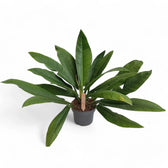
Philodendron campii 'Lynette' is a rosette-forming Philodendron with long, narrow green leaves rising from a short central stem. The plant forms a rounded shape in the pot, with arching leaves that layer outward as it matures.
The glossy to semi-glossy leaves are usually narrow-oblong to lance-shaped, with a clear midrib and petioles that angle outward from the centre. New growth appears from the middle of the rosette, while older outer leaves gradually age away around the base.
How Philodendron campii 'Lynette' forms its rosette
- Rosette habit: Short central stem with leaves arranged in a rounded form.
- Leaves: Long, narrow green blades with a glossy to semi-glossy surface.
- Pot habit: Self-supporting shape that stays upright without a moss pole.
- Base care: Needs even moisture, drainage and air around the short stem.
Wet-forest origin of Philodendron campii
Philodendron campii comes from wet tropical forests in Colombia, Ecuador, Peru and northern Brazil. Its usually epiphytic, rosulate habit suits an open mix that stays slightly moist without becoming dense around the short stem.
The central growth point should not sit in a wet, compacted mix. A proportionate pot, free drainage and careful watering help protect the base while the narrow leaves continue rising from the middle of the plant.
Caring for the short stem of Philodendron campii 'Lynette'
- Light: Give bright indirect light; direct midday sun can mark the narrow leaves.
- Watering: Water when the upper 20–30% of the mix has dried, then let excess water drain fully.
- Substrate: Use a chunky aroid mix with bark, perlite or pumice, and a moisture-holding organic component.
- Humidity: Moderate to good humidity helps fresh central leaves expand smoothly.
- Temperature: Best kept warm, ideally above 18°C, with protection from cold glass, draughts and winter transport stress.
- Potting: Choose a stable pot with drainage; repot only when roots have clearly filled the current container.
- Fertilizing: Feed lightly during active growth with a balanced fertiliser at reduced strength.
- Propagation: Usually propagated from basal shoots or specialist nursery production, not from single leaf cuttings.
- Pruning: Remove ageing outer leaves close to the base without cutting into the central growth point.
- Semi-hydroponics: Can adapt to mineral substrates such as pon, pumice, lava or LECA if the short stem stays above the wet zone.
- Growth rate: Usually moderate indoors, with the rosette widening gradually as new leaves replace older outer growth.
Philodendron campii 'Lynette' problems around the base
- Yellow outer leaves: One old leaf at a time is normal; several at once usually points to a wet root zone or low light.
- Soft base: Check the central stem and substrate depth; reduce watering and improve aeration if the base stays damp.
- Brown leaf tips: Look for irregular watering, dry air near heat sources or mineral-heavy water.
- Small new leaves: Move the plant closer to bright filtered light and check whether the roots are cramped or staying too wet.
- Pests: Check the leaf bases and undersides for spider mites, thrips, mealybugs or scale, especially on stressed plants.
Philodendron campii 'Lynette' pet safety
Like other Philodendron, Philodendron campii 'Lynette' contains calcium oxalate crystals. Keep it away from pets that bite plants, and wash hands after pruning or removing damaged leaves if your skin is sensitive.
Philodendron campii etymology and publication
The genus name Philodendron comes from Greek roots meaning tree-loving. Philodendron campii was described by Thomas B. Croat in Aroideana in 2004. The epithet campii is a Latinized commemorative name based on the surname Camp.
Order Philodendron campii 'Lynette' for a compact, narrow-leaved rosette Philodendron with a clean upright shape in the pot.
Shipping Notes
- Free Standard Shipping on $100+ Orders to the USA.
- Except Preorder products are shipped in 48 hours.
- Delivery to the USA:
- Standard Shipping : 3-10 business days
- If time is of the essence, please consider selecting expedited delivery for faster service.
Exchange/Return Notes
- We offer a 30-day return/exchange service after receiving.
- Final sale items are not eligible for returns or exchanges.
- To process your return/exchange, please contact us at [email protected]
- Please click here for more details>>> Return & Exchange Policy