SKU: 9922242369
where can you buy tiger lilies

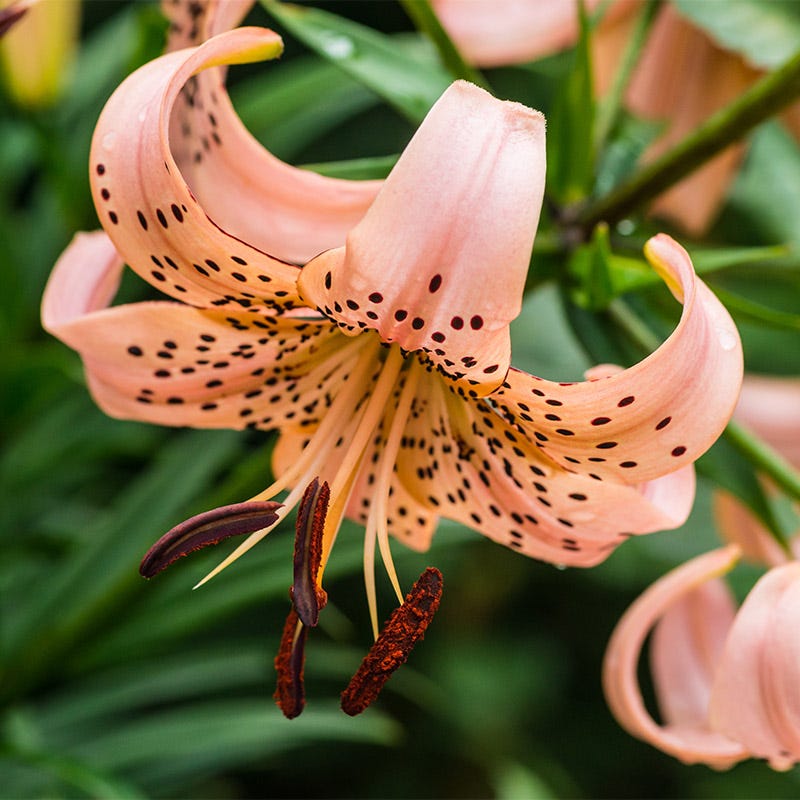
where can you buy tiger lilies Pink Tiger Lily Bulbs, Lilium

Sale price$26.47 Regular price$29.41
Save 10%

Pay in installments of $7.35 with ShopPay, AfterPay and Klarna

Shipping Estimate
USA
  • USA
  • CAN

Ships within 48 hours · Estimated delivery Jul 20 - Jul 25

Promo Codes Available:

For Your Every Summer RSVP, with Code: SUMMER15

Description

where can you buy tiger lilies Pink Tiger Lily Bulbs, LiliumIn more recent years, the hybridizers have managed to create new colors in the Tiger Lily group, maintaining the large flowers, the easy culture, the perennial qualities, and even the handsome black spots of the original Orange Tiger.' The true Tiger Lilies: Don't make a common mistake, and call just any old spotted orange lily a 'Tiger Lily.' Only one group is descended from the real thing. Like most Asian species lilies, this old reliable was a

In more recent years, the hybridizers have managed to create new colors in the Tiger Lily group, maintaining the large flowers, the easy culture, the perennial qualities, and even the handsome black spots of the original Orange Tiger.'

The true Tiger Lilies: Don't make a common mistake, and call just any old spotted orange lily a 'Tiger Lily.' Only one group is descended from the real thing. Like most Asian species lilies, this old reliable was a staple in the Oriental diet for centuries. The bulbs were--and are--cooked for foods and soups. But it's not the taste that made this lily bulb world famous. It's the beautiful flowers and the ease of growing them.

The true Tiger Lily is native to Korea, but today, gardeners the world over enjoy the beautiful big flowers on strong stems that return year after year. In fact, Tiger lilies are now so common in the US, many people think they're native.

As long as you have well-drained soil, they will grow for you, perfectly perennial even in some of America's coldest climates.

This is the lily with little black 'bulbils' (baby bulbs) that form up and down the stem in the leaf axils. These little bulbs drop to the ground naturally, and spring up the next year as baby tiger lily plants. Over the years, you'll have an expanding clump.

This is the perfect no-maintenance lily to add to your flower border or particularly, your wildflower meadow. A few towering lilies over a wild meadow in full bloom is a wonderful mid-summer sight.


Growing Lilies: True lilies (which don't include daylilies and others which are not in the genus Lilium) are easy to grow today, and more popular every season. Since they are upright and take practically no space at ground level, it's easy to plant lilies between other established perennials and shrubs. Most can also tolerate some shade, which adds versatility for the gardener. There are many lily groups, but to keep it simple, we will consider only a few of the main types that are important to gardeners. Each lily we ship includes complete instructions for planting. So don't hesitate. You can easily bring the spectacular beauty of lily flowers to any summer meadow or garden.

'Wild' Lilies or 'Species' Lilies These are the true wildflowers from the world over. They are the ones all the glamorous hybrids are descended from. We're fortunate to have some of these botanical treasures on our list of lilies this season.

Oriental Hybrid Lilies are the now famous, very fragrant ones with large, flattened flowers such as red Stargazer and white Casa Blanca. These are the ones now so popular in the floral trade, but are also very easy to grow. They bloom from mid-summer through early fall. Most have very large, outward-facing, fragrant flowers.

Asiatic Hybrid Lilies are today's largest group of garden lilies, quite easy to 'naturalize'. This growing group of lilies was begun by hybridizers in the US, and were first called 'Mid-Century Hybrids.' Compared to Orientals, the Asiatic Hybrid lilies bloom earlier (early to mid summer), the plants are shorter, the flowers a bit smaller, and most blooms are upward-facing and star-shaped. Some of the most famous Asiatic Hybrids are yellow 'Connecticut King,' and the famous red, 'Gran Paradiso.'

Tiger Lilies. This group is led by the famous old orange wild lily, which used to be called Lilium tigrinum. Botanists have changed that to Lilum lancifolium, but that doesn't stop most people (including us) from using the old name 'tigrinum.' From the original orange, the hybridizers have created new colors from white to pink. All have the large flowers, black spots, and tough perennial qualities of the original. (By the way, don't call any old spotted orange lily 'tiger lily'. This one is the real thing, and no lily common name is more mis-used.)

Trumpet Lilies Sometimes called 'Aurelian Hybrids' or other names, the large, tall trumpet lilies are all descended from The Regal Lily, a white wild species lily from China. All are incredibly fragrant, and wonderful for cutting. They grow tall, and often need staking, since a well-grown stalk can have over 15 huge flowers.

Shipping Notes
  • Free Standard Shipping on $100+ Orders to the USA.
  • Except Preorder products are shipped in 48 hours.
  • Delivery to the USA:
  1. Standard Shipping : 3-10 business days
  • If time is of the essence, please consider selecting expedited delivery for faster service.
Exchange/Return Notes
  • We offer a 30-day return/exchange service after receiving.
  • Final sale items are not eligible for returns or exchanges.
  • To process your return/exchange, please contact us at [email protected]
  • Please click here for more details>>> Return & Exchange Policy
SKU: 9922242369

Discover Niche Categories That Outsell where can you buy tiger lilies

Top-Converting Item to Boost Your Average Order

4.8 ★★★★★
Based on 9 reviews
Sort
Highest Rating
Newest First
Oldest First
Product Reviews
A
Verified Purchase
Amazon Customer
Chelsea, US
★★★★★ 5
Engaging & Effective for toddlers w/Autism!
Format: Paperback, Format: Paperback
My almost 3 year old was recently diagnosed with Autism. He struggles with transitions and also has a speech delay, which often contributes to big meltdowns when he doesn’t get his way. He’s been a “hitter” since about 18M… and it’s so hard! I know he has big emotions and can’t regulate them easily. This book is FANTASTIC! It’s easy to read and has cute and relatable illustrations. It can be a little repetitive, but that’s what helps get the point across. Let’s face it, my son is also very repetitive, so it seems to resonate with him. It talks about different feelings and emotions, how it’s ok to feel that way, and how to handle them without hitting. For example, you can use your words to ask a grownup for help; you can draw an angry picture; you can squeeze your hands into a ball and release them, etc. There’s different options for different scenarios, and each one is described in a way that toddlers can figure out how to do it themselves. His favorite is to squeeze his hands into a fist, or give his body a big “squeeze hug.” I’ve already caught him doing that a few times instead of slapping me! It’ll take practice (like the book mentions) but I think he’ll be able to self-regulate better with some of these ideas!! I also have some new phrases to use and picked up some sign language. I love the tips for caregivers in the back! If you have a hitter (especially one on the spectrum), you need this! I actually like it better than our other book, Hands Are Not for Hitting. Similar story line, but this one is more detailed and better suited for older toddlers. I highly recommend it!! Hope this helps ☺️
WAS THIS REVIEW HELPFUL?YesReportShare
Reviewed in the United States on March 14, 2022
E
Verified Purchase
eDUB
Massapequa, US
★★★★★ 5
Wonderful Book for Toddlers and Up!
Format: Paperback, Format: Paperback
Great book for toddlers or older! I bought this for my 2.5 y.o. and she would request me to read it every night. She would demonstrate some of the techniques described in the book at her own voilition, which was awesome because it showed that a couple methods were 'sticking.' The next step was trying to help her to perform the technique when needed....like when wanting to hit her brother, which is a bit more challenging! The illustrations are beautiful, large, and colorful. There's one sentence that I think is confusing for little ones to comprehend, such as the breathing method you'd use when blowing bubbles or a pinwheel. I wish there was an "as if" in there so it's taken less literally. However, the flow of the book is nice. It goes through situations which might occur, how you might feel, and then the techniques. Love the page that summarizes all the techniques and the 6 strategies in the back for parents. The pages are a slightly thicker than most paperbacks for kids - more durable for sure, which I appreciate. It's written by a child psychologist, so you know it's going to be a book of quality!
WAS THIS REVIEW HELPFUL?YesReportShare
Reviewed in the United States on January 23, 2025
J
Verified Purchase
James Roberts
New York, US
★★★★★ 5
Well done
Format: Hardcover
Beautiful book. Big, beautiful illustrations. The reading is easy though some of the concepts may be a little difficult for younger ones to grasp. Though this just leaves a great opportunity for further discussion on all the different reasons for crying. Great teaching tool. The illustrations do a wonderful job depicting these deeper concepts. Readers may find themselves lingering a little bit on each page, after the reading is done, absorbing the meaning of the words and pictures. Very well done.
WAS THIS REVIEW HELPFUL?YesReportShare
Reviewed in the United States on May 17, 2020
S
Verified Purchase
SacDancer
New York, US
★★★★★ 5
Beautiful book, sweet message
Format: Hardcover
Go ahead and buy it for all the kids you know
WAS THIS REVIEW HELPFUL?YesReportShare
Reviewed in the United States on December 11, 2021
A
AnnieB
Port Orchard, US
★★★★★ 5
Sensitively written and beautifully illustrated
Format: Hardcover
Why Do We Cry? is an sweetly illustrated and sensitively written book for young readers. Originally published in Spanish in 2018, this English translation released 7th April 2020 from Kids Can Press is 34 pages and available in hardcover and ebook formats. The book takes the form of a dialogue between a mother and son about why people cry and why it's good to examine and experience negative emotions so we can process them and what function tears (and crying) actually serve physiologically and emotionally. The text by Fran Pintadera (weblink in Spanish) is supported and enhanced beautifully by the nuanced illustrations by Ana Sender. This would make a superlative reading circle, library group, or classroom read for youngsters. There's a short discussion resource at the back of the book which includes some science based information on tears and the physiological functions they perform. Learning to process strong emotion in a positive and constructive manner is -vital- for development. I appreciated that the dialogue was sensitively handled and that the author chose to make the child male was a nice touch. I think that this could be a very valuable book *especially* given our current pandemic world situation. Five stars. Beautiful little book with universal relevance. Disclosure: I received an ARC at no cost from the author/publisher for review purposes.
WAS THIS REVIEW HELPFUL?YesReportShare
Reviewed in the United States on April 19, 2020

recommand products