SKU: 31483764835
long sleeve floral dress short

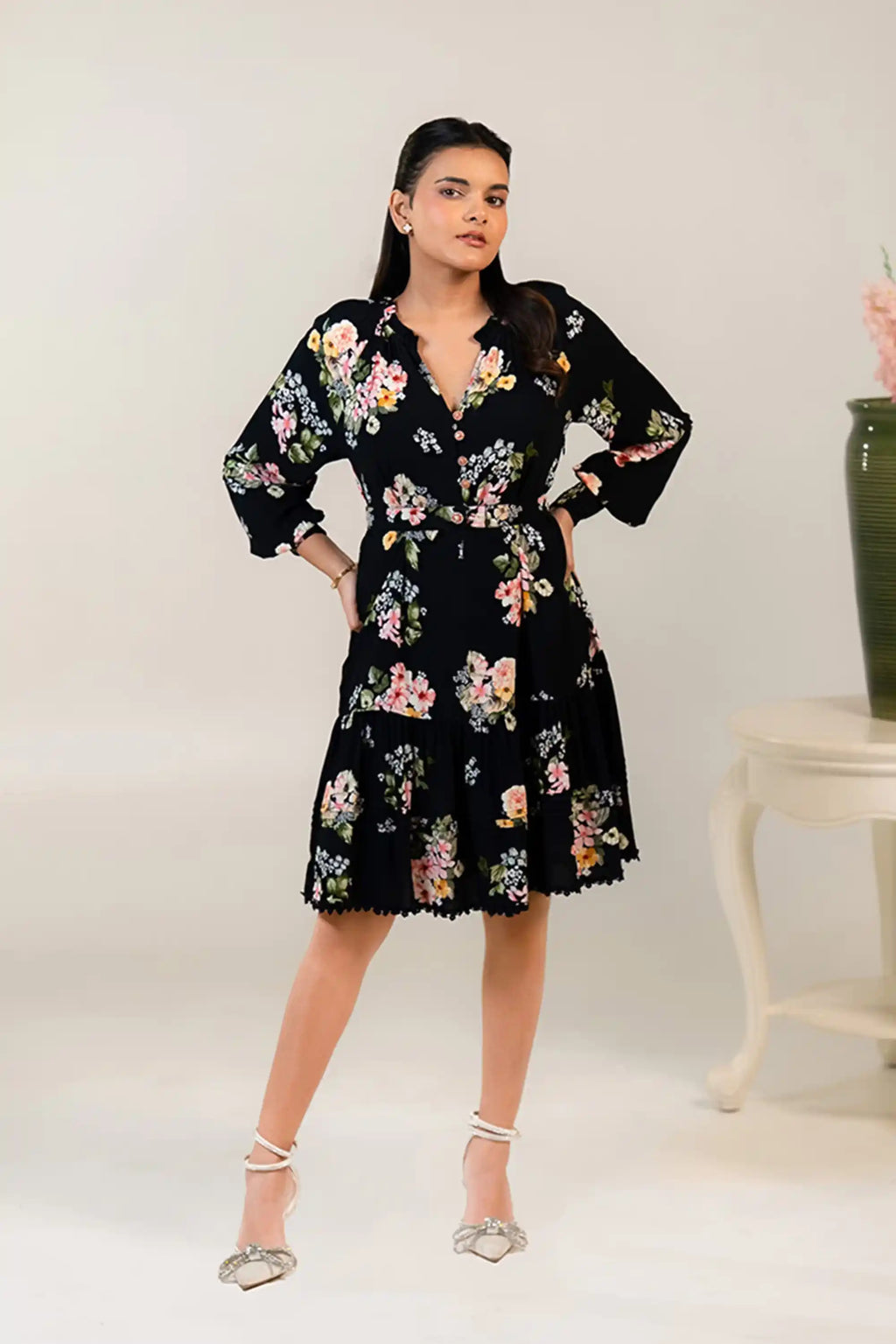
long sleeve floral dress short Pretty Pixie Women Floral Print A-Line Dress For Women (Black, M)

Sale price$18.06 Regular price$20.07
Save 10%
Size: 4

Shipping Estimate
USA
  • USA
  • CAN

Ships within 48 hours · Estimated delivery Jul 11 - Jul 16

Promo Codes Available:

For Your Every Summer RSVP, with Code: SUMMER15

Description

long sleeve floral dress short Pretty Pixie Women Floral Print A-Line Dress For Women (Black, M)Black Floral Long Sleeve Tiered Button Down Dress Graceful, versatile, and timeless, the Black Floral Long Sleeve Tiered Button Down Dress is a Pretty Pixie original crafted for women who love effortless elegance. This mini black dress combines breathable comfort with a structured silhouette, making it a standout in every modern wardrobe. Designed with a flattering V neckline, tiered skirt, and delicate floral print, it proves that dresses are perfect

Black Floral Long-Sleeve Tiered Button-Down Dress

Graceful, versatile, and timeless, the Black Floral Long-Sleeve Tiered Button-Down Dress is a Pretty Pixie original crafted for women who love effortless elegance. This mini black dress combines breathable comfort with a structured silhouette, making it a standout in every modern wardrobe. Designed with a flattering V-neckline, tiered skirt, and delicate floral print, it proves that dresses are perfect for both special occasion one piece dress and relaxed everyday charm.


What Makes It Special

Breathable Cotton Blend: Shell made from an organic viscose-cotton mix with 100% cotton lining, ideal for warm days and cooler layering.

Tiered Button-Down Silhouette: The flowy tiered button-down dress design adds structure while offering natural movement and femininity.

Statement Belt: A jewel-embellished brooch belt adds a touch of sparkle, turning it into a chic party dress option.

Long-Sleeve Finish: Elegant full sleeve design provides coverage and balance, making it equally suited for semi formal and formal dresses wardrobes.

Made in India: Ethically produced by skilled artisans with attention to sustainability.


Why You'll Love It

This dress is tailored to flatter all body types. It blends the charm of line dresses with the functionality of cotton dresses you can wear year-round. The tiered layers and waist-defining belt ensure a perfect fit, while the breathable fabric keeps you comfortable from day to night.

It transitions seamlessly across types of dresses equally wearable as casual day attire, an elegant party wear dress, or a polished option for formal events. It stands tall among black dresses for its romantic details and versatile design, making it a dress for every occasion in your rotation.

Whether styled for date nights, office-ready chic, or seasonal gatherings, this mini dress for women shows why dresses for women are the most versatile wardrobe staples.


How to Style It

Workday Classic: Pair with pointed-toe flats and a structured tote for a refined professional look.

Evening Elegance: Elevate with strappy heels, bold earrings, and a sleek bun for semi formal dinners or date nights.

Weekend Ready: Add sneakers, a belt bag, and minimal jewelry for an effortlessly chic casual day ensemble.

Party Perfect: Style with stilettos, a jewel clutch, and sparkling accessories instantly one of the best party wear dresses for womens.


Perfect For

Seasonal weddings, birthdays, and special occasions

Everyday wear when you want polish with comfort

Fans of mini dresses, short dresses for women, or elevated formal dresses for women

Women looking for party wear dresses that transition easily across settings

Anyone who loves versatile black floral long-sleeve tiered button-down dresses that adapt across a wide range of looks


Sustainable Style You Can Trust

At Pretty Pixie, every piece is crafted with sustainability in mind. This mini dress uses natural fibers, low-impact dyeing, and artisan finishes. With breathable lining and thoughtful tailoring, it embodies a modern twist on traditional black dresses, proving that style and sustainability can live side by side.


Sizes & Fit

Available Sizes: XS, S, M, L, XL, XXL

Fit Tip: True to size. The brooch belt cinches the waist, ensuring a perfect fit across body types.

Style No: PE 971124 | Components: 2

Dress Length: 37" | Tiered Hem | Button-Down Front | Long-Sleeve | Fully Lined


Care Instructions

Gentle hand wash only

Do not wring or tumble dry

Line dry in shade

Iron inside out on low heat


What Our Customers Say

This mini dress for women has the perfect balance of elegance and comfort. I wore it to a formal event and felt amazing. Ria K.

One of my favorite party wear dresses for womens! The belt and floral print are so unique. Sana M.

The mini black dress I didn't know I needed breathable cotton, flattering tiers, and perfect for date nights. Meera P.


Final Touch of Flair

From casual day outings to formal events, this Pretty Pixie design proves that dresses are perfect when they deliver elegance, comfort, and versatility. Whether you're shopping for short dresses for women, looking to add to your collection of party wear dresses, or want a reliable dress for every occasion, the Black Floral Long-Sleeve Tiered Button-Down Dress deserves a spot in your wardrobe.

Updated on:

Shipping Notes
  • Free Standard Shipping on $100+ Orders to the USA.
  • Except Preorder products are shipped in 48 hours.
  • Delivery to the USA:
  1. Standard Shipping : 3-10 business days
  • If time is of the essence, please consider selecting expedited delivery for faster service.
Exchange/Return Notes
  • We offer a 30-day return/exchange service after receiving.
  • Final sale items are not eligible for returns or exchanges.
  • To process your return/exchange, please contact us at [email protected]
  • Please click here for more details>>> Return & Exchange Policy
SKU: 31483764835

Discover Niche Categories That Outsell long sleeve floral dress short

Top-Converting Item to Boost Your Average Order

4.8 ★★★★★
Based on 249 reviews
Sort
Highest Rating
Newest First
Oldest First
Product Reviews
L
Verified Purchase
LPThomas
Fort Morgan, US
★★★★★ 4
Interesting and important book
Format: Hardcover
This book looks at the motivations and demographics of the first wave of English immigrants to flee to what was to become the USA. Interestingly written, it explores the educations, positions of and the relationships of the earliest settlers to our east coast. I read it while researching our Family Tree and finding the people connected before coming, and for generations after. The endless Indian wars were a revelation, as was the tale of the oppressed becoming the oppressors as Quaker families fled Massachusetts for New Netherlands.
WAS THIS REVIEW HELPFUL?YesReportShare
Reviewed in the United States on March 9, 2013
R
Verified Purchase
RobCargill
Waukegan, US
★★★★★ 5
The Barbarous Years: The Peopling of British North America: The Conflict of... Bernard Bailyn
Format: Hardcover
A remarkable book!!! I have never read such a comprehensive book on early United States history that contained so much information I had never read before. How the status of "indentured servant" existed alongside the origins of slavery in Virginia and Maryland (along the Chesapeake Bay) was both remarkable and horrible. That a white man (typically, landowner) could have a child with a (black) slave who would become a free person at adulthood (earliest laws) created problems (they needed the "help"), so this law of the 1650s-1660s was changed! And if a white (free) woman had a child with a (black) slave, the resulting child would remain a slave! Matrilineal or patrilineal human rights, that is the question. Indentured servant, but with no expiration date. I had never before read how people in this country were real "pioneers" in the creation of slavery - at least with slavery of humans captured from the continent of Africa! It seems that whatever voices of "Christian" decency there might have been at the time - church based values or ones simply based in the hearts of people living here - they were drowned out by commercial interests or those who simply couldn't be bothered by such concerns. I hope you read this book and recommend it to your friends! Sincerely, Bob Cargill, Minneapolis
WAS THIS REVIEW HELPFUL?YesReportShare
Reviewed in the United States on April 19, 2013
K
Verified Purchase
k
Bozeman, US
★★★★★ 3
A decent primer -- no more.
Format: Hardcover
This is an odd book for one of America's premier historians. It isn't a bad book -- a person of Bailyn's erudition couldn't write a bad book -- but it doesn't hang together well. The author does not really have anything new to say and a historian of the Early Colonial Period will quickly recognize the usual sources. It is hard to see exactly what historiographical niche this book fills. Even the title is misleading. Sure, Jamestown was barbarous enough by our standards and New Amsterdam was plenty harsh. But, the Bay Colony was, by the rough-and-ready standards of 17th century Europe, pretty civilized. (Compare it with the contemporaneous English Civil War or the Thirty Years War.) As for "Conflict of Civilizations," there was certainly enough of that but the most interesting part of the book, the last third or so on the Bay Colony, is largely an account of Puritan theological quarrels. In fact, one senses that Bailyn felt like he was "home" when he wrote about the Bay Colony. He has, after all, written about New England since 1955 ("Merchants.") He gives the reader a clear account of the theological duels between Winthrop, Cotton, Hooker, Williams, Hutchinson and others. But, others have done this as well or better. Bailyn all but ties himself in a knot to be politically correct toward the Native Americans. For every Indian atrocity he finds a matching atrocity in European civilization. Still, if captured in war one was likely to be a lot better off among the English, French or Dutch than the Pequods. A LOT better off! This volume is part of a series that explores the settling of North America and hardly anyone is better equipped for this than the author. But, what begins as a good account of the horrors of Jamestown drifts into a twice-told tale of the niceties of Puritan disputation. It is almost as if Bailyn got bored half-way through and started channeling Perry Miller. A good book in its way and quite useful for an upper division course or first-year graduate seminar. But, not well-written enough to snare the casual reader and not original enough to snare the professional historian. An odd number.
WAS THIS REVIEW HELPFUL?YesReportShare
Reviewed in the United States on February 19, 2013
G
Verified Purchase
Goldry Bluzco
San Leandro, US
★★★★★ 5
Sheds Light On A Dimly Perceived Period
Format: Kindle
This book is clearly intended for those of us (non-historians) curious about what is a dimly perceived period of North American colonial history. Living as I do in Tidewater Virginia, I consider myself fairly well versed with the earliest years of English settlement or invasion, depending on your point of view. But, I was wrong. I had, of course, read about the wretched first two years of the Jamestown enterprise, but I had no idea just how ghastly the conditions of the first twenty years of the English colonial period were. Wave after wave of newcomers simply starved or died of disease in those years. The mortality rate was shocking. So many people were dying off that the local Indians did not even think it necessary to kill these newcomers (which proved a mistake, of course). And this was not just at Jamestown. For example, the author says that in any given year in one county 30 to 40% of the children under the age of eight were orphans. And the origins of many of these earliest colonists -- orphans dumped by local churches, beggars snatched off of urban streets, prisoners marched from gaol to waiting ships, many poor people literally kidnapped or tricked into emigrating -- was eye-opening. Talk about the refuse of British society. (As an aside, anyone whose humble immigrant ancestors came to Virginia in those years can forget about doing any genealogical research. You will never find the answers to your questions.) This does tend to be a bleak read. One of the things that jumped out at me was the sad, repetitive tale of European-Indian relations. It mattered not where one was. Virginia, Maryland, Delaware, New Amsterdam, New York, the pattern is always the same. Trade and early friendly relations were quickly undermined by misunderstandings, stupidity, devious tricks, alcohol, and land disputes that led to attack and counter attack and massacres on both sides. One of the things I did enjoy was the Indians' views of Christianity. Those mentioned by the author viewed it as little more than a strange dream. When the concept of a universal god was explained to them they laughed and called it a silly fable. I can only agree. My respect for their powers of reasoning and perspicacity rose immeasurably. Just who was the savage?
WAS THIS REVIEW HELPFUL?YesReportShare
Reviewed in the United States on July 30, 2013
J
Verified Purchase
J. Grattan
Louisville, US
★★★★★ 4
Interesting, but a little scattershot (3.75*s)
Format: Paperback
One thing is for certain, in this highly detailed work by the author, there is no attempt to sugarcoat the European experience in emigrating to America in the 17th century. He examines Virginia, the Chesapeake area, New York, and New England. In the initial stages merely surviving was an accomplishment. Most of the early settlers were clueless about overcoming the harsh conditions that they found, not to mention the savagery that the natives unleashed upon them without warning. A large supply of the weak and vulnerable facilitated this peopling of America, despite the dreadful conditions. In addition, as the author shows in great detail, are the conflicts among the settlers. America was settled during a time of great political and religious clashes in England. Most of the settlers were Protestants, but held widely differing, contentious views about religious practice. Much of the governance of the colonies was autocratic, inept, and harsh. A good many of the settlers were indentured by contract for years and thereby were practically slaves, in contrast to the well connected who were granted huge estates. But even then, the author points out that the living standards for even the rich were terrible by European standards. The book is definitely more sociology than historical. One learns about the origins of the settlers across America and the implications for the possibility of robust communities. The author definitely does not hold back on naming thousands of settlers across the colonies; it is difficult to slog through all of that. The book does seem a little scattershot in its organization and subject matter.
WAS THIS REVIEW HELPFUL?YesReportShare
Reviewed in the United States on June 10, 2017

recommand products