SKU: 35020691071
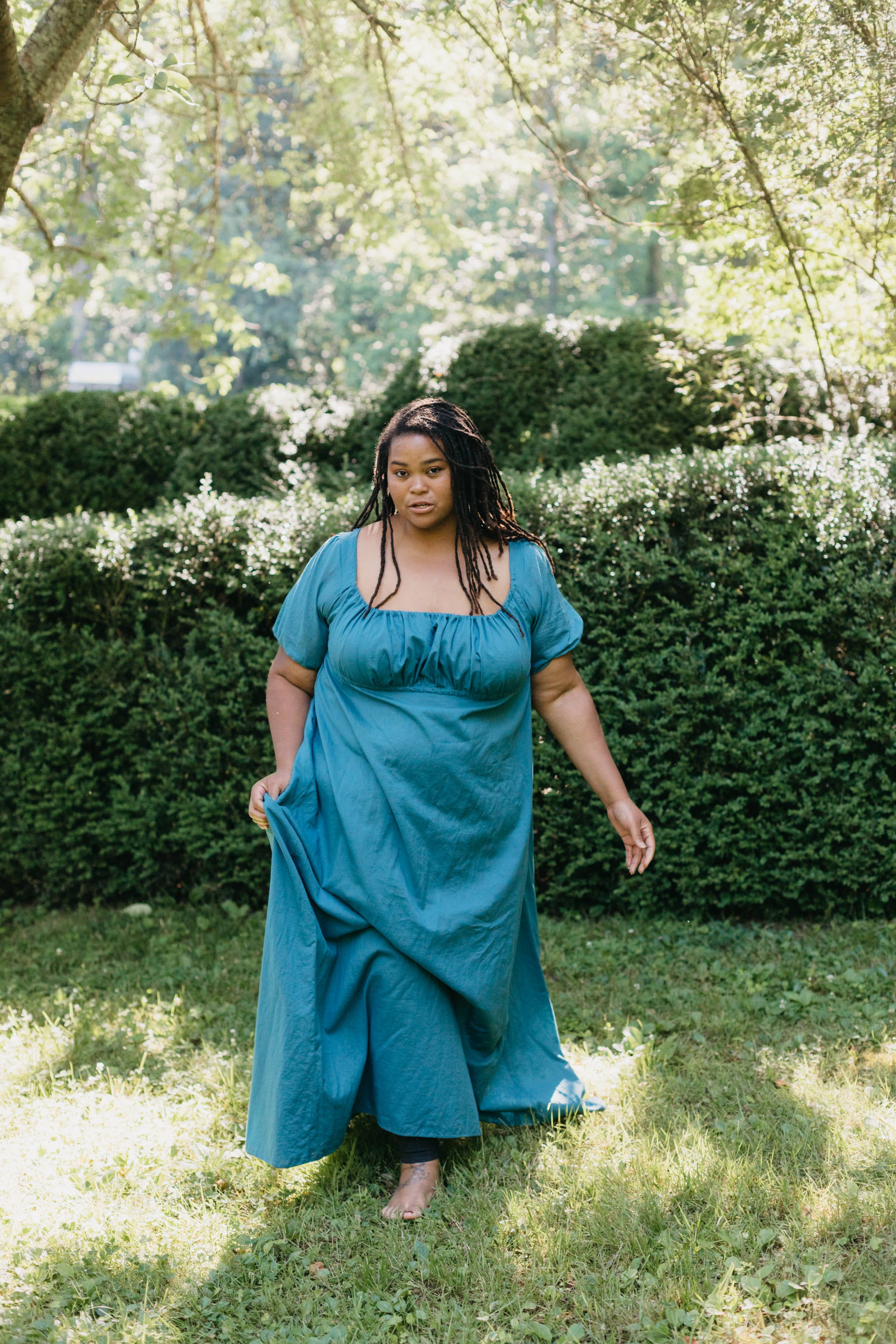
empire line dresses for women

empire line dresses for women 215 Empire Dress

Sale price$20.64 Regular price$22.93
Save 10%

Pay in installments of $5.73 with ShopPay, AfterPay and Klarna

Shipping Estimate
USA
  • USA
  • CAN

Ships within 48 hours · Estimated delivery Oct 10 - Oct 15

Promo Codes Available:

For Your Every Summer RSVP, with Code: SUMMER15

Description

empire line dresses for women 215 Empire DressMisses sizes SM 3XL. This high waisted dress known today as "empire" was worn in the period following the French Revolution in the late 1700s. Often called a "chemise gown" to satirize its scandalous brevity and lack of undergarments, it reflected a desire to return to simpler, classical Grecian dress after the excesses of the European nobility and patriot alike. Its peak of popularity was during the "First Empire" period (1799 1815); hence its name.

Misses sizes SM-3XL.

This high-waisted dress known today as "empire" was worn in the period following the French Revolution in the late 1700s. Often called a "chemise gown" to satirize its scandalous brevity and lack of undergarments, it reflected a desire to return to simpler, classical Grecian dress after the excesses of the European nobility and patriot alike.  Its peak of popularity was during the "First Empire" period (1799-1815); hence its name.  It was worn floor length or as high as knee length in front; trains were also worn for day or evening until 1806.  The Empire Dress has remained a favorite fashion silhouette through today.

Folkwear presents a sewing pattern for this classic in three lengths, with two sleeve options.  A narrow bodice is gathered into a slim A-line skirt front and side panels, and full gathered skirt back that falls to just below knee length, full length, or full length with train for weddings or formal wear.

On the traditional version, drawstrings fit the bodice firmly to the bust and tie at center back. For contemporary wear, we suggest a closed back and elastic in place of the drawstrings. Short puffed sleeves may be cut very high or slightly longer - both are authentic. The longer sleeves feature button and cord detailing. 

Suggested fabrics: Soft, lightweight or medium-weight fabrics such as cotton gauze, batiste, dotted Swiss, rayon challis, silk, very lightweight silk velvet with drape.

Yardage chart (.pdf)

Era: Regency, 1700s to early 1800s

This pattern is available as a Paper pattern and PDF pattern.  Choose the pattern format you want at the top.  The PDF pattern has instructions, and layered files for copy shop (36” and A0), projector, and print at home (A4 or 8.5”x11”).

Sewing Tip

Linda of Pine City, Minnesota, says this dress is popular with the Fur Trade reenactment crowd and she has made it several times. She says, "Some of us have a devil of a time putting together the little pieces that go around the armhole. The pattern markings are critical, and you should use tailor's tacks and position them carefully. I also suggest that you clearly mark the wrong side of each of the little pieces if your fabric's right and wrong sides are similar."

Shipping Notes
  • Free Standard Shipping on $100+ Orders to the USA.
  • Except Preorder products are shipped in 48 hours.
  • Delivery to the USA:
  1. Standard Shipping : 3-10 business days
  • If time is of the essence, please consider selecting expedited delivery for faster service.
Exchange/Return Notes
  • We offer a 30-day return/exchange service after receiving.
  • Final sale items are not eligible for returns or exchanges.
  • To process your return/exchange, please contact us at [email protected]
  • Please click here for more details>>> Return & Exchange Policy
SKU: 35020691071

Discover Niche Categories That Outsell empire line dresses for women

Top-Converting Item to Boost Your Average Order

4.5 ★★★★★
Based on 18 reviews
Sort
Highest Rating
Newest First
Oldest First
Product Reviews
M
Verified Purchase
Matthew Nations
Draper, US
★★★★★ 5
Excellent Introduction to Hemodynamics for a Resident or Fellow
Format: Paperback
Background: PGY-2 Internal Medicine Resident with no prior hemodynamic monitoring experience Overall: Fantastic introduction to the field. The author will assume you know the following prior to starting the book: - Moderate understanding of EKG’s - Anatomical arrangement of the heart and its vessels - Understanding some of the practical effects of atrial fibrillation (lack of an atrial contraction, etc) Specifics: The book can be picked up without significant prior knowledge of hemodynamic monitoring. I initially tried to read Hemodynamic Rounds, and the authors of that book did not introduce significant pieces of information, such as the normal pressures of the heart chambers, what each wave means on the monitor, and how is each chamber of the heart/vessel represented on the monitor (where do I look to see the left ventricular pressure?). In contrast to that, Dr. Hanna provides a book that appears to be intended for residents/cardiology fellows or zealous pre-cardiology interns who are looking for an introduction to the field that maintains enough depth to be practical. Its first section goes over the relevant physiology and pathophysiology and the mechanical/hemodynamic representation. The second section is a series of practice problems with excellent explanations which reviews all of the prior concepts and helps to solidify them in the reader’s mind. The reader will learn to appreciate the relevant waveforms and their relevant representations, the normal values for the cardiac chambers and vessels, and eventually the changes to these normal values during pathologic states. As others have mentioned, it is concise, but this also makes it a bit dense initially when the reader encounters the basic four waveforms and attempts to memorize the normal pressures. Once you get over that initial learning curve, the rest of the first section goes a bit faster. Overall, I’m very happy I purchased this book, and I feel that it has prepared me very well for time spent in the cardiac ICU.
WAS THIS REVIEW HELPFUL?YesReportShare
Reviewed in the United States on July 25, 2019
J
Verified Purchase
john c wynsen
Alexandria, US
★★★★★ 5
Info not to be found elsewhere ...
Format: Paperback
I am a cardiologist in my 50s. I have long been interested in hemodynamics and have an extensive home file system and library of Cardiovascular related books and journal articles. I thought I understood hemodynamics and tracings very well. However this book is a treasure trove of info that simply cannot be found in other publications. It has been a very worthwhile purchase. Highly recommended. This is best suited for cardiology fellows and beyond in my opinion. This info is simply not to be found elsewhere. It is as if a grey haired attending is pointing out minutiae to you that you had not realized was buried in the tracings. Well written and easy to digest. It is best to have a good understanding of hemodynamics and waveforms before reading this though. The correlation with ECHO and diastolic issues is also very good. (This book should be required reading for all cardiology fellows - invasive or noninvasive)
WAS THIS REVIEW HELPFUL?YesReportShare
Reviewed in the United States on February 7, 2016
I
Verified Purchase
Items not received
Fort Morgan, US
★★★★★ 5
Hemodynamics
Format: Paperback
Very good book for students and residents of cardiology who want to learn from basic to adavence hemodynamics! Im strongly recommending it to everyone ! Its like a bible for hemodynamics!!
WAS THIS REVIEW HELPFUL?YesReportShare
Reviewed in the United States on June 11, 2024
C
Verified Purchase
C Hwang
Battle Creek, US
★★★★★ 5
Excellent
Format: Paperback
As a second-year cardiology fellow, I used to get very confused with hemodynamics during my cath and CCU rotations. This book is a gem, it is clear and logically written, has great explanations of waves and great illustrations. The constrictive pericarditis, valvular disease, and FFR chapters are impressive with echocardiographic and physiologic correlations. I actually liked everything I read, like the nice differentiation between the pressure tracings of various chambers. Some of it requires multiple reads but it is worth it. I realized that I had missed a great deal of the basic understanding of pressure tracing configuration, wedge pressure, shunts. There are also over 50 cases in a test-answer format probably covering and reviewing most hemodynamic topics. It is like 2 books in 1.
WAS THIS REVIEW HELPFUL?YesReportShare
Reviewed in the United States on March 14, 2013
A
Verified Purchase
Aziz A
Whiting, US
★★★★★ 3
Black and white
Format: Paperback
Bought this book. Good content. However my copy is in black and white. There are references to colored arrows. I later learned that others have a colored copy.
WAS THIS REVIEW HELPFUL?YesReportShare
Reviewed in the United States on January 30, 2026

recommand products