SKU: 83320673583
what is a master set in pokemon cards

what is a master set in pokemon cards Base Set 2 Complete Master Set (130/130) 2000| TradingCardSets.Com

Sale price$25.29 Regular price$28.10
Save 10%

Pay in installments of $7.03 with ShopPay, AfterPay and Klarna

Shipping Estimate
USA
  • USA
  • CAN

Ships within 48 hours · Estimated delivery Jul 28 - Aug 2

Promo Codes Available:

For Your Every Summer RSVP, with Code: SUMMER15

Description

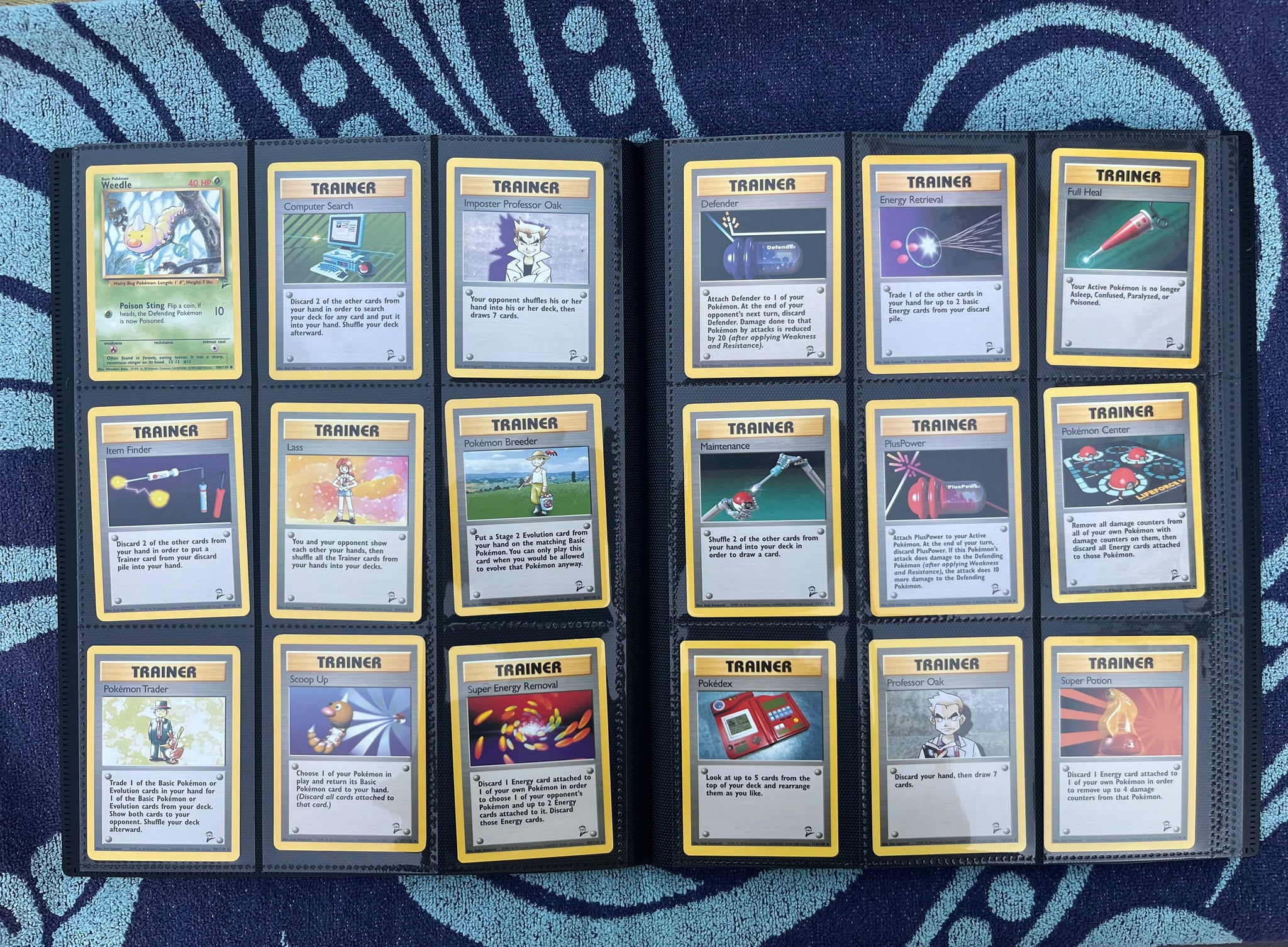
what is a master set in pokemon cards Base Set 2 Complete Master Set (130/130) 2000| TradingCardSets.ComUp for sale is a rare and highly sought after item a complete master set of Pokmon Card Base Set 2 from the year 2000! This set is a must have for any serious Pokmon card collector, as it includes all 130 cards from the set, including rare and powerful cards like Charizard, Blastoise, and Venusaur. Includes 130 cards total, all possible holographic, rare, common, and uncommon Base Set 2 cards. Base Set 2 was the fourth set of cards to be released, and

Up for sale is a rare and highly sought-after item - a complete master set of Pokémon Card Base Set 2 from the year 2000! This set is a must-have for any serious Pokémon card collector, as it includes all 130 cards from the set, including rare and powerful cards like Charizard, Blastoise, and Venusaur. Includes 130 cards total, all possible holographic, rare, common, and uncommon Base Set 2 cards. 

Base Set 2 was the fourth set of cards to be released, and is a compilation of different Pokémon and artworks from the Base Set and Jungle Set. The symbol for this set resembles a number 2 with a Pokéball in the center. There are 130 cards total in Base Set 2. Base Set 2 was originally released in February of 2000. 

The Base Set 2 was the follow-up to the original Base Set and was released in 2000. It features classic Pokémon characters from the first generation, and the cards are highly valued for their nostalgic and collectible appeal. This complete set is in excellent condition, with all cards stored and shipped carefully and meticulously in an included side-load binder!

The set includes a wide variety of cards, from common to rare, and features artwork and designs unique to the Base Set 2. Whether you're a long-time collector or a newcomer to the world of Pokémon cards, this complete set is sure to be a prized addition to your collection.

Don't miss your chance to own this rare and valuable item - buy now and add the Pokémon Base Set 2 Complete Set (130/130) to your collection today!

All cards are authentic, official Pokémon TCG (Trading Card Game) Cards. All cards are in English. All cards are raw (ungraded) unless otherwise stated. Card conditions in this particular set range from Near Mint to Moderately Played. Cards are carefully stored and shipped protected in an included high-quality side load binder. Send us an e-mail at [email protected] or use the chat feature to ask for photos of the complete set for sale or any individual cards! We sell a large number of sets and the set in the photographs may be a set that we previously sold and not the exact cards for sale! For more information be sure to check our Frequently Asked Questions (F.A.Q.) section! 

Base Set 2 Complete Master Set (130/130) 2000 Card List:

1/130 Alakazam

2/130 Blastoise

3/130 Chansey

4/130 Charizard

5/130 Clefable

6/130 Clefairy

7/130 Gyarados

8/130 Hitmonchan

9/130 Magneton

10/130 Mewtwo

11/130 Nidoking

12/130 Nidoqueen

13/130 Ninetales

14/130 Pidgeot

15/130 Poliwrath

16/130 Raichu

17/130 Scyther

18/130 Venusaur

19/130 Wigglytuff

20/130 Zapdos

21/130 Beedrill

22/130 Dragonair

23/130 Dugtrio

24/130 Electabuzz

25/130 Electrode

26/130 Kangaskhan

27/130 Mr. Mime

28/130 Pidgeotto

29/130 Pinsir

30/130 Snorlax

31/130 Venomoth

32/130 Victreebel

33/130 Arcanine

34/130 Butterfree

35/130 Charmeleon

36/130 Dewgong

37/130 Dodrio

38/130 Dratini

39/130 Exeggutor

40/130 Farfetch'd 

41/130 Fearow

42/130 Growlithe

43/130 Haunter

44/130 Ivysaur

45/130 Jynx

46/130 Kadabra

47/130 Kakuna

48/130 Lickiting

49/130 Machoke

50/130 Magikarp

51/130 Magmar

52/130 Marowak

53/130 Nidorina

54/130 Nidorino

55/130 Parasect

56/130 Persian

57/130 Poliwhirl

58/130 Raticate

59/130 Rhydon

60/130 Seaking

61/130 Seel

62/130 Tauros

63/130 Wartortle

64/130 Weepinbell

65/130 Abra

66/130 Bellsprout

67/130 Bulbasaur

68/130 Caterpie

69/130 Charmander

70/130 Cubone

71/130 Diglett

72/130 Doduo

73/130 Drowzee

74/130 Exeggcute

75/130 Gastly

76/130 Goldeen

77/130 Jigglypuff

78/130 Machop

79/130 Magnemite

80/130 Meowth

81/130 Metapod

82/130 Nidoran F

83/130 Nidoran M

84/130 Onix

85/130 Paras

86/130 Pidgey

87/130 Pikachu

88/130 Poliwag

89/130 Rattata

90/130 Rhyhorn

91/130 Sandshrew 

92/130 Spearow

93/130 Squirtle

94/130 Starmie

95/130 Staryu

96/130 Tangela

97/130 Venonat

98/130 Voltorb

99/130 Vulpix

100/130 Weedle

101/130 Computer Search

102/130 Imposter Professor Oak

103/130 Item Finder

104/130 Lass

105/130 Pokémon Breeder

106/130 Pokémon Trader 

107/130 Scoop Up

108/130 Super Energy Removal

109/130 Defender

110/130 Energy Retrieval

111/130 Full Heal

112/130 Maintenance

113/130 PlusPower

114/130 Pokemon Center

115/130 Pokedex

116/130 Professor Oak

117/130 Super Potion

118/130 Bill

119/130 Energy Removal

120/130 Gust of Wind

121/130 Poke Ball

122/130 Potion

123/130 Switch

124/130 Double Colorless Energy

125/130 Fighting Energy

126/130 Fire Energy

127/130 Grass Energy

128/130 Lightning Energy

129/130 Psychic Energy

130/130 Water Energy

Disclaimer: Please note that while the images shown on our listings are not pictures of the exact cards in each set. You will receive one of each of the cards shown in the photos, but the cards received will not be the exact cards pictured. These images are from previously sold sets and serve as a reference. Every card is unique and the actual cards you receive may vary from those shown in the images. We adhere to card condition guidelines and are committed to transparency in our descriptions and titles. For additional peace of mind, we welcome requests for front and back close-ups of any specific cards prior to your purchase. By placing an order, you acknowledge and agree to these terms.

Shipping Notes
  • Free Standard Shipping on $100+ Orders to the USA.
  • Except Preorder products are shipped in 48 hours.
  • Delivery to the USA:
  1. Standard Shipping : 3-10 business days
  • If time is of the essence, please consider selecting expedited delivery for faster service.
Exchange/Return Notes
  • We offer a 30-day return/exchange service after receiving.
  • Final sale items are not eligible for returns or exchanges.
  • To process your return/exchange, please contact us at [email protected]
  • Please click here for more details>>> Return & Exchange Policy
SKU: 83320673583

Discover Niche Categories That Outsell what is a master set in pokemon cards

Top-Converting Item to Boost Your Average Order

4.8 ★★★★★
Based on 7 reviews
Sort
Highest Rating
Newest First
Oldest First
Product Reviews
C
Verified Purchase
Carol E.
Charlottesville, US
★★★★★ 5
WHY YOU SHOULD BUY THIS BOOK
Format: Paperback
Forgotten Civilization by Dr. Robert Schoch Why should you buy this book? 1) You're already looking at it so you must have some interest in this topic. 2) Dr. Schoch has a great ability to take his, or others, theories and support them with well researched scientific data. This is helpful to those of us who are curious about alternative explanations but are still dependent on the "scientific thinking" paradigm. (He doesn't make statements like "when humans bred with aliens in 20,823 BC..."). 3) He always makes you think about conventional wisdom in a new way. For instance, in this book - the age of Easter Island statues (moai). How DID they get buried so deeply when they (conventionally) only go back to a South Pacific Polynesian settlement times?? I have stood in front of the moais on Easter Island and read many books on it's history and it never occurred to me to question the timeline. It takes that unique geologist perspective which Dr Schoch brings to his writings. 4) He introduces you to other researchers or writers that you will want to know more about. Like Thomas Brophy, Anthony Peratt, Paul LaViolette and many others. 5) The Appendices. Some excellent information on multiple topics included at the end of the book. 6) Because Dr. Schoch has gone where many others SHOULD go - against conventional archeological/historical wisdom which makes no sense. His initial theories on the age of the Sphinx as a young academic were very daring and absolutely correct. The geological community had no problem with his ideas - but Egyptologists did, and they have been after him ever since. Choosing a controversial research path has meant some changes in his academic career I'm sure, as "Academics," for all it's spouting of tremendous support for new knowledge and research is very much mired in politically correct concrete. (Go to Egypt and look for yourself. Even a casual tourist will see how wrong standard academic theories are currently). 7) I guarantee you will learn new and interesting things that just may change your life - or at the very least, change the way you think about the future. -C. Engel
WAS THIS REVIEW HELPFUL?YesReportShare
Reviewed in the United States on September 27, 2012
K
Verified Purchase
Kindle Customer
Los Angeles, US
★★★★★ 3
A Book About Everything and Nothing
This was a great idea for a book and it's too bad that Mr. Schoch decided not to write it. Some of the ideas about solar events, the way the plasma manifested in the sky as it relates to ancient petroglyphs is fascinating. Mr. Schoch spent very little time in this space however (in spite of the book's title). Instead we got a brief, incomplete overview coupled with a survey of every piece of fringe science out there from the memory of water, to quantum entanglement to telepathy. There was the obligatory chapter on his work with the Sphinx of course. It always comes back to the Sphinx with this guy. Not an original thought in the book, but there was plenty of promotion of fringe science, especially the work of Paul LaViolette whose confusing and widely ignored and self-published work got several chapters. I gave the book 3 stars for its entertainment value and docked it two for not staying on point. This is still a great and fascinating subject. I wish Mr. Schoch thought so too.
WAS THIS REVIEW HELPFUL?YesReportShare
Reviewed in the United States on March 30, 2015
C
Verified Purchase
Chongyean Cheang
Belleville, US
★★★★★ 5
An amazing book
Format: Paperback
Silent Spring by Rachel Carson is one book that has opened our minds to how much has gone wrong in the world. It is an immensely powerful scientific book for general readers packed full of verifiable research and data. Rachel Carson wrote the book about the widespread use of chemical pesticides that have wreaked havoc upon the water, the atmosphere, the soil, and the earth since the experiments conducted during World War II. Carson begins the book with a short chapter containing an imaginary scenario of a quiet American countryside in spring devoid of birds and other wildlife. Carson then asks a question which the book attempts to answer: "What has already silenced the voices of spring in many towns in America?" (Carson 1962) The other sixteen chapters fully detail how the use of chemical pesticides and herbicides impacts the environment and silences living species when people do not pay attention. In chapter two she makes the point that humans can alter nature. "The most alarming of all man's assaults upon the environment is the contamination of air, earth, rivers, and sea" (Carson 1962). The author demonstrates that people try to get a quick fix for their small problems but are often unaware of the consequences of their quick fix solutions. "We use the chemicals to kill weeds, insects, and pests…… They should not call insecticides but biocides" (Carson 1962). In the next chapter, "Elixirs of Death," she introduces chemicals which can harm health such as chlorinated hydrocarbons (e.g., DDT), organic phosphates, and other hydrocarbons that are more toxic than DDT such as dieldrin, Aldrin, and endrin. She tells the story of a child and family dog that was suddenly killed by the use on an endrin cockroach spray. When the chemicals are combined with one another, it leads to an unpredictable and harmful result in the atmosphere and living creatures. Carson continues in chapter 4 and five by describing the effect of pesticides in water and soil. Even though low concentrations of insecticide in the water is not detrimental, a habit of putting poison in water builds up and ends up passing into fishes, animals, and humans. DDD and DDE, the toxaphenes used in clear lakes destroy the human adrenal cortex (Carson 1962). Even though the chemicals had been deposited years ago, it was carried on in living species from generation to generation. Similarly, soil can be destroyed if it contains too many pesticides and these chemicals may remain in the ground for an extended period. The following chapter of the book mentioned that there are ways to avoid using insecticides to kill insects such as introducing different species of plants or by introducing plant-eating insects. Carson continues her analysis of the life-threatening consequences of pesticides on the surroundings in chapters 7, 8 and 9. She mentions that the entire population of living creatures, including birds and fish, was killed in sprayed areas. "Aldrin, one of the deadliest of all chemicals, was chosen to kill the Japanese beetles... After a few reports came in of dead birds everywhere…. Dogs and cats sickened" (Carson 1962). The author also provides excerpts of letters from people who lived in the areas saying that these pesticides changed the landscape of the areas in which they lived. One woman reported that the spraying of these chemicals had wiped out robins, chickadees, and cardinals. Other women from Alabama said the result of fire-ant spraying made the birds disappear overnight. Other people in Mississippi saw no land birds for miles after spraying. The author ends the chapter with the question, "Isn't it possible to help the balance of nature without destroying it? Who has the right to decide about the use of chemicals?" Chapter 10 details the death of wildlife when aerial spraying is conducted. She comments on the lack of precaution and foresight being used by the pesticide industry. "No research was done before the launch of million acres aerial campaign" (Carson 1962). It shows the lack of caution and general unawareness of the consequences of their actions. The following chapter examines the evidence that the widespread use of poisonous substances can cause the slow, prolonged destruction of human health. For example, she mentions, "DDT has been found everywhere in processed food and cooked restaurant meals" (Carson 1962). The cumulative effect of using different chemicals is that it is incorporated into our food. It is unpredictable how much it can cause harm. A huge amount of poison is everywhere; people exist in their day-to-day lives without knowing that it is even there. Carson calls it "the age of poison" (Carson 1962). Chapters 12, 13 and 14, Carson directs examines the chemicals harmful to human tissues and organs. Back in the days, we lived in fear of infectious diseases such as smallpox and cholera. Now, we are living with and facing new diseases that Carson calls "the environmental disease." The author gives many examples of the sources of the chemicals and how it reacts and is incorporated into the body. "Dieldrin can have long-term effects such as loss of memory, insomnia, nightmares, and mania" (Carson 1962). At the end of chapter 14, she mentions the statistic that one in every four Americans is developing cancer. The possible explanation is that the sale of chemicals in the market is an accepted part of our lives. She describes how she was slowly dying of cancer as she finished this book. In the next three chapters, Carson describes how insects have developed the ability to reproduce and resist the effects of the sprays. In other words, like the title of Chapter 15 states, "nature fights back." Finally, the final chapter, "The Other Road" presents alternatives to chemical control of pests. Chemical "solutions" should be stopped. Instead, an alternative way is biological solutions based on knowledge of living organisms. She gives examples such as insect sterilization, insect venom as a poison, insect killing microorganisms, and ultrasonic sound to kill mosquito larvae. "The choice, after all, is ours to make" (Carlson 1962). Overall, Silent Spring is all about how the world has changed because of our misguided actions of using harmful chemical pesticides in nature. The book opens our eyes and minds to the fact that these synthetic pesticides have poisoned all living species, destroyed the environment, and contaminated the world. I would recommend this book to all people that are interested in how much the earth is contaminated by humans and want to find a way to help keep the balance of nature without destroying it.
WAS THIS REVIEW HELPFUL?YesReportShare
Reviewed in the United States on February 12, 2018
L
Verified Purchase
Lisa D.
Pawtucket, US
★★★★★ 5
Book
Format: Paperback
Enjoyed the book
WAS THIS REVIEW HELPFUL?YesReportShare
Reviewed in the United States on April 27, 2026
S
Verified Purchase
SEONGJAE KIM
Grantham, US
★★★★★ 5
[book review] Silent Spring
Format: Paperback
Author of Silent Spring Rachel Carson points out in Chapter 14 that cancer was increasing not only in the general public but also in youth: “The monthly report of the Office of Vital Statistics for July 1959 states that malignant growths, including those of the lymphatic and blood-forming tissues, accounted for 15 percent of the deaths in 1958 compared with only 4 percent in 1900. Judging by the present incidence of the disease, the American Cancer Society estimates that 45,000,000 Americans now living will eventually develop cancer. This means that malignant disease will strike two out of three families (221)”. “Today, more American school children die of cancer than from any other disease. So serious has this situation become that Boston has established the first hospital in the United States devoted exclusively to the treatment of children with cancer. Twelve percent of all deaths in children between the ages of one and fourteen are caused by cancer” (221). Why there were trends of increasing cancer? To answer the question, this paper delves into the 3 causes of cancers mentioned in this chapter - radiation, chemicals, and lack of oxygen for cells. Furthermore, it explores additional important questions it makes us ask. Cancer can be caused by natural sources such as ultraviolet radiation from the sun, radiation from certain rocks, and other similar sources. While Carson admits they are still a factor in producing malignancy, she argues that since these sources have existed for longer than life on Earth and only those who are resistant to them have survived over time, modern-day organisms must have adapted to living with them. In other words, there are likely other reasons for increasing cancer rates besides natural sources. Carson believed that it was especially due to the widespread use of man-made carcinogens in pesticides and insecticides. Compared to natural cancer-causing materials, man-made carcinogens were brand new forms of chemicals that had never existed in the natural environment before, so human beings’ slow biological evolution has not adapted to them yet. Carson not only suggested this logical process but also shared some real-life examples of how humans started to realize that man-made materials can cause cancer. Some of them were due to a lack of knowledge about carcinogens and were somehow inevitable because it was occupational exposure. For instance, in 1775, Sir Percivall Pott declared that scrotal cancer, which was so common among chimney sweeps, must be caused by the soot that accumulated on their bodies. “In the early 1920’s women who painted luminous figures on watch dials swallowed minute amounts of radium by touching the brushes to their lips; in some of these women bone cancers developed after a lapse of 15 or more years. A period of 15 to 30 years or even more has been demonstrated for some cancers caused by occupational exposures to chemical carcinogens” (226). At least these occupational carcinogen exposures were limited to relatively small populations. However, DDT which has produced suspicious liver tumors on animal subjects during laboratory tests and was given the definite rating of a chemical carcinogen by Dr. Huper of the National Cancer Institute, and other insecticides were widely used. Not only the direct exposure to those chemicals are problem but also they don't simply disappear after they're used. They keep following up the food chain, ending up in humans and potentially causing cancer. How do some chemicals cause cancer? German biochemist, Professor Otto Warburg has proposed a persuasive theory. He believes that these chemicals or radiation agents destroy the respiration of normal cells, depriving them of energy. This theory was confirmed in 1953 when other researchers were able to turn normal cells into cancer cells by depriving them of oxygen intermittently over long periods. The impact of these chemicals is not limited to existing organisms; they can also affect unborn babies. This is because babies have rapid cell divisions, making them more vulnerable to the effects of cancer-producing agents that penetrate the placenta and act on the rapidly developing fetal tissues. Dr. W. C. Hueper of the National Cancer Institute has suggested that congenital cancers and cancers in infants may be related to the action of cancer-producing agents to which the mother was exposed during pregnancy. The long latent period of most cancers is the time required for the infinite number of cell divisions during which fermentation gradually increases after the initial damage to respiration. However, since babies are in the process of rapid cell division, they may develop cancer faster when exposed to carcinogens compared to adults. How do we end up surrounded by chemicals that potentially cause cancers to not only living humans but even further unborn babies? Carson wrote - “The chemical agents of cancer have become entrenched in our world in two ways: first, and ironically, through man’s search for a better and easier way of life; second, because the manufacture and sale of such chemicals has become an accepted part of our economy and our way of life” (242). But we can’t just stop developing chemicals to pursue better and easier lives or change our lives back to primitive levels because unsatisfactory is human nature. Then what’s the practical solution? I’ll say regulators with expertise. Just like we are not using toxic chemicals that were used in the past thanks to regulations, regulations should keep monitoring such potential dangers. Therefore regulators must be experts. But this approach isn’t perfect. Moving legislation to phase out the use of such carcinogenic chemicals has been slow which makes “what the public is asked to accept as “safe” today may turn out tomorrow to be extremely dangerous” (224). It's hard to believe that toxic chemicals like DDT were widely used just a few generations ago. However, it's important to consider that similar practices may be occurring today in the world we live in right now. In Professor Handwerk’s words “Now You See It… Now You Don’t.” and we must keep asking what are the DDTs - something harmful but shocking widely used - nowadays. It’s the important question that Carson made us think further about the cause of the cancer.
WAS THIS REVIEW HELPFUL?YesReportShare
Reviewed in the United States on March 25, 2024

recommand products