SKU: 74286784967
dieffenbachia picta schott

dieffenbachia picta schott Dieffenbachia 'Amy' | Cream-Green Cane

Sale price$24.81 Regular price$27.57
Save 10%

Pay in installments of $6.89 with ShopPay, AfterPay and Klarna

Shipping Estimate
USA
  • USA
  • CAN

Ships within 48 hours · Estimated delivery Oct 17 - Oct 22

Promo Codes Available:

For Your Every Summer RSVP, with Code: SUMMER15

Description

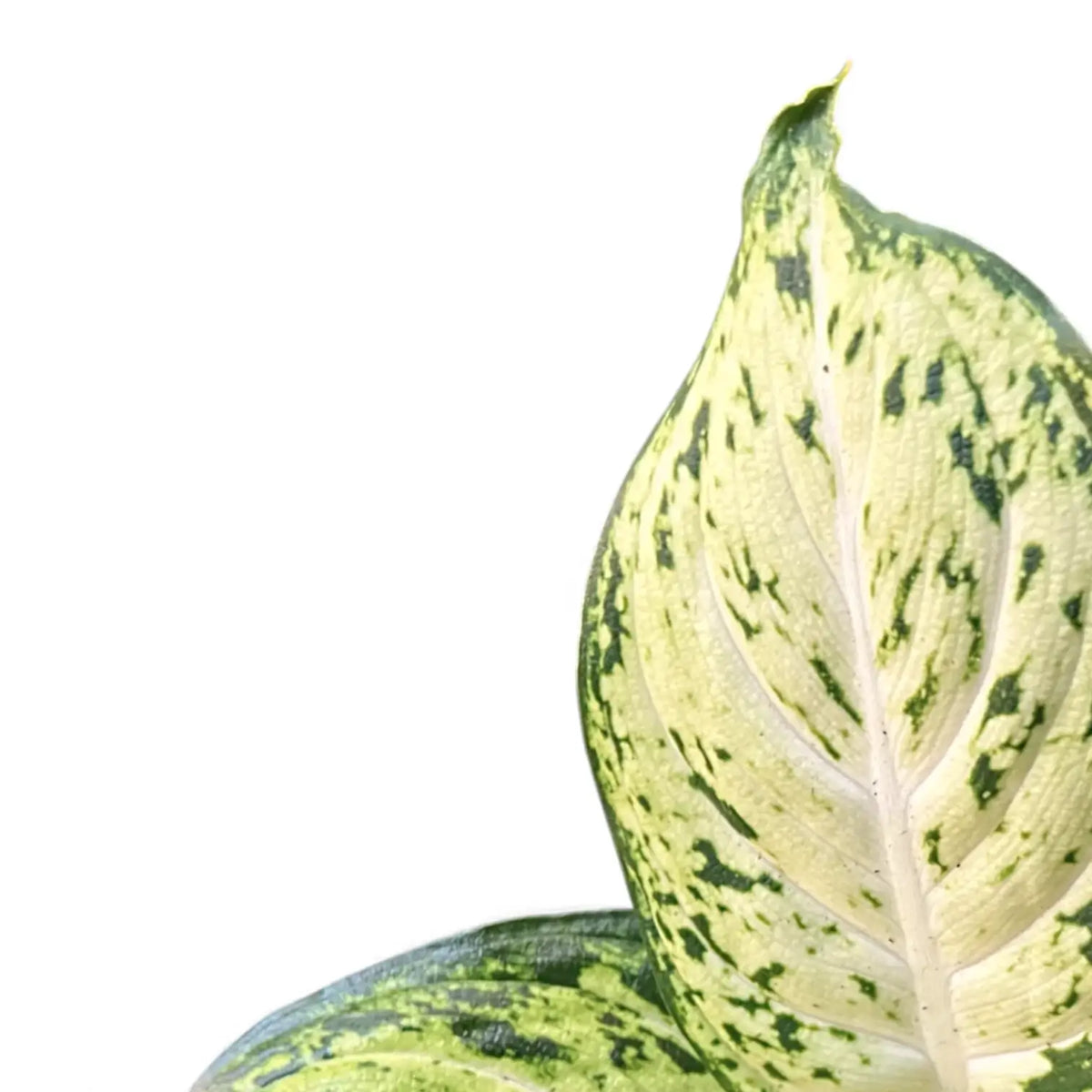
dieffenbachia picta schott Dieffenbachia 'Amy' | Cream-Green CaneDieffenbachia 'Amy' Cream green Dieffenbachia 'Amy' foliage With a firm upright cane and broad glossy leaves, Dieffenbachia 'Amy' shows green and cream to pale yellow patterning above a clear vertical stem. The crown builds from the top of the stem, giving the plant a defined upright line in the pot. New leaves open from the crown, while older lower leaves may naturally age away as the stem develops. A firm cane base, active upper leaves and an evenly

Dieffenbachia 'Amy'

Cream-green Dieffenbachia 'Amy' foliage

With a firm upright cane and broad glossy leaves, Dieffenbachia 'Amy' shows green and cream-to-pale-yellow patterning above a clear vertical stem. The crown builds from the top of the stem, giving the plant a defined upright line in the pot.

New leaves open from the crown, while older lower leaves may naturally age away as the stem develops. A firm cane base, active upper leaves and an evenly moist airy root ball indicate stable growth.

Dieffenbachia 'Amy' plant profile

  • Upright cane-form Dieffenbachia with a defined patterned crown
  • Broad glossy leaves with green and cream-to-yellow patterning
  • Sheathing petioles that clasp the stem as each new leaf develops
  • Tropical indoor aroid for bright filtered or gentle medium light
  • Pale leaf tissue that can mark under harsh sun, dry root pockets or fertiliser salt build-up

Dieffenbachia seguine cane growth

Dieffenbachia seguine is an accepted aroid species from the Caribbean and tropical South America, with stout stems, large alternate leaves and petioles that sheath the cane.

Older names such as Dieffenbachia maculata and Dieffenbachia picta still appear for related dumb cane plants, while much of this cultivated material is now generally placed within Dieffenbachia seguine.

Mature Dieffenbachia can form a spadix and spathe, the typical flowering structure of aroids. Indoors, broad patterned leaves gather around a firm upright cane.

Dieffenbachia 'Amy' care

  • Light: Offer bright indirect light or soft medium light. Use a curtain or distance from the glass where pale tissue faces midday sun.
  • Watering: Water thoroughly once the top layer has dried. Keep moisture even while new leaves are forming and slightly lighter during cooler months.
  • Substrate: Use an airy aroid mix with bark, coir or fine organic material plus pumice or perlite for root oxygen.
  • Drainage: Grow in a pot with drainage holes and clear excess water from decorative outer pots after watering.
  • Temperature: Keep around 18–27 °C. Warm roots keep the cane firm after watering.
  • Humidity: Moderate ambient humidity reduces sticking and dry edges on new leaves. Even substrate moisture matters more than spraying the foliage.
  • Feeding: Use a gentle balanced fertiliser in spring and summer, then flush the substrate occasionally to limit salt build-up.
  • Pot balance: Rotate the plant occasionally so the crown develops evenly around the stem.
  • Repotting: Repot in spring or early summer when roots fill the container. Move up by one pot size and keep the cane base at the same level.
  • Pruning and propagation: Cut away spent leaves cleanly at the petiole base. Stem sections and top cuttings root in warm, humid conditions when each cutting includes a viable node.

Amy leaf and cane checks

  • Brown marks on pale leaf areas: Check for direct sun, heat through glass, dry root pockets or fertiliser salt build-up.
  • Several yellow leaves at once: Inspect the root ball for excess moisture, cold substrate or a sharp light change.
  • Soft cane base: Review drainage, reduce moisture around the stem and inspect the roots.
  • New leaf unfolding unevenly: Check humidity, watering consistency and the emerging leaf sheath.
  • Leaning crown: Rotate the pot and check whether the root ball is secure. A discreet stake steadies a taller cane.

Amy sap and careful handling

Dieffenbachia 'Amy' contains calcium oxalate raphides in the sap, so chewed or swallowed tissue can irritate oral tissue, skin and eyes. Keep the pot in a low-contact position away from pets and children, use gloves for pruning and clean tools after contact with cut tissue.

Amy aroid family and name

Dieffenbachia belongs to Araceae, the aroid family, and the genus honours Joseph Dieffenbach of the Schönbrunn palace gardens in Vienna. Dieffenbachia seguine (Jacq.) Schott is the accepted species behind many dumb cane houseplants with upright canes and patterned leaves.

Dieffenbachia 'Amy' combines upright cane growth with cream-green leaves and crisp margins.

Shipping Notes
  • Free Standard Shipping on $100+ Orders to the USA.
  • Except Preorder products are shipped in 48 hours.
  • Delivery to the USA:
  1. Standard Shipping : 3-10 business days
  • If time is of the essence, please consider selecting expedited delivery for faster service.
Exchange/Return Notes
  • We offer a 30-day return/exchange service after receiving.
  • Final sale items are not eligible for returns or exchanges.
  • To process your return/exchange, please contact us at [email protected]
  • Please click here for more details>>> Return & Exchange Policy
SKU: 74286784967

Discover Niche Categories That Outsell dieffenbachia picta schott

Top-Converting Item to Boost Your Average Order

4.0 ★★★★★
Based on 16 reviews
Sort
Highest Rating
Newest First
Oldest First
Product Reviews
C
Verified Purchase
C.J.
Whiting, US
★★★★★ 4
Pretty Good... Not amazing.... But pretty good.
Format: Paperback
Before taking a stab at my first real story I have decided to read two books on the art of writing fiction; "Techniques of the Selling Writer" by Dwight Swain, and the book I am reviewing now, "Plot and Structure" by James Bell. While Swain's book was more of an all inclusive manual on writing interesting fiction, Bell's book is focused strictly on, as the name suggests, plot and structure. What this book is not... This is not a 'how to write a novel' book; if you are going to just read one book on writing a fiction novel then "Techniques of the Selling Writer" may be the more appropriate choice. If you are looking for a book that deals with anything outside of plot and structure, this book will be of no help there either. This book is designed to be supplemental to an already moderately educated reader. If you read Swain's book first, then you will instantly recognize the principles of this book. What this book is... This is a great book on, you guessed it, Plot and Structure. It's actually a fairly concentrated look into the subject. The chapters... Ch 1: What's a plot, anyway? Ch 2: Structure: What holds your plot together. Ch 3: How to explode with plot ideas. Ch 4: Beginning strong. Ch 5: Middles. Ch 6: Endings. Ch 7: Scenes. Ch 8: Complex Plots. Ch 9: The character arc in plot. Ch 10: Plotting Systems. Ch 11: Revising your plot. Ch 12: Plot Patterns. Ch 13: Common plot problems and cures. Ch 14: Tips and Tools for plot and structure. I found the specificity of this book very helpful with each principle being illustrated by a paragraph or so of a known author's work. Bell handpicks excerpts from authors varying from Dean Koontz to Herman Melville, brilliantly pulling text from these masters and showing us how they went about the relevant technique. This easy to read nature and well outlined subject matter means I will be using several of its chapters as a personal reference guide in the future. I'm certain it will keep me from making many of the mistakes beginning writers make and possibly save me weeks in rewrites. I will say this though... "Techniques of the Selling Writer" is a better book and covers plot quite well too; so if you are only going to read one book on writing, that is a damn good place to start. If you want to supplement that reading further, "Plot and Structure" comes highly recommended. [...]
WAS THIS REVIEW HELPFUL?YesReportShare
Reviewed in the United States on May 26, 2010
F
Verified Purchase
fernando pedernera
Fort Morgan, US
★★★★★ 5
Have no fear!, or The writer's Victorinox.
Format: Kindle
You can't praise this book enough. There are a ton of how-to books out there, but this one really made a difference for me. Think of writing as a journey through the woods: You set up, you get in the muddle, and you come out (hopefully) on the other side. When doing this, we try to use as many tools and resources as we can to make it to the other side, but most of the time you fail (or tools fail on you) and you end up starving or being eaten by some wild animal in the muddle of the story. What James Scott Bell wants you to have in clear is that the most useful tool you can have out there is YOU. And all of his tips, advice and excercises are aimed to one thing and one thing only: how to unleash and harness the power of your story (and survive). It provides clear, straight-forward tools and tips, adressing many aspects of the writing process you won't find in many of them. It is a must-read for anyone interested in the study of plots and storytelling. Relevant examples that take in consideration a wide array of writer profiles, and Bell does not abuse with film examples (and most of the movies it references are also books i.e.: the maltesse falcon, the godfather, etc.). It contains useful excercises at the end of each chapter to help you put the tehcniques in practice and bring the best out of your learning experience. It really helped me overcome several issues I had with my novel-writing and opened my mind to a new scope on plot and str.. This is a wonderful book, written in the same gripping style that the author suggests to use, and with great success. I think this is a wonderful book because it does not give infalible advice. To me that is very important. Let me ilustrate how I felt by giving you the following example: (after developing content) -Regular book: so just do This (and fail, miserably). -Bell's book: Many writers had this problem before and by doing This you might also find a solution for it. In case That doesn't work, you could maybe try This, or come back at it again later on with a fresh view and give it another try.
WAS THIS REVIEW HELPFUL?YesReportShare
Reviewed in the United States on August 18, 2017
N
Verified Purchase
Nancy C. Beck
Belleville, US
★★★★★ 5
Excellent resource
Format: Paperback
Two novel ideas ago, I had to put that one aside because I stuffed it to the point where the story made no sense. I intend to go back to it at some point, but for now, it's collecting dust. Also collecting dust is my more recent idea. I started with an outline (of sorts), wrote and rewrote it a few times...only to get stuck on Chapter 8 or so. I didn't know where to take the story. This one will probably never get resurrected...but you never know. Which leads me to one of the best things in this book: outlining with index cards. There's at least one other book touting this, but I'm sure there are others that do. What sets this one apart, in my mind, is his suggestions on how to set it up. This doesn't comprise a huge part of the book, but it made enough sense to me that I decided to give it a whirl. Almost 50,000 words later, I'm still chugging along, taking into mind his ideas (I'd never heard it put quite this way) about doorways of no return (more on that in a moment). Sure, I've made some changes, throwing out cards, rearranging cards, adding cards. That's the beauty of this system: it's not set in granite. If your muse takes you in a way that's different from what you originally wrote, go for it! Mr. Bell explains the doorways simply, at first, as transitions - from beginning to middle and then middle to ending. The first doorway gets your Main Character from beginning to middle; the idea is to create a scene where the MC is thrust into conflict in a way that keeps him/her there. With the second doorway (middle to ending), something has to happen to set up the final confrontation. It's usually a huge clue, a big piece of information, or a major crisis that sends the MC hurtling towards the conclusion. Mr. Bell explains these in greater detail, and I found his explanations quite understandable. But there's more to this book than that. Mr. Bell gets into how to come up with plot ideas, character arcs, revising, plot problems and cures, scenes, and tips and tools. I wasn't bothered by his reusing some of the same good writing examples, but it may make you cringe or roll your eyes. Other than that minor quibble, I think everything else about this book makes it shine as a writer's resource.
WAS THIS REVIEW HELPFUL?YesReportShare
Reviewed in the United States on December 1, 2006
C
Verified Purchase
Corwin
Natrona Heights, US
★★★★★ 5
Most Helpful Book I've Read on Plot and Structure
Format: Paperback
This is a well-organized, easy-to-read guide to techniques used to develop plots and sound story structure. It includes 14 chapters and two appendices. They cover such topics as what a plot is, how structure holds plot together, how to get ideas, and how to handle/interweave plot into all the levels of a novel (from whole sections such as the Beginning or middle of the work, down to the micro level of individual scenes). He includes discussion of different "plotting systems" (from writing by "the seat of your pants" to types/methods of creating outlines of various levels of "thoroughness" for those interested in mild outlining to someone with full-blown OCD). It discusses complex plots and sub plots, character arcs in relation to plot, common problems and solutions, revision, and more. Every chapter ends with a few exercises to reinforce the topic covered. The two appendices are a checklist for reminding you of major plot components as you write, and how to create "back cover" (aka the blurbs on the back of your book, or the summaries on the inside flap of dust jackets). As a writer, I am a "seat of the pants" guy, who's reluctantly recognized it isn't working for me (a major motivation for getting this book). Bell's discussion of different styles of outlining, though brief, gave me ideas of how to proceed. While I've often read books that include exercises, I confess to rarely doing them -- Bell is an exception (no, I didn't do *all* of them, but.... :) ). His text uses plenty of examples, drawn from movies and well-known novels. I've read other works on plot and structure (both general books and at least two dedicated to these topics), and have found this one to be by far the most readable, instructive, easy-to-digest, and *helpful.*
WAS THIS REVIEW HELPFUL?YesReportShare
Reviewed in the United States on June 17, 2017
C
Verified Purchase
Cora L. Foerstner
Louisville, US
★★★★★ 5
I have a few instructional writing books I reread; this is one of them.
Format: Paperback
Plot & Structure: Techniques and Exercises for Crafting a Plot That Grips Readers from Start to Finish by James Scott Bell may be the best book for plotting and creating structure in fiction stories that I’ve read. I have a few instructional writing books I reread; this is one of them. Plot & Structure works for writers who don’t use outlines and for those who do. Throughout Bell acknowledges and addresses how his ideas about plot and structure can be used by all writers. This isn’t a “my way or the highway” kind of book. Bell gives practical advice for all writers. What’s so great about Plot & Structure? The biggest plus is Bell’s practical and down to earth strategies and clear explanations. Here are the other greats: Bell’s approach isn’t a how-to formula; it’s more of a guide. His genre is thrillers, but he addresses the needs of other genres as well as those of literary fiction. He provides many strategies writers can use to approach plot and structure; plus, he encourages readers to find their own way of working. The exercises at the end of the chapters are practical. If you try some of them, you’ll discover that they aren’t busywork but helpful approaches to solving writing issues. Unless you’re a pro with so many publications behind you that you don’t need help, this isn’t a book to read once and put away. It’s a book you’ll come back to and get more out of with a second or third reading. If you want a formula or step-by-step program, this isn’t a book for you. He gives choices so you can find you own style and way of working. Which is one of the things like I about the book. It’s like going to a writer buffet and choose the strategies that work for you. If you are someone who writes without an outline, you are going to be surprised because Bell doesn’t leave you out of any of the equations. He has strategies for all writers.
WAS THIS REVIEW HELPFUL?YesReportShare
Reviewed in the United States on November 13, 2014

recommand products