Pay in installments of $6.34 with
 ,
,
 and
and

Shipping Estimate
USA
- USA
- CAN
- USA
- CAN
Ships within 48 hours · Estimated delivery Oct 16 - Oct 21
 Promo Codes Available:
For Your Every Summer RSVP, with Code: SUMMER15
Description
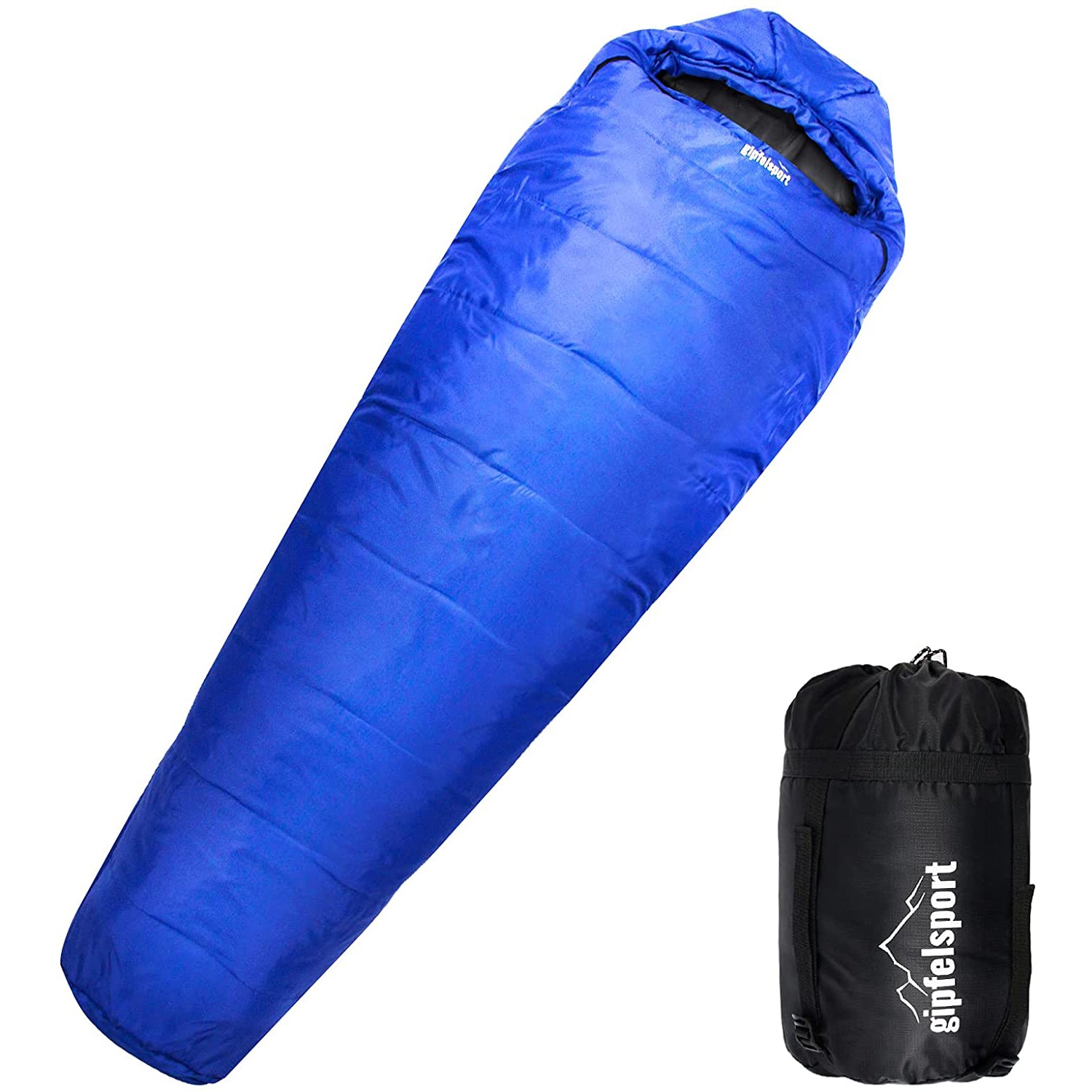
schlafsack für minus 20 grad WinterschlafsackWinterschlafsack Schlafsack aus Kunstfaser Dicke von 300gr m Gewicht: 1550g Gre: 215 x 85 (55) cm Komfortbereich (T comf): 2C unterer Grenzbereich (T lim): 4C extremer Bereich (T ext): 20C Beschreibung des Kunstfaser Schlafsack fr den Winter Winterschlafsack fr kalte Temperaturen Der Winterschlafsack von Gipfelsport ist etwas fr Klteempfindliche. Dennoch kommt es auf den Einsatz an. Der Schlafsack garantiert bei einer durchschnittlich frierenden
- Winterschlafsack - Schlafsack aus Kunstfaser
- Dicke von 300gr/m²
- Gewicht: 1550g
- Größe: 215 x 85 (55) cm
- Komfortbereich (T comf): 2°C
- unterer Grenzbereich (T lim): -4°C
- extremer Bereich (T ext): -20°C
Beschreibung des Kunstfaser Schlafsack für den Winter
Winterschlafsack für kalte Temperaturen
Der Winterschlafsack von Gipfelsport ist etwas für Kälteempfindliche. Dennoch kommt es auf den Einsatz an. Der Schlafsack garantiert bei einer durchschnittlich frierenden Person einen Komfortbereich von etwa 2 - 12°C.
Doch was heißt das genau? Der TComf (Komfortbereich) liegt bei diesem Modell bei 2°C. Das bedeutet, dass der Wert ein unterer Komfort-Grenzwert bei Standardgebrauch bei einer Norm-Frau ist - sie friert so gerade noch nicht. Je nach körperlicher Verfassung, können diese Werte etwas schwanken. Hier sollte immer ein gewisser Puffer eingeplant werden.
Im Allgemeinen gibt es vier Angaben für die Wärmeleistung eines Schlafsacks:
- Der obere Grenzbereich (Tmax): Dieser Wert gibt an, bei dem ein Norm-Mensch anfängt zu schwitzen. Dieser Wert wird so gut wie nie angegeben, da bei zu warmen Temperaturen, der Schlafsack geöffnet oder beiseite gelegt werden kann.
- Der Komfortbereich (Tcomf): Bei diesem Wert friert die Norm Frau noch so gerade nicht. Die Norm Frau ist 25 Jahre alt, wiegt 60kg und ist 1,6m groß.
-
Der untere Grenzbereich (Tlim): Bei diesem Wert friert der Norm Mann noch so gerade nicht. Der Norm Mann ist 25 Jahre alt, wiegt 70kg und ist 1,73m groß.
- Der extreme Bereich (Text): Dieser Wert sollte nicht erreicht werden. Hier geht es um das Überleben. Dieser Wert gibt an bei dem die Norm Frau noch überleben kann. Diese Temperaturen lassen sich nicht lange aushalten und es besteht die Gefahr der Unterkühlung.
Tipp beim Winterschlafsack Kauf
Wir empfehlen beim Kauf des Schlafsacks auf den Komfortbereich zu achten, da bei diesen Temperaturen sowohl Mann als auch Frau noch angenehm schlafen kann. Demenstprechend geben wir auch immer diesen Komfortbereich speziell an. Für diesen Winterschlafsack empfehlen wir eine Temperatur von 2 - 12°C. Dieser Bereich schwankt etwas. Je nach Statur, körperlicher Verfassung und Kälteempfinden kann dieser Bereich verschoben und/oder erweitert werden. So kann der Schlafsack auch bei einigen bis zum Gefrierpunkt (bis 0 Grad) noch erholsame Nächte bescheren. Der Schlafsack eignet sich bei wärmeren Tagen im Winter oder kälteren Nächten im Herbst und Frühling.Der Mumienschlafsack für längere Wärme
Der Schlafsack für den Winter hat eine eng an den Körper liegende Form. Der Mumienschlafsack ist die beliebteste Schlafsackform, da er die Wärme länger speichert als ein Deckenschlafsack. Durch die enge Form, ist auch weniger Material notwendig. Dadurch ist der Mumienschlafsack platzsparender als ein Deckenschlafsack. Der Nachteil eines Mumienschlafsacks ist, dass man in diesem weniger Bewegungsfreiheit hat. Auch kann man diesen nicht mit anderen Schlafsäcken am Reißverschluss kombinieren.
Vorteile des Mumienschlafsack
- geringeres Gewicht
- kleineres Packmaß
- höhere Wärmeleistung
Einsatzgebiet des Mumienschlafsacks
Der Winterschlafsack ist ein wichtiges Accesoire für alle, die im Winter oder sich in kalten Temperaturen aufhalten. Er ist besonders nützlich bei Aktivitäten, die mehrere Tage andauern können, wie Klettern, Wandern, Skifahren und andere Wintersportarten, aber auch für längere Reisen oder Campingausflüge. Der Winterschlafsack ist dafür konzipiert, den Träger bei kalten Temperaturen warm und behaglich zu halten. Dazu verfügt er eine besonders wärmende Füllung, die dafür sorgt, dass die Körperwärem entweichen kann. Sollte es dennoch zu warm im Schlafsack werden, kann durch den 2-Wege-Reißverschluss der Fußbereich geöffnet werden.
Shipping Notes
- Free Standard Shipping on $100+ Orders to the USA.
- Except Preorder products are shipped in 48 hours.
- Delivery to the USA:
- Standard Shipping : 3-10 business days
- If time is of the essence, please consider selecting expedited delivery for faster service.
Exchange/Return Notes
- We offer a 30-day return/exchange service after receiving.
- Final sale items are not eligible for returns or exchanges.
- To process your return/exchange, please contact us at [email protected]
- Please click here for more details>>> Return & Exchange Policy