Pay in installments of $5.71 with
 ,
,
 and
and

Shipping Estimate
USA
- USA
- CAN
- USA
- CAN
Ships within 48 hours · Estimated delivery Sep 10 - Sep 15
 Promo Codes Available:
For Your Every Summer RSVP, with Code: SUMMER15
Description
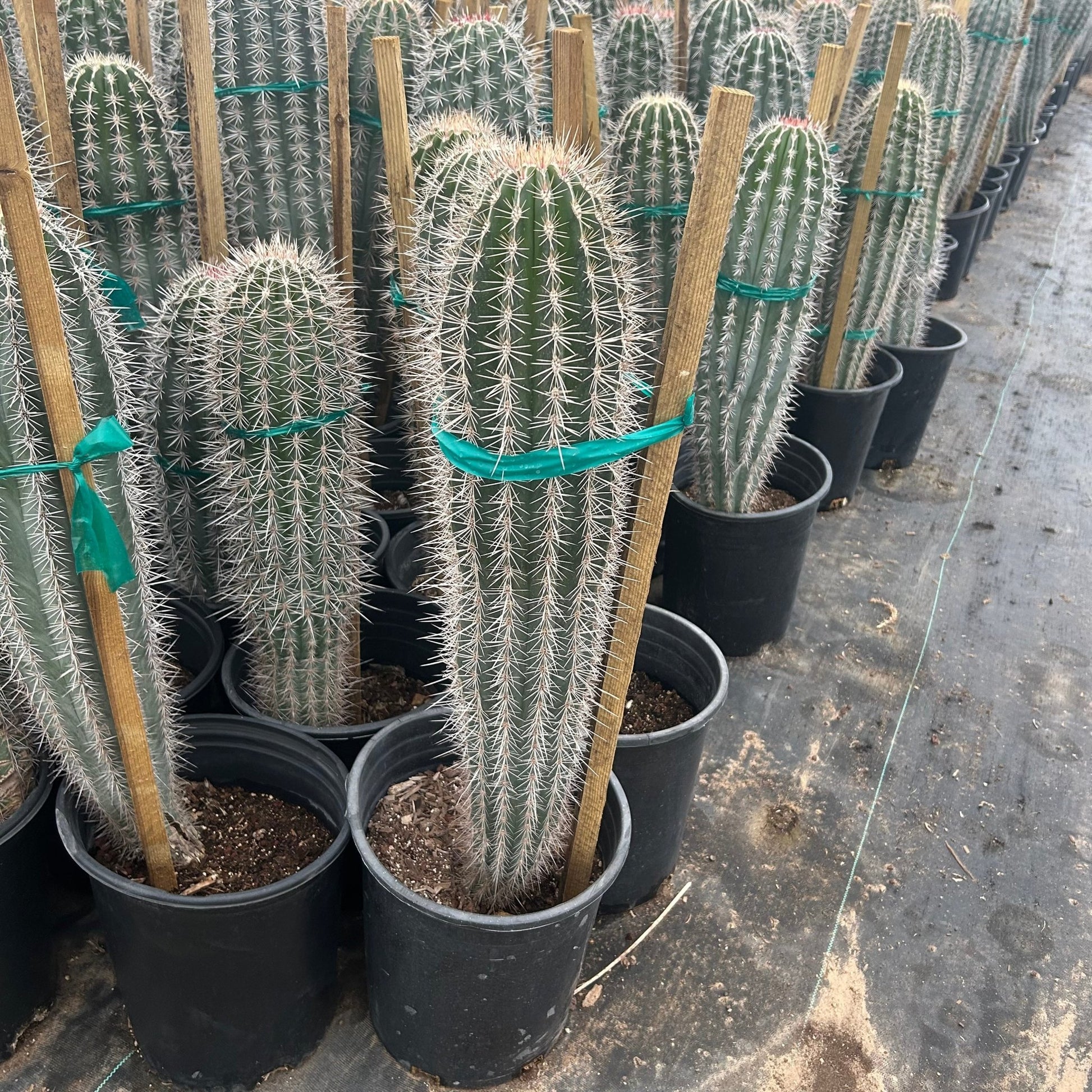
catus ever green potting plants Buy Cardon Cactus Phoenix, AZ | Pachycereus pringleiThe World's Tallest Cactus for Bold Phoenix Landscapes Cardon Cactus (Pachycereus pringlei) is the largest cactus species on Earth, capable of reaching heights over 60 feet in its native Baja California habitat. In Phoenix Valley landscapes, Cardon grows into an impressive columnar specimen with a thick, bluish green trunk and dramatic branching arms. Hardy, drought tolerant, and built for extreme desert heat, Cardon thrives across Scottsdale, Mesa,
The World's Tallest Cactus for Bold Phoenix Landscapes
Cardon Cactus (Pachycereus pringlei) is the largest cactus species on Earth, capable of reaching heights over 60 feet in its native Baja California habitat. In Phoenix Valley landscapes, Cardon grows into an impressive columnar specimen with a thick, bluish-green trunk and dramatic branching arms. Hardy, drought-tolerant, and built for extreme desert heat, Cardon thrives across Scottsdale, Mesa, Chandler, and Gilbert with minimal care. Whether you're creating a signature entry feature in Tempe, anchoring a commercial landscape in Peoria, or building a world-class cactus garden in Glendale — Cardon delivers a scale and presence no other cactus can match.
Cardon Cactus Plant Details
| Attribute | Detail |
|---|---|
| Scientific Name | Pachycereus pringlei |
| Common Names | Cardon, Cardón, Mexican Giant Cardon |
| Mature Height | 20–40+ feet in cultivation (60+ feet in habitat) |
| Mature Width | 8–15 feet (branching candelabra form) |
| Growth Rate | Slow to moderate — 6–12 inches per year in Phoenix once established |
| Sun | Full sun (6+ hrs). Handles reflected heat from walls and pavement. |
| Water | Very low once established. Extremely drought-tolerant. |
| USDA Zones | 9b–11 (Phoenix is Zone 9b–10a) |
| Soil | Well-draining. Adapts to Arizona caliche soils with proper drainage. |
| Foliage | Evergreen — thick bluish-green ribbed trunk year-round |
| Bloom Season | Spring — white nocturnal flowers along stem tips |
| Native Region | Baja California and northwestern Mexico |
Cardon Cactus Uses in Phoenix Landscapes
Monumental Specimen Plant
Cardon is the ultimate statement cactus. A single mature specimen commands attention in any landscape — front yards, estate entrances, resort lobbies, and botanical collections. Its massive columnar trunk and branching candelabra silhouette create a sense of scale that photographs beautifully and impresses visitors year-round.
World-Class Cactus Collections
For serious cactus collectors and botanical enthusiasts, Cardon is a crown jewel. It pairs spectacularly with Saguaro, Organ Pipe, and Mexican Fence Post to create a diverse columnar cactus display. Plant it as the centerpiece with lower-growing species like Golden Barrel and Agave around the base.
Commercial & Resort Landscapes
Cardon's dramatic size and clean vertical lines make it ideal for high-end commercial projects — resort entrances, golf course borders, and restaurant patios. Larger box sizes provide instant architectural impact for projects that need a "wow factor" from day one.
Drought-Tolerant & Low-Maintenance Design
Once established, Cardon needs almost no supplemental water and zero pruning. It's a set-it-and-forget-it plant for water-conscious homeowners across the Phoenix Valley who want maximum visual impact with minimum maintenance.
Best Time to Plant Cardon in Phoenix
Fall (October–November) is the ideal planting window. Warm soil encourages root establishment while cooler air reduces transplant stress, giving the cactus 6–8 months to settle before its first Phoenix summer. Spring (February–April) is the second-best option. Avoid summer planting — extreme heat stresses newly transplanted large columnar cacti.
How to Plant Cardon Cactus
- Dig wide, not deep — 2–3x the root ball width, same depth as the container.
- Check for caliche — break through any hardpan layer to ensure drainage. Cardon will rot in standing water.
- Backfill with native soil — a light 20% pumice or perlite blend improves drainage in heavy clay.
- Spacing — 10–15 ft from structures and other large specimens to allow for mature spread.
- Water basin — build a 3–4 inch ring around the root zone to direct water during establishment.
- Mulch — 2–3 inches of gravel or decomposed granite (avoid organic mulch touching the trunk).
Watering Cardon Cactus in Phoenix
First Year Watering Schedule
Weeks 1–2: Every 5–7 days, deep and slow (20–30 min drip). Month 1–3: Every 10–14 days. Month 3–12: Every 2–3 weeks (every 10–14 days in peak summer). After Year 1: Monthly in summer; little to no supplemental water in winter. Established Cardons are among the most drought-tolerant cacti available.
Drip Irrigation
Place a 2 GPH emitter 18–24 inches from the base. Established plants need very little supplemental water. Overwatering is the #1 killer — always err on the dry side, especially during winter dormancy.
How fast does Cardon grow in Phoenix?
Cardon grows slowly when young (3–6 inches/year), but picks up speed once established, reaching 6–12 inches per year in Phoenix's warm climate. A 5 gallon specimen can reach 6–8 feet within 8–10 years with proper care.
How big does Cardon get in Phoenix?
In cultivation, Cardon typically reaches 20–40 feet in the Phoenix area. In its native Baja habitat, specimens have been measured at over 60 feet — making it the tallest cactus species in the world.
Is Cardon cold hardy in Phoenix?
Cardon handles Phoenix winters well, tolerating brief dips to 28–30°F. In the coldest parts of the Valley, plant it near south-facing walls for radiant heat protection during rare hard freezes.
What's the difference between Cardon and Saguaro?
Both are massive columnar cacti, but Cardon grows taller and wider, with a thicker trunk and more numerous branches. Saguaro is native to Arizona; Cardon is native to Baja California. Both thrive in Phoenix landscapes and pair beautifully together.
You May Also Like
Saguaro — Arizona's iconic columnar cactus. Pair with Cardon for an unbeatable desert duo.
Arizona Organ Pipe — Multi-stem native columnar cactus with sweet edible fruit.
Mexican Fence Post — Fast-growing, clean columnar lines — great for hedges and borders.
San Pedro Cactus — Fast-growing columnar cactus with stunning overnight blooms.
Totem Pole Cactus — Smooth, spineless columns for a sculptural desert garden accent.
How Many Cardon Do I Need?
Cardon is a monumental columnar specimen (20 to 40+ ft tall, 8 to 15 ft wide), so it is planted as a single focal point rather than in rows. One mature Cardon anchors an entry, courtyard, or cactus collection on its own. If you have the space for a multi-specimen display, set plants 10 to 15 ft apart, and keep that same 10 to 15 ft of clearance from structures, walls, and overhead lines so the branching candelabra crown has room to develop.
| Planting | Spacing | Plants needed |
|---|---|---|
| Single monumental focal point | standalone, 10 to 15 ft clearance | 1 |
| Estate or collection grouping | 10 to 15 ft apart | 3 |
Cardon Season-by-Season in Phoenix
- Spring (Feb to Apr): White nocturnal flowers open along the stem tips on mature plants, drawing bats and moths. Best second planting window once nights warm.
- Summer (May to Sep): Built for extreme Phoenix heat and reflected heat, this is the main growth season once a plant is established. Let the soil dry fully between waterings, and ease off after monsoon storms, since standing water is the main risk.
- Fall (Oct to Nov): Prime planting season. Warm soil and mild air give roots 6 to 8 months to anchor before the first summer.
- Winter (Dec to Jan): Holds its thick bluish-green trunk and form. Tolerates brief dips to about 28 to 30 F; in the coldest pockets of the Valley, site it near a south-facing wall for radiant warmth during rare hard freezes.
At a Glance
✔ Heat-Loving (Reflected-Heat Tolerant) ✔ Drought-Tolerant ✔ Evergreen ✔ Low-Maintenance ✔ Pollinator-Friendly ✔ Deer & Rabbit-Resistant
Plant It With
- Golden Saguaro: a fellow giant columnar for an iconic desert-duo silhouette.
- Mexican Fence Post: clean green columns that build out a columnar cactus collection.
- Blue Myrtle Cactus: branching blue-green candelabra for mid-height structure in the grouping.
- Golden Barrel: gold-spined globes clustered at the base for ground-level contrast.
Is Cardon Right for Your Yard?
Cardon thrives in full sun with sharp drainage and reflected heat, needs almost no water or pruning once established, and delivers a scale no other cactus can match. It is not a fit for small yards or spots near walls, eaves, and overhead lines, since a mature plant reaches 20 to 40 ft and 8 to 15 ft wide, and it will rot in soil that holds water.
Shipping Notes
- Free Standard Shipping on $100+ Orders to the USA.
- Except Preorder products are shipped in 48 hours.
- Delivery to the USA:
- Standard Shipping : 3-10 business days
- If time is of the essence, please consider selecting expedited delivery for faster service.
Exchange/Return Notes
- We offer a 30-day return/exchange service after receiving.
- Final sale items are not eligible for returns or exchanges.
- To process your return/exchange, please contact us at [email protected]
- Please click here for more details>>> Return & Exchange Policy