Pay in installments of $5.76 with
 ,
,
 and
and

Shipping Estimate
USA
- USA
- CAN
- USA
- CAN
Ships within 48 hours · Estimated delivery Jul 28 - Aug 2
 Promo Codes Available:
For Your Every Summer RSVP, with Code: SUMMER15
Description
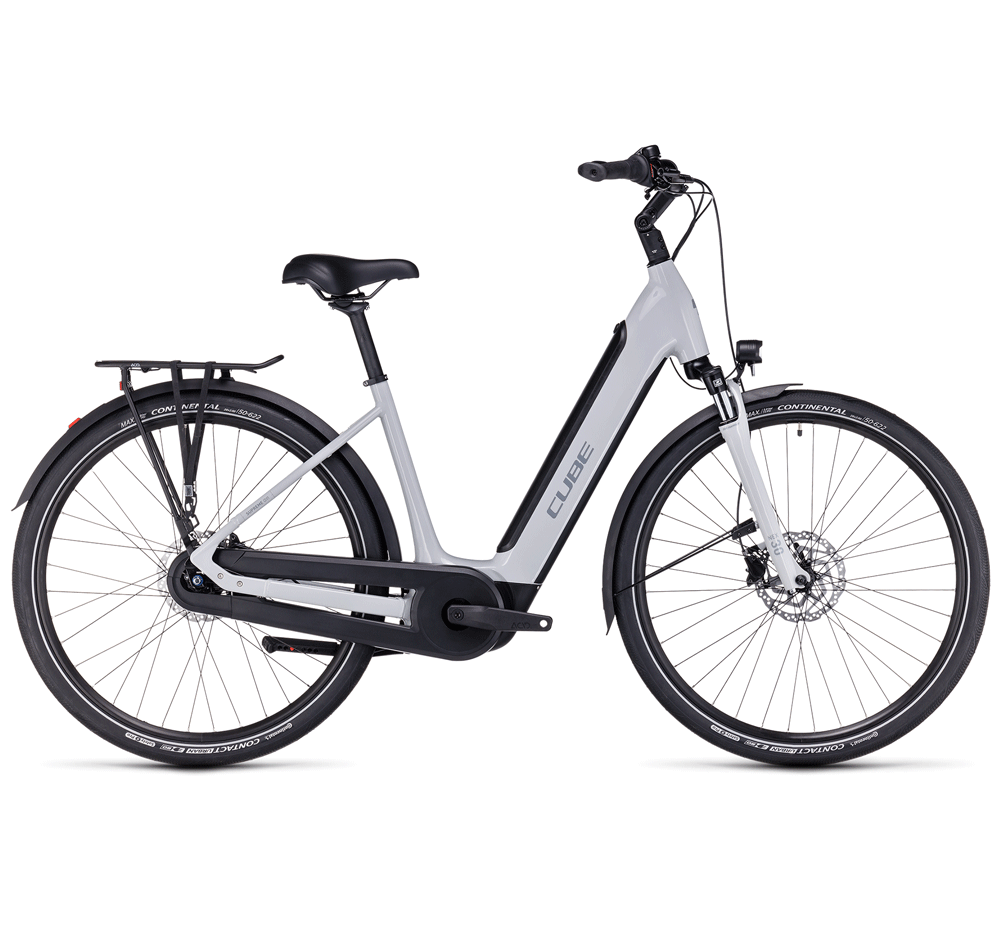
cub e bike Cube eBikeThe Cube Supreme Hybrid ONE is the kind of bike we really believe in. This e bike is special because it's one of the few e bikes actually designed for city bike riding rather than recreational riding. The way you can tell is by noting the full chain guard (to keep your office wears clean) and the ultra low maintenance internal gear hub. So, why are we so excited about this bike? Well, studies in Holland show that non electric bikes tend to negotiate
The Cube Supreme Hybrid ONE is the kind of bike we really believe in. This e-bike is special because it's one of the few e-bikes actually designed for city bike riding rather than recreational riding. The way you can tell is by noting the full chain-guard (to keep your office-wears clean) and the ultra low-maintenance internal gear hub.
So, why are we so excited about this bike? Well, studies in Holland show that non-electric bikes tend to negotiate distances no further than 7.5km. That's why you see so many cyclists in Amsterdam or downtown Toronto. If you live, work and play downtown, chances are good you live most of your life in a radius under 7.5km. But many of us live a bit further, and the idea of putting on cycling clothes, getting all sweaty, taking a shower at arrival, and then changing at work all sounds rather unappealing. But, this is where an e-bike is a game-changer! Studies show that an e-bike beats a car in urban distances up to 20km in range, and an e-bike delivers you door-to-door sweat-free, all the while crushing hills at a max speed of 32km/hr.
But, most e-bikes on the market use high-maintenance derailleurs with exposed chains that splatter oil all of your clothes. Not this bike. The Cube Hybrid ONE is a true city bike, with it's internal gear hub and full chain-case, but the extra bonus of an electric assist! The motor is where this bike sings. In a market flooded with cheap aftermarket kits that are low in quality and dangerous, Cube chooses German-made Bosch systems that are without argument the leaders in quality, technology and dedicated after-sales service. The Bosch Active Line motor reads your pedalling input data and regulates the assistance, creating an output that feels like something close to mind-reading. It's 50nm of power will flatten any hill and it's absolutely massive 500W battery provides up to 130km of range.
The rest of the bike takes quality seriously. Powerful Shimano disc brakes ensure intuitive control and all the stopping power you'll ever need. Hate punctures? The Continental Contact tires have a thick anti-puncture layer to ensure each ride is trouble-free. Best of all, this bike comes already equipped with a quality kickstand, rack, and powerful 60 LUX German-made lighting system that runs off the battery.
- Questions? Book a consultation with one of our E-Bike experts
- Lightweight Aluminum frame with Front Suspension - Provides strength and agility on even the roughest roads
- Motor: Quiet & reliable Bosch Active Line provides 50Nm acceleration at low cadences
- Battery: Bosch 500Wh gives you up to 130km of range on a single charge
- Lighting: Super-bright ACID-60 LED Lighting is German-made for ultimate functionality
- Drivetrain: Super low-maintenance Shimano Nexus-7 internal gear hub
- Shimano hydraulic disc brakes offer intuitive stopping power in absolutely every weather condition
- Continental tires are highly puncture-resistant - Made in Germany
-
Comfortable ergonomic ACID gel saddle
| SUPREME HYBRID ONE |
|
|---|---|
| FRAME | Aluminum - Greyblue |
| BIKE WEIGHT | 26.6 kg / 58 Ibs |
| WEIGHT CAPACITY | 140 kg |
| BATTERY | Bosch Powertube 500 |
| MOTOR | Bosch Active Line Gen 3 50nm |
| DISPLAY | Bosch Purion |
| MAX ASSISTED SPEED | 32km/hr as per Canadian regulations |
| COMPUTER MODES | Eco, Tour, Sport, Turbo |
| RANGE ESTIMATE | 80-100km |
| CHARGING TIME | Four hours |
| SUSPENSION FORK | Suntour NEX 50mm |
| HEADSET | Acros AZF integrated |
| SEATPOST | Cube Performance Post 30.9mm |
| TIRES | Conti Contact Urban, SafetyPro |
| TUBES | Schwalbe |
| RIMS | CUBE EX23, 36H, Disc |
| FRONT HUB | Shimano HB-TX505 QR, Centerlock |
| REAR HUB | Shimano Nexus SG-C3001-7D, 7-Speed |
| CRANKSET | ACID E-crank |
| CHAINRING | 38T |
| CHAINGUARD | Chain Guard |
| CHAIN | KMC Z610 |
| GEARS |
Shimano Nexus SG-C3001-7D, 7-Speed |
| SADDLE | Natural Fit SHEN |
| PEDALS | Acid PP Trekking |
| SHIFTING SYSTEM | Shimano Nexus |
| SHIFTER | Shimano Nexus |
| HANDLEBAR | Cube Comfort Shape Bar |
| STEM | Cube Comfort Stem Pro - Adjustable |
| GRIPS | Natural Fit Comfort |
| BRAKES | Shimano BR-MT200 Hydraulic Disc |
| FRONT LIGHT | ACID PRO-E 60LUX |
| TAIL LIGHT | ACID PRO-E, 12V, Mudguard Rear |
| MUDGUARDS | ACID 56 BB-Mount |
| REAR RACK |
ACID Semi-integrated carrier |
| BUNGEE | N/A |
| BELL |
Easy Bell |
| KICKSTAND | ACID Pro Flat Mount Kickstand |
| LOCK | N/A |
| CUBE SUPREME SPORT ONE | FROM | TO |
|---|---|---|
| 46 CM | 5' 0" | 5'3" |
| 50 CM | 5' 4" | 5'7" |
| 56 CM | 5' 7" | 6'0" |
How does a Cube compare to other e-bikes?
It's German! And, that means a lot. Germany is home to largest e-bike market in the world and also the highest regulations. This regulatory environment produces some of the best products out there since each brand competes with other brands for the highest level of safety. These regulations, known as the Straßenverkehrszulassungsordnung (try saying that three times fast!) cover everything from the nature of dynamo or electric lighting beams (and how they are not permitted to blind oncoming traffic) to the quality of everything from the kickstand to the rear racks. Built in Germany, Cube thus has access to tons of German parts that are made-in-Germany and are not easily available in China - where most e-bikes are made. Finally, there's just something ephemeral about the deep experience and maturity that is built into a Cube bike. Where so many North American brands are still figuring out how to build e-bikes, Cube has that all figured out and leads from the front.
Why Bosch for the motor/battery system?
Bosch has been supplying the automotive industry for over 100 years and when they entered the e-bike market in the early 2000s they did so with a commitment to carrying over their extensive experience and focus on high standards of quality and reliability. As evidence of this Bosch was the first e-bike brand to ensure all of its motors, batteries and chargers meet UL 2849, an international e-bike safety standard.
Bosch also draws on its automotive experience to create and maintain a massive network of highly trained dealers and service centres. This means you won’t struggle to find service for your bike whether that's with us or in another city around the world.
Due to the high quality of the motor/battery systems and the massive network of service centres, investing in a Bosch system will save you time and money on maintenance and repairs over the life of the bike. Bosch also offers a spare parts guarantee, meaning they are committed to producing replacement parts, even for their discontinued systems, which means a longer life for your bike!
Does the battery lock to the bike?
Yep. That’s one expensive chunk of Lithium Ion. Frame-mounted batteries lock on to the down-tube and only you can remove them with the key provided. Internal frame batteries are built into the bike, so no need to worry!
How long does it take to charge the battery?
It takes about five hours to charge a single battery from flat to full. The batteries don't have memory so there is no problem if you only charge the battery a little bit, halfway, or whatever. You’ll get over 1000 complete charges, which is typically 5+ years of use before a replacement is required.
Is the unit serviceable?
You bet it is. For years the e-assist market was dominated by small fly-by-night companies with good ideas and no balance sheet. The consumer took all the risk and were often left with technical assistance phone numbers that no longer worked. Cube partner with Bosch, a huge player in the e-bike market – and they are sophisticated, which means they are updatable, diagnosable, and if something does break, fundamentally repairable.
What's the lifetime on the battery?
On average you will get about 18,000-20,000 miles from the battery before it needs to be replaced.
This is expensive! Will it get stolen?
Estimates are that over 90% of bicycle theft is tied to cash-for-drugs (unfortunately) and most bike losses are due to inferior or cheap locks. Make sure you buy a good ABUS U-lock or a chain and your bike will be safe.
What’s the warranty?
For the original owner, Cube offers a two-year warranty for manufacturer defects on frame and fork, five years for frame / swingarm breakage, and two years on the battery. Does not include wear and tear.
Shipping Notes
- Free Standard Shipping on $100+ Orders to the USA.
- Except Preorder products are shipped in 48 hours.
- Delivery to the USA:
- Standard Shipping : 3-10 business days
- If time is of the essence, please consider selecting expedited delivery for faster service.
Exchange/Return Notes
- We offer a 30-day return/exchange service after receiving.
- Final sale items are not eligible for returns or exchanges.
- To process your return/exchange, please contact us at [email protected]
- Please click here for more details>>> Return & Exchange Policy