Pay in installments of $5.89 with
 ,
,
 and
and

Shipping Estimate
USA
- USA
- CAN
- USA
- CAN
Ships within 48 hours · Estimated delivery Oct 18 - Oct 23
 Promo Codes Available:
For Your Every Summer RSVP, with Code: SUMMER15
Description
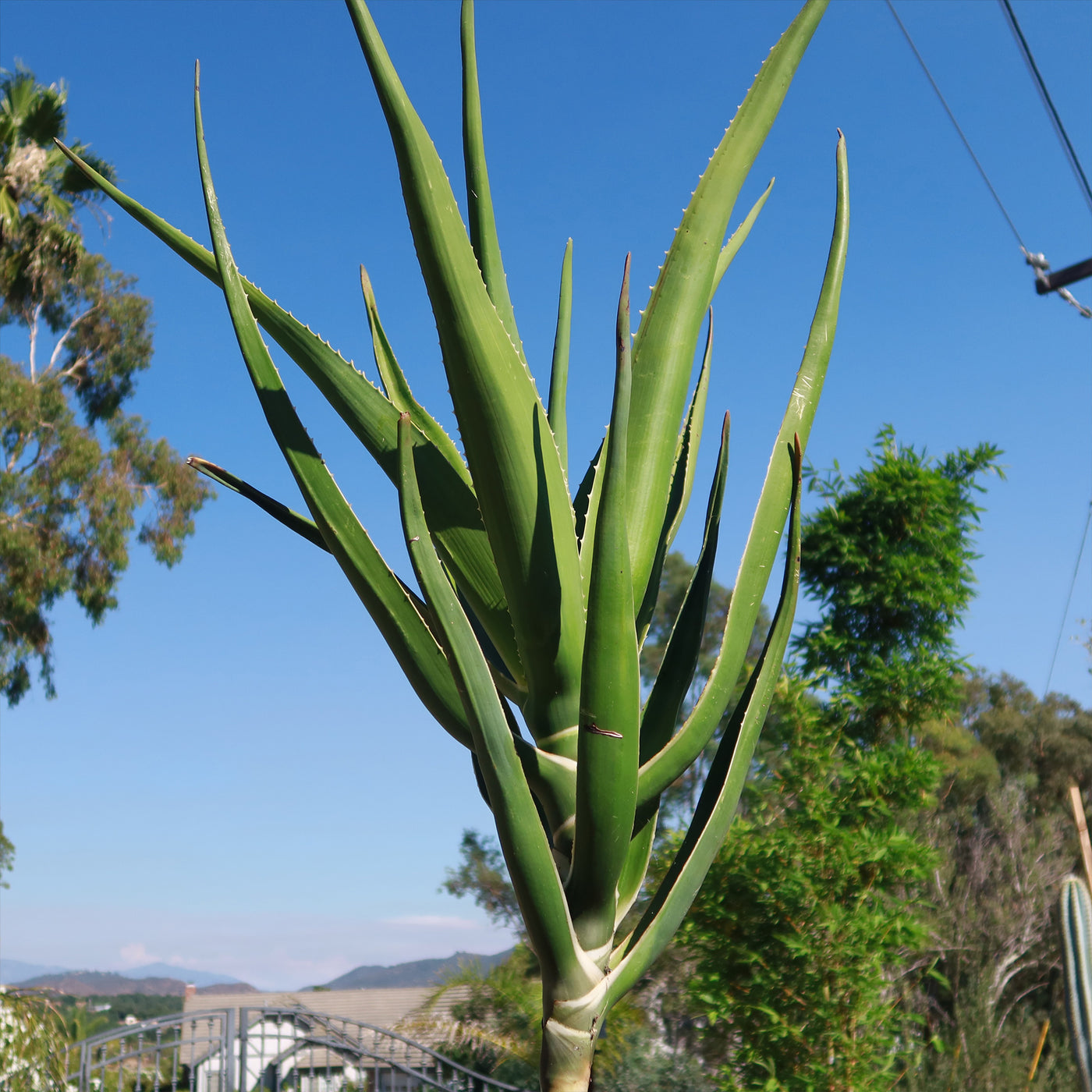
tallest aloe vera plant Aloe TreeAre you on the lookout for a striking and low maintenance aloe plant to elevate your garden? Look no further than the Aloe Tree, known as Aloidendron barberae (formerly known as Aloe bainesii or Aloe barberae). Hailing all the way from South Africa, it gets its common name, "tree aloe," because of its tall and tree like growth habit. This aloe tree is one of Africa's largest growing aloe plants, which can grow up to 30 feet in height, resembling a
Are you on the lookout for a striking and low-maintenance aloe plant to elevate your garden? Look no further than the Aloe Tree, known as Aloidendron barberae (formerly known as Aloe bainesii or Aloe barberae). Hailing all the way from South Africa, it gets its common name, "tree aloe," because of its tall and tree-like growth habit.
This aloe tree is one of Africa's largest-growing aloe plants, which can grow up to 30 feet in height, resembling a tree. This distinguishes it from other aloe species that have a more compact and rosette-like growth form. It features a thick-gray-smooth trunk with a grayish-brown bark that becomes rough and textured as it matures. This Aloe bainesii has a neat, rounded crown of long, narrow, deeply channeled, curved, and toothed leaves that are arranged in rosettes at the top of the trunk.
The stunning flowers are one of the most remarkable aspects of the aloe tree. During the winter months, it produces tall, branching inflorescences that are covered in vibrant red or orange tubular flowers. These flowers attract pollinators like birds and bees, adding to the aloe plant's overall beauty.
Aloe tree propagation can be done through various methods such as seed germination, stem cuttings, or division of offsets. Overall, the Aloe tree is a versatile aloe plant with medicinal properties, attractive stems, and succulent leaves, suitable for treating burns, cuts, and skin irritations.
Watering Needs
When it comes to watering the aloe tree, it's important to strike a balance. This succulent is known for its ability to tolerate drought conditions, so it doesn't require frequent watering. Always err on the side of underwatering because overwatering can cause root rot and other problems.
A good rule of thumb is to water the Tree Aloe deeply but infrequently. In order to avoid waterlogged conditions, allow the soil to completely dry out between waterings; during the summer months, when your Aloe barberae is actively growing, you can water it every 2-3 weeks. In the winter, when growth slows down, you can reduce watering to once a month or even less.
Remember, it's always better to underwater than overwater the Tree Aloe. Pay attention to the aloe plant's leaves and overall appearance. If the leaves start to look shriveled or wrinkled, it may be a sign that the plant needs water. Adjust your watering schedule accordingly, and your Tree Aloe will thrive!
Light Requirement
The Aloe bainesii tree aloe thrives in full sun, making it a sun-loving plant. It requires bright, direct sunlight for at least 6 hours a day to maintain its health and vibrant appearance. Placing it in a location with ample sunlight will help promote optimal growth and flowering.
If you're growing the Tree Aloe indoors, make sure to place it near a sunny window where it can receive plenty of sunlight. Alternatively, you can use grow lights to supplement the natural light and provide the necessary brightness for your aloe tree plant.
While the Tree Aloe can tolerate some shade, it may not grow as vigorously or produce as many flowers. Insufficient light can cause it to become leggy and weak. Therefore, it's best to provide it with as much direct sunlight as possible to ensure its overall well-being.
Optimal Soil & Fertilizer Needs
When it comes to the soil and fertilizer needs of the Aloe barberae, it's important to provide it with well-drained soil. A sandy or loamy soil mix is ideal for this succulent. It allows excess water to drain away, preventing the roots from sitting in water and potentially rotting. Too much water and BAM! You've got root and stem rot faster than you can say "cactus." That's why we at Planet Desert have got your back with ours specialized succulent potting mix. This will help mimic the natural conditions that the Tree Aloe prefers.
As for fertilizing, the Tree Aloe doesn't require frequent or heavy feeding. Aloe plants are generally low maintenance when it comes to fertilization. You can use a balanced natural fertilizer specifically formulated for succulents with an equal dose of NPK. During the active growing season, which is typically spring, you can fertilize the Aloe tree once a month. In the dormant season, reduce or stop fertilizing altogether as the plant's growth slows down.
Remember, providing well-draining soil and occasional fertilization will help keep your Tree Aloe healthy and thriving!
Hardiness Zone & More
The Aloe tree is native to the warm regions of South Africa and is known for its ability to tolerate hot and dry conditions. It is typically hardy in USDA hardiness zones 9 to 11, which means it can withstand minimum temperatures of 20 to 40 degrees Fahrenheit.
In terms of temperature preferences, the Tree Aloe thrives in warm climates. It can tolerate temperatures as high as 100 degrees Fahrenheit but may experience some stress if exposed to prolonged extreme heat. It is important to protect your aloe trees from frost and freezing temperatures, as it is not frost-tolerant.
As for humidity, the Tree Aloe is adapted to arid and semi-arid environments, so it prefers low to moderate humidity levels. It can handle dry air and does not require high humidity to thrive. However, it is important to provide adequate moisture to the aloe tree roots, especially during the growing season, to ensure their overall health.
With the help of Aloe barberae – Aloe tree, you'll start to spend less time maintaining your garden and more time taking in its beauty!
Shipping Notes
- Free Standard Shipping on $100+ Orders to the USA.
- Except Preorder products are shipped in 48 hours.
- Delivery to the USA:
- Standard Shipping : 3-10 business days
- If time is of the essence, please consider selecting expedited delivery for faster service.
Exchange/Return Notes
- We offer a 30-day return/exchange service after receiving.
- Final sale items are not eligible for returns or exchanges.
- To process your return/exchange, please contact us at [email protected]
- Please click here for more details>>> Return & Exchange Policy